

Your Iron Tablets Are Wrecking Your Gut and Here Is How to Fix It
You already know iron tablets can cause diarrhea. You are living it. Every dose feels like a gamble between treating your anemia and spending the next few hours near a bathroom. Maybe you have noticed dark green poop, cramping, or urgency that makes daily life unpredictable. The frustration is real, and you are not alone in it.
Research published in Microbiology Research confirms that up to 60% of people taking oral iron supplements report gastrointestinal side effects, and those side effects drive up to 50% of patients to abandon their treatment plan entirely. That means half the people prescribed iron for anemia simply stop taking it because their gut cannot handle it. The result? Their iron deficiency persists, fatigue deepens, and the cycle of feeling terrible continues. Some people even experience mucus diarrhea or worry about alarming stool changes like coffee ground stool, which can signal something more serious than a supplement side effect.
Why This Problem Deserves a Real Solution
Iron is not optional when you are anemic. Your body needs it to produce healthy red blood cells, transport oxygen, and maintain basic energy levels. Quitting supplementation because of diarrhea might bring short-term gut relief, but it leaves the underlying deficiency untreated. For some patients, especially those who cannot tolerate oral forms, iron infusion side effects become a concern when considering alternatives. Others have tried products like Hema Plex or different supplement brands hoping for a gentler experience, only to find the same gut distress. The good news? There are proven, practical ways to stop the diarrhea without stopping the iron.
Most iron-related diarrhea is manageable with the right combination of dose adjustments, timing changes, and formulation switches. Stopping supplementation entirely is rarely the only option.
What This Guide Covers
This article is a step-by-step action plan, not a biology lecture. You will learn why your gut reacts the way it does (briefly), then move into what actually works: immediate relief strategies, dose and timing adjustments, gentler iron formulations ranked by tolerability, dietary fixes that support absorption, and clear signs iron pills are working versus red flags that need a doctor. Whether you are dealing with faeces floating, sticky stools, or wondering if can constipation cause fever alongside your GI issues, each section builds on the last so you can start with the simplest fix and escalate only if needed.
The goal is straightforward: find the minimum effective approach that keeps iron in your body and diarrhea out of your day.
Why Iron Tablets Cause Diarrhea in the First Place
Before jumping into fixes, it helps to understand what is actually happening inside your gut when you swallow an iron tablet. Not because you need a biology degree, but because knowing the "why" makes the solutions in later sections click into place. The short version: your body can only absorb so much iron at once, and everything left over causes trouble through three distinct pathways.
How Unabsorbed Iron Irritates Your Intestines
Imagine swallowing a standard ferrous sulfate 325mg tablet. That pill contains roughly 65 mg of elemental iron, but your intestines can only absorb a fraction of it. Research from Anglia Ruskin University and The Functional Gut Clinic notes that the body can absorb a maximum of about 25 mg of elemental iron per day, and that limit only applies under conditions of severe deficiency. For most people, the number is far lower. So where does the rest go? It stays in your gut, and that is where the problems begin.
Three mechanisms drive iron-induced diarrhea:
- Direct mucosal irritation. Unabsorbed iron is a pro-oxidant. Through a process called the Fenton reaction, excess iron in the intestinal lumen generates reactive oxygen species (free radicals) that damage the lining of your intestines. This oxidative stress injures intestinal villi, disrupts tight junction proteins between cells, and triggers inflammation of the intestinal mucosa. The result is irritation that speeds up gut motility and loosens stools. If you have ever noticed black diarrhea or unusually dark, watery bowel movements after taking iron, this oxidative damage is a key reason.
- Osmotic water draw. Excess iron sitting in the bowel lumen acts as an osmotic agent, pulling water from surrounding tissues into the intestinal space. More water in the bowel means looser, more frequent stools. This effect intensifies with higher doses, which is why people prescribed two or three tablets daily often experience worse diarrhea than those on a single dose.
- Gut microbiome disruption. Your intestinal bacteria need iron too, but not all species benefit equally. Unabsorbed iron preferentially feeds pathogenic bacteria like Salmonella, E. coli, and other Enterobacteriaceae, while simultaneously reducing protective species like Lactobacillus and Bifidobacterium. A review published in Pharmaceuticals confirmed that iron supplementation in Kenyan infants increased pathogenic bacteria and decreased beneficial strains, with elevated markers of gut inflammation. This microbial imbalance alone can trigger diarrhea, bloating, and abdominal discomfort. It is a similar mechanism to what parents sometimes notice as mucus in baby poop when infants are started on iron-fortified formulas.
The more iron that goes unabsorbed, the more it oxidizes, draws water into the bowel, and feeds harmful bacteria. Reducing unabsorbed iron is the single most effective lever for stopping diarrhea.
Temporary Adjustment vs Persistent Diarrhea
Not all iron-related diarrhea means something is wrong with your supplement choice. Your gut often needs time to adapt. During the first one to two weeks, mild loose stools, some cramping, or changes in stool color (including green stool, which relates to the green stool meaning people often search for) are common adjustment responses. Your intestinal cells are recalibrating how they handle the increased iron load, and your microbiome is shifting to accommodate the new nutrient environment.
Temporary diarrhea typically:
- Starts within the first few days of supplementation
- Gradually improves over one to two weeks
- Remains mild enough that you can continue daily activities
Persistent diarrhea is different. If your symptoms last beyond two weeks, worsen over time, or are severe enough to affect hydration and daily function, that is your gut telling you the current formulation, dose, or timing is not working. Some people find that products marketed as gentler options, like Slow Fe or liquid formulations such as Floradix liquid iron, reduce symptoms enough to get through the adjustment period. Others need a more fundamental change in approach. Persistent diarrhea is not something to push through. It is a signal to adjust, not to quit.
Why Dose Size Matters More Than You Think
Here is the part most people miss: diarrhea from iron is dose-dependent. Clinical guidelines often recommend two to three ferrous sulfate tablets daily, delivering up to 195 mg of elemental iron. Yet the body's absorption ceiling sits around 25 mg per day at best. That means the vast majority of a high-dose regimen passes straight through the GI tract unabsorbed, fueling all three irritation pathways described above.
This is also why the relationship between constipation can cause weight gain searches and iron supplementation confuses people. Iron can cause constipation or diarrhea depending on the dose, the formulation, and individual gut biology. Higher doses tend to push the balance toward more unabsorbed iron and more GI distress in either direction.
The practical takeaway? The dose your doctor prescribed may be clinically appropriate for your anemia, but your gut may not tolerate it in a single sitting. The next sections cover exactly how to bridge that gap, starting with the gentlest formulation options and moving into the specific dosing and timing strategies that keep iron working for you instead of against you.
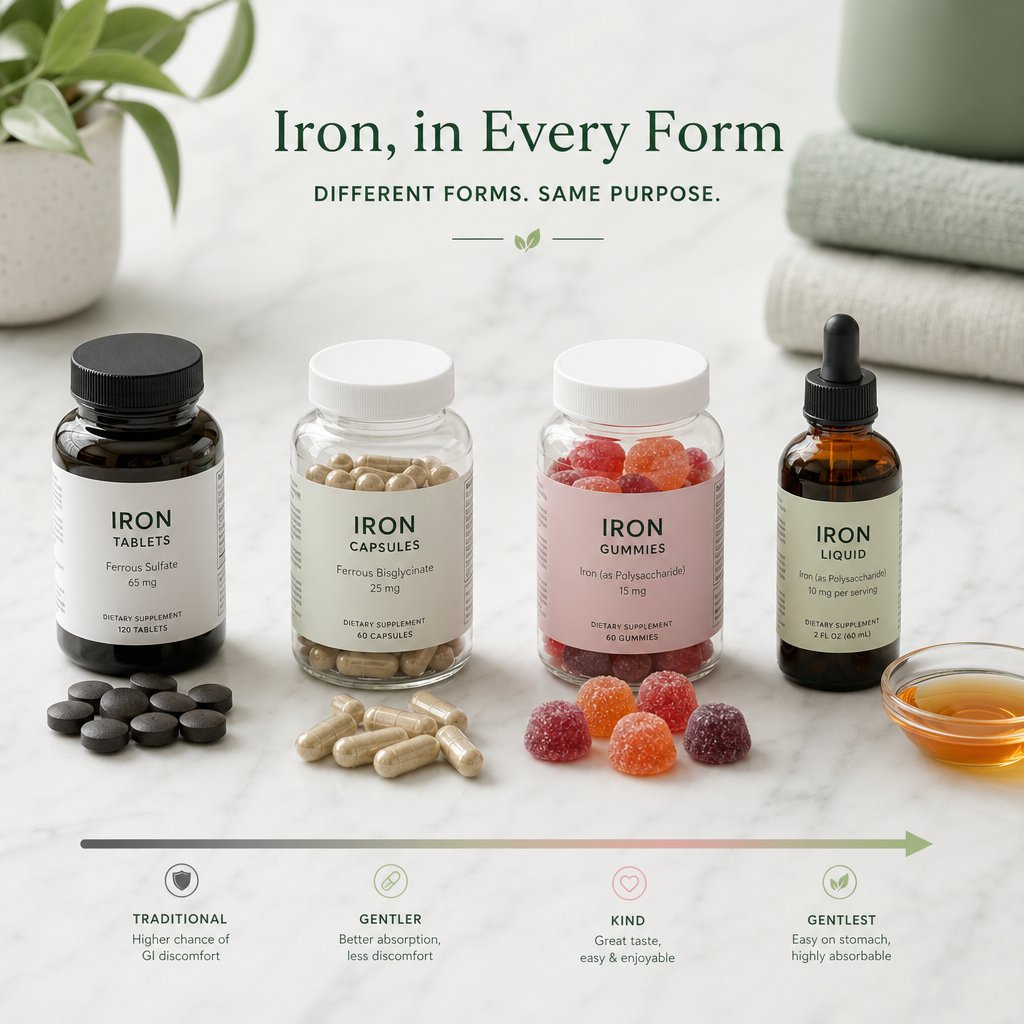
Iron Supplement Forms Ranked by Diarrhea Risk
Dose size drives diarrhea, but the form of iron you take determines how much of that dose actually gets absorbed versus how much lingers in your gut causing problems. Not all iron supplements are created equal. Some dump a large payload of free iron directly onto your intestinal lining, while others shield the iron molecule during transit and deliver it more efficiently into your bloodstream. Choosing the right form can be the difference between tolerating your anemia treatments comfortably and dreading every single dose.
Ferrous Sulfate vs Ferrous Gluconate vs Ferrous Fumarate
These three are the traditional iron salts, and they dominate pharmacy shelves. They are inexpensive, widely available, and well-studied. They also share a common problem: they release free ionic iron directly into the gut, which triggers the oxidative irritation and osmotic effects covered in the previous section.
Here is how they differ in practice:
- Ferrous sulfate is the most commonly prescribed oral iron supplement worldwide. A standard ferrous sulfate 325mg tablet (hydrated form) delivers about 65 mg of elemental iron. That is a large single dose, and because absorption tops out well below that amount, a significant portion goes unabsorbed. The result is the highest rate of GI side effects among the three salts, including nausea, cramping, constipation, and diarrhea. Products like Ferosul are ferrous sulfate formulations, so if you are taking one and experiencing gut distress, the form itself may be the issue. LiverTox data from the NIH confirms that hydrated ferrous sulfate at 325 mg provides roughly 64 mg of elemental iron, while the desiccated version of the same weight delivers a much higher 120 mg.
- Ferrous fumarate packs even more elemental iron per tablet. A typical 300 mg dose contains about 99 mg of elemental iron (33% iron by weight). While it is effective at raising hemoglobin levels, the higher elemental iron load means more unabsorbed iron and a correspondingly high risk of iron supplement side effects, including diarrhea. Some people tolerate it better than sulfate due to individual gut chemistry, but on average, the GI profile is comparable.
- Ferrous gluconate is the gentlest of the three salts. A 325 mg tablet delivers only about 39 mg of elemental iron (12% iron by weight). That lower elemental dose means less unabsorbed iron irritating the intestinal lining. For people who need a traditional iron salt but cannot stomach ferrous sulfate, gluconate is often the first switch doctors recommend. The trade-off is that you may need to take it more frequently to match the same total daily iron intake.
Why Chelated Iron and Bisglycinate Are Easier on the Gut
You may have seen the word "chelated" on supplement labels and wondered what it actually means. The meaning of chelated is straightforward: the iron atom is bonded to an amino acid (typically glycine), forming a stable ring-like molecular structure. Picture the iron wrapped in a protective shell. That shell prevents the iron from making direct contact with your intestinal lining during digestion, which dramatically reduces the oxidative irritation that causes cramping and diarrhea.
Ferrous bisglycinate, also commonly labeled as iron glycinate, is the most widely available chelated iron form. Two glycine molecules bond to a single ferrous iron ion, creating a compound with a molecular weight of only about 204 daltons. That small, stable structure offers two major advantages for your gut:
- Higher absorption efficiency. A randomized trial published in Biomedicine & Pharmacotherapy compared ferrous bisglycinate chelate to ferrous sulfate in cancer patients with iron deficiency anemia. Patients taking bisglycinate at just 28 mg per day achieved similar hemoglobin and ferritin improvements as those taking 105 mg per day of ferrous sulfate. That is roughly one-quarter the dose producing equivalent results, which means far less unabsorbed iron left behind to irritate the gut.
- Lower GI toxicity. In the same study, GI side effects occurred in only 17% of the bisglycinate group compared to 33% of the ferrous sulfate group. A pilot trial in Current Pediatric Reviews reinforced these findings, showing that iron bisglycinate chelate produced no adverse effects in children during 45 days of supplementation while still significantly increasing both hemoglobin and ferritin levels.
The practical implication is clear: because chelated iron is absorbed more efficiently, less of it remains in the intestinal lumen. Less unabsorbed iron means less oxidation, less osmotic water draw, and less fuel for pathogenic gut bacteria. For anyone asking how do you stop diarrhea when taking iron tablets, switching to a chelated form like iron bisglycinate is one of the most impactful single changes you can make.
Polysaccharide iron complex is another alternative worth mentioning. It uses ferric iron (Fe3+) bound to a polysaccharide carrier, which reduces the free iron exposure in the gut. However, research suggests its bioavailability may be lower than both ferrous sulfate and bisglycinate, potentially requiring higher doses that partially offset the tolerability advantage.
Liquid iron supplement formulations, meanwhile, offer a different kind of flexibility. Because you measure each dose with a dropper or syringe, you can fine-tune the exact amount of elemental iron you take, starting very low and gradually increasing as your gut adapts. This precision is especially useful for people who are sensitive even to low-dose tablets. The downside? Liquid iron can stain teeth and has a strong metallic taste that some people find difficult to tolerate. Taking it through a straw and rinsing your mouth afterward helps minimize staining. You may also notice black specks in stool with liquid formulations, which is a normal and harmless sign of iron passing through the digestive tract.
Iron Form Comparison Table
The table below summarizes the key differences across the most common oral iron forms. Use it as a quick reference when discussing options with your healthcare provider or choosing a supplement on your own.
| Iron Form | Typical Dose | Elemental Iron per Dose | GI Side-Effect Severity | Diarrhea Risk | Absorption Characteristics |
|---|---|---|---|---|---|
| Ferrous Sulfate (hydrated) | 325 mg | ~65 mg | High | High | Standard absorption; most studied form; significant unabsorbed iron at typical doses |
| Ferrous Fumarate | 300 mg | ~99 mg | High | High | High elemental iron load; effective but leaves substantial unabsorbed iron |
| Ferrous Gluconate | 325 mg | ~39 mg | Moderate | Moderate | Lower elemental iron per dose; gentler than sulfate and fumarate; may require more frequent dosing |
| Ferrous Bisglycinate (Chelated) | 25-28 mg elemental | 25-28 mg | Low | Low | Amino acid chelate shields iron from gut lining; higher fractional absorption; less unabsorbed iron |
| Polysaccharide Iron Complex | 150 mg elemental | 150 mg | Low to Moderate | Low to Moderate | Ferric iron bound to polysaccharide; reduced free iron exposure; bioavailability may be lower |
| Liquid Iron (various forms) | Variable | Variable (user-controlled) | Low to Moderate | Low to Moderate | Precise dose control; allows gradual titration; may stain teeth; metallic taste |
A few patterns stand out. The traditional iron salts (sulfate, fumarate) deliver the most elemental iron per dose but carry the highest diarrhea risk. Ferrous bisglycinate sits at the opposite end, offering efficient absorption at lower doses with minimal gut irritation. Liquid iron and polysaccharide complexes fall somewhere in between, with the added benefit of dosing flexibility.
Knowing which form you are currently taking, and where it falls on this spectrum, is the first step toward a targeted fix. But switching formulations is only one piece of the puzzle. The way you take your iron, including when, how much, and what you pair it with, matters just as much for keeping diarrhea under control.
A Step-by-Step Plan to Stop Iron-Induced Diarrhea
You know which iron form you are taking and where it sits on the tolerability spectrum. That knowledge is useful, but it does not help much when you are in the middle of an active diarrhea episode and need relief right now. This section lays out a structured, escalating action plan you can start using today. Each step builds on the one before it, so begin with the simplest adjustment and move up only if your symptoms persist.
The goal is not to eliminate every trace of GI discomfort. It is to find the minimum effective dose and delivery method that your gut can tolerate consistently, because an iron supplement you actually take every day beats a "perfect" one that sits untouched in your medicine cabinet.
Here is the full sequence, from immediate symptom management to longer-term strategy shifts:
- Manage the acute episode first.
- Lower your dose or split it.
- Take iron with a small amount of food.
- Pair iron with vitamin C.
- Switch to a gentler iron formulation.
- Try alternate-day dosing.
Let's walk through each one.
Immediate Relief for Active Diarrhea Episodes
When diarrhea is already happening, your first priority is not iron absorption. It is hydration. Loose, frequent stools pull water and electrolytes out of your body fast, and dehydration can set in within hours if you are not replacing what you lose. Senior Clinical Dietitian Christine Siebel at MD Anderson puts it plainly: "It's not just about replacing the fluid, but also the electrolytes your body loses."
Start with these immediate steps:
- Drink water with electrolytes. Plain water alone is not enough. Use an oral rehydration solution, diluted sports drink, or make your own by mixing water with a pinch of salt and a small amount of sugar. Sip steadily throughout the day rather than gulping large amounts at once.
- Follow the BRAT diet for 24 to 48 hours. BRAT stands for bananas, white rice, applesauce, and white toast. These bland, low-fiber foods help firm up stools without further irritating your gut. Bananas are especially helpful because they supply potassium, an electrolyte you lose rapidly during diarrhea. Keep portions small and eat frequently rather than sitting down to full meals.
- Avoid gut irritants temporarily. Skip coffee, dairy, high-fiber foods, spicy dishes, and alcohol until your stools normalize. These can all accelerate intestinal transit time and make diarrhea worse.
- Consider pausing your iron dose for one to two days. If diarrhea is severe, skipping a day or two of iron will not derail your anemia treatment. It gives your gut a chance to recover so you can resume supplementation with the adjustments below. A tarry or unusually dark stool after restarting is normal and simply reflects iron passing through the digestive tract.
The BRAT diet is a short-term tool, not a long-term nutrition plan. Once your stools begin to firm up, gradually reintroduce other bland, low-fat foods before returning to your regular diet. The real fix comes from changing how you take your iron so the diarrhea does not keep coming back.
Dose Adjustments That Reduce Gut Irritation
If you are currently taking a full 65 mg elemental iron dose in one sitting, your gut is absorbing what it can and leaving the rest to wreak havoc. Lowering the amount of unabsorbed iron in your intestines at any given time is the most direct way to reduce diarrhea. Two strategies accomplish this:
Step 2: Lower and split your dose. Instead of one large dose, try splitting it into two smaller portions taken eight to twelve hours apart. For example, if your doctor prescribed one ferrous sulfate 325 mg tablet daily (65 mg elemental iron), ask about switching to two ferrous gluconate tablets spaced throughout the day, each delivering roughly 39 mg of elemental iron. You get a comparable total daily intake with less iron sitting unabsorbed in your gut at any one time.
There is an important caveat here. Clinical evidence shows that iron doses of 60 mg or more stimulate hepcidin, a hormone that blocks iron absorption for up to 24 hours and can reduce absorption of subsequent doses by 35 to 45%. That means taking two high doses in the same day can actually be counterproductive. Splitting works best when each individual dose stays below that 60 mg hepcidin threshold. If you are wondering whether can you take iron and magnesium together to simplify your supplement routine, space them at least two hours apart, as magnesium can interfere with iron absorption.
Step 3: Take iron with a small amount of food. This is a trade-off, and it is worth being honest about it. Taking iron on an empty stomach maximizes absorption. Taking it with food can reduce absorption by up to 50%. But here is the reality: if diarrhea is so bad that you skip doses or quit entirely, absorption drops to zero. A supplement you actually take with a small snack absorbs more iron over time than one you abandon after three miserable days.
Choose a light, low-fiber snack when pairing iron with food. A few crackers, a small piece of chicken, or a slice of white toast work well. Avoid dairy, whole grains, and high-calcium foods at the same time, as calcium directly competes with iron for absorption. Think of food as a buffer that slows the release of free iron onto your intestinal lining, reducing the sticky poop, cramping, and urgency that come with a large bolus of unabsorbed iron hitting your gut all at once.
The Food and Vitamin C Absorption Strategy
Step 4: Pair your iron dose with vitamin C. Vitamin C is the most well-established dietary iron booster. It works by converting ferric iron (Fe3+) into the more absorbable ferrous form (Fe2+) and by forming a soluble chelate with iron that prevents it from binding to absorption inhibitors in the gut. The practical result: more iron gets into your bloodstream and less remains in the intestinal lumen to cause irritation.
A small glass of orange juice, a handful of strawberries, or a 200 mg vitamin C tablet taken alongside your iron dose is enough to make a meaningful difference. Interestingly, a randomized clinical trial published in JAMA Network Open involving 440 adults with iron deficiency anemia found that iron supplements alone were equivalent to iron plus vitamin C in improving hemoglobin recovery over eight weeks. The adverse event rates were also comparable between both groups (20.9% vs 20.5%). This suggests that while vitamin C enhances iron absorption in controlled meal studies, its clinical impact on anemia recovery may be more modest than traditionally believed.
So why still recommend it? Because even a small improvement in absorption efficiency means less unabsorbed iron irritating your gut. If vitamin C helps you absorb 5 to 10% more of each dose, that is 5 to 10% less iron fueling oxidative damage, osmotic water draw, and bacterial imbalance in your intestines. For someone battling daily diarrhea, that marginal gain in absorption can translate into a noticeable reduction in symptoms. The strategy is especially effective when combined with food: vitamin C can partially offset the absorption reduction caused by eating, giving you the tolerability benefit of food without as steep an absorption penalty.
Step 5: Switch to a gentler formulation. If steps two through four have not resolved your diarrhea, revisit the iron form comparison table from the previous section. Moving from a traditional iron salt like ferrous sulfate or al sulphate formulations to a chelated option like ferrous bisglycinate can dramatically reduce GI symptoms. Liquid iron is another option if you need precise dose control to find your personal tolerance threshold. This switch alone resolves diarrhea for many people who thought they simply "could not tolerate iron."
Step 6: Try alternate-day dosing. This is the strategy most people have never heard of, and it may be the most effective single change for persistent iron-related diarrhea. Rather than taking iron every day, you take it every other day, giving your gut and your hepcidin levels a full reset between doses. The result is better fractional absorption per dose and significantly fewer GI side effects. Some people also notice improvements beyond their gut, including iron supplements hair regrowth benefits becoming more apparent as consistent adherence improves iron stores over time.
Alternate-day dosing deserves its own detailed breakdown, including specific scheduling examples and the research behind why it works, which is exactly where we are headed next.
Alternate-Day Dosing and Dose-Splitting Strategies That Protect Your Gut
Taking iron every single day sounds like the fastest path to replenishing your stores. Intuitively, more frequent doses should mean faster recovery. But your body's iron-regulation system does not work that way, and the biology behind it explains why skipping a day can actually help you absorb more iron while experiencing far less diarrhea.
What Alternate-Day Dosing Is and Why It Works
Every time you swallow an iron dose of 60 mg or more, your liver releases a hormone called hepcidin. Hepcidin acts like a gatekeeper: it degrades ferroportin, the only protein responsible for moving absorbed iron from your intestinal cells into your bloodstream. The result is a temporary shutdown of iron absorption that persists for roughly 24 hours before returning to baseline. Take another dose the next morning, and you are essentially pushing iron into a gut that has partially closed the door on absorbing it. More of that second dose goes unabsorbed, which means more oxidative irritation, more osmotic water draw, and more diarrhea.
Alternate-day dosing sidesteps this problem by giving hepcidin a full 48-hour window to reset. By the time your next dose arrives, ferroportin expression has recovered and your intestinal cells are primed to absorb iron efficiently again. A crossover study in women with iron deficiency anemia, published in Haematologica, measured this directly using stable iron isotopes. Fractional iron absorption on alternate days was 40 to 50% higher than on consecutive days for both 100 mg and 200 mg doses. Hepcidin levels on the alternate day (48 hours after the previous dose) were statistically indistinguishable from baseline, confirming the reset.
Clinical outcomes back this up. A 2025 systematic review and meta-analysis pooling 11 randomized controlled trials with 1,014 participants found that hemoglobin improvements were comparable between daily and alternate-day dosing (pooled mean difference of just 0.28 g/dL, which did not reach statistical significance). Meanwhile, GI side effects trended lower with alternate-day regimens, and metallic taste was significantly less frequent. Guidelines from the American College of Gastroenterology and the European Hematology Association now recommend alternate-day dosing when daily iron is poorly tolerated, and a 2025 expert consensus panel from the Iron Consortium at Oregon Health & Science University unanimously endorsed the same approach.
What does this mean in plain terms? You can take iron every other day, get essentially the same hemoglobin recovery, and put your gut through significantly less stress. For anyone who has been white-knuckling through daily doses and wondering why does poop float or why stools have turned unusually loose, this scheduling change alone can be transformative.
How to Split Your Iron Dose Effectively
Dose-splitting is a complementary tactic that works alongside alternate-day dosing or as a standalone adjustment. The idea is simple: instead of one large bolus of elemental iron, you divide the total into two smaller doses separated by eight to twelve hours. Each smaller dose stays below the hepcidin-triggering threshold, and less unabsorbed iron sits in your gut at any given moment.
There is a nuance worth noting. The same Haematologica research found that splitting a dose into two daily portions did not increase total iron absorption compared to a single daily dose, because the first dose still raised hepcidin enough to blunt absorption of the second. Splitting works best for tolerability rather than absorption. If your primary problem is diarrhea rather than slow hemoglobin recovery, splitting can meaningfully reduce the per-dose iron load your intestines have to handle.
Here are practical scheduling examples that combine both strategies:
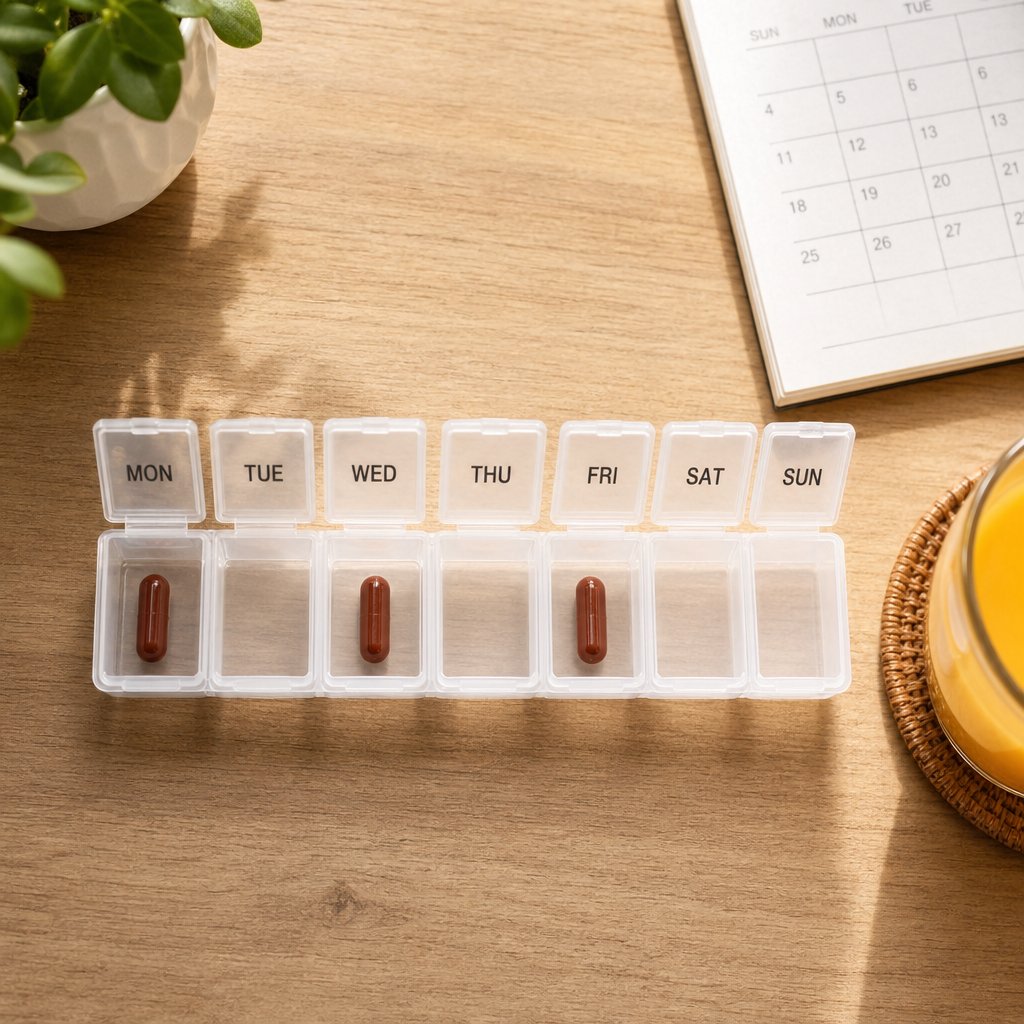
- Monday-Wednesday-Friday dosing: Take your full iron dose (for example, one iron bisglycinate capsule delivering 25 mg elemental iron) on three non-consecutive days per week. This gives hepcidin a full reset between each dose and cuts your weekly GI exposure nearly in half.
- Every-other-day single morning dose: Take iron first thing in the morning on alternating days. Mark your calendar or set a phone reminder for Day 1, Day 3, Day 5, and so on. This is the simplest schedule and the one most closely studied in clinical trials.
- Split-dose on dosing days: If your doctor wants you on a higher total daily amount, split it into a morning and evening dose (e.g., 25 to 30 mg elemental iron at 7 AM and again at 7 PM) on your dosing days only. This reduces the per-dose gut burden while still delivering a meaningful total on each active day.
- Gradual ramp-up: Start with every-other-day dosing at a low amount for the first two weeks, then increase to daily dosing once your gut has adapted. This approach works well with products like Novaferrum iron (a liquid formulation) or slow release iron tablets, where you can fine-tune the amount incrementally.
Timing Iron Around Meals Without Killing Absorption
Morning dosing on an empty stomach consistently produces the highest absorption rates. Hepcidin follows a natural circadian rhythm, sitting at its lowest point in the early morning, which means your gut's iron gates are wide open at that time. If your stomach can handle it, taking iron 30 to 60 minutes before breakfast is the ideal window.
But ideal and realistic are not always the same thing. If morning fasting doses trigger diarrhea severe enough that you skip the next dose entirely, the math changes fast. An iron tablet taken with a light snack that absorbs at 50% efficiency still delivers more iron over a month than a fasting dose that gets abandoned after a week of gut misery. Consistency matters more than perfection here.
If you need to take iron with food, keep the meal small and low in absorption inhibitors. A piece of toast with a glass of orange juice is a reasonable compromise: the food buffers direct gut irritation while the vitamin C partially offsets the absorption reduction. Avoid pairing iron with dairy, coffee, tea, or calcium-rich foods, all of which compete with or bind iron and further reduce uptake. Some people also notice greenish stool during pregnancy or other life stages when combining iron with certain foods, which is typically harmless and reflects how iron interacts with bile during digestion.
The tarry meaning behind dark or black stools after iron supplementation is simply unabsorbed iron oxidizing as it moves through the digestive tract. It is not a cause for concern on its own. What does matter is whether your stools are consistently loose, watery, or accompanied by cramping beyond the first two weeks of supplementation. If alternate-day dosing, dose-splitting, and meal timing still have not resolved persistent diarrhea, the next lever to pull is what you eat around your iron doses, and how you support the gut bacteria that iron supplementation tends to disrupt.

Dietary Strategies to Calm Your Gut While Taking Iron
Dosing schedules and formulation switches address how iron enters your body. What you eat around those doses shapes how your gut responds to it. The right food pairings can pull more iron into your bloodstream (leaving less behind to cause trouble), while the wrong ones can sabotage absorption and amplify diarrhea at the same time. This is the part of iron therapy most people overlook, and it is one of the easiest levers to adjust without changing your supplement at all.
Foods That Improve Iron Absorption and Reduce Gut Irritation
The logic here is simple: anything that helps your body absorb more iron from each dose means less unabsorbed iron sitting in your intestines fueling oxidative damage, osmotic water draw, and bacterial imbalance. Vitamin C is the most powerful dietary tool for this job. It converts ferric iron (Fe3+) into the more absorbable ferrous form (Fe2+) and forms a soluble complex that keeps iron available for uptake rather than binding to inhibitors in the gut.
You do not need a megadose supplement to get the benefit. Pairing your iron tablet with any of these vitamin C-rich foods makes a measurable difference:
- Bell peppers — one medium red bell pepper delivers about 150 mg of vitamin C, more than an orange
- Strawberries — a half-cup provides roughly 50 mg of vitamin C and is easy on the stomach
- Citrus fruits — a small glass of orange juice or half a grapefruit alongside your iron dose is the classic pairing for good reason
- Kiwi — two small kiwis deliver over 100 mg of vitamin C with minimal fiber bulk
- Tomatoes — fresh or lightly cooked, they add vitamin C without heavy fiber that could speed transit time
A literature review in Nutrients confirms that ascorbic acid is among the most effective enhancers of intestinal iron absorption, working in part by counteracting the inhibitory effects of phytates and polyphenols found in other foods. Even small amounts of vitamin C can have a noticeable effect on how much iron your body actually takes in. If you have ever wondered why does blood taste like metal, it is because hemoglobin contains iron, and that metallic flavor is a direct reminder of how central this mineral is to your blood chemistry. Getting more of it absorbed efficiently means less of it wasted in your gut.
What to Avoid When Taking Iron Supplements
Some foods and drinks actively block iron absorption. Eating them at the same time as your iron dose means more of that iron passes through unabsorbed, which is exactly the scenario that triggers diarrhea. You do not need to eliminate these from your diet entirely. You just need to space them away from your iron dose by at least two hours.
- Dairy products (milk, cheese, yogurt). Calcium and iron compete for the same absorption pathways in the digestive tract. Consuming them together in large amounts reduces how much iron your body takes in. MedlinePlus specifically advises waiting at least two hours after consuming milk, calcium supplements, or antacids before taking iron.
- Coffee and tea. Both contain polyphenols and tannins that bind to iron and form insoluble complexes your body cannot absorb. This applies to black tea, green tea, and even decaffeinated coffee, which still carries the same binding compounds. Waiting one to two hours after your iron dose before having your morning coffee is usually enough to avoid the interaction.
- High-fiber foods. Whole grains, raw vegetables, bran, and legumes contain phytates that inhibit non-heme iron absorption. They also accelerate intestinal transit time, which can worsen diarrhea when your gut is already irritated by iron. During active diarrhea episodes, reducing fiber intake temporarily gives your intestines a chance to recover. Preparation methods like soaking, sprouting, and cooking can lower phytate levels in these foods when you reintroduce them.
- Soy-based foods. Tofu, soy milk, and edamame contain compounds that interfere with iron uptake, especially when consumed alongside iron-rich meals or supplements. Moderation and spacing are the key adjustments here, not avoidance.
A common question people ask is can iron supplements cause diarrhea even when taken correctly. The answer is yes, especially if absorption-blocking foods are consumed at the same time. Every food interaction that reduces absorption increases the amount of free iron left in the gut, and that unabsorbed iron is what drives the GI symptoms. Timing your meals strategically is one of the simplest ways to reduce iron pills side effects without changing your supplement or dose at all.
Supporting Your Gut Microbiome During Iron Therapy
Here is the piece most iron-supplement guides skip entirely: what unabsorbed iron does to your gut bacteria. A review published in Nutrients found that excess iron in the intestinal environment preferentially feeds pathogenic bacteria like Enterobacteriaceae and pathogenic E. coli, while reducing beneficial species like Bifidobacterium and Lactobacillus. In studies on Kenyan infants, iron fortification increased fecal calprotectin levels (a marker of intestinal inflammation) and shifted the microbiome toward a more inflammatory profile. The same review notes that only about 10% of dietary iron is absorbed, with the remaining 90% excreted through fecal matter, directly affecting microbiota balance.
This microbial imbalance is not just a theoretical concern. It actively contributes to diarrhea, bloating, and abdominal discomfort during iron therapy. Rebuilding and maintaining a healthy gut flora can help counteract this effect. Probiotic-rich foods are a practical starting point:
- Yogurt and kefir — contain live Lactobacillus and Bifidobacterium strains that help restore the beneficial bacteria iron supplementation tends to suppress. Because dairy inhibits iron absorption, time these at least two hours away from your iron dose.
- Sauerkraut and kimchi — naturally fermented vegetables rich in Lactobacillus species. The lactic acid produced during fermentation may also increase dietary iron bioavailability, creating a dual benefit.
- Miso and tempeh — fermented soy products that deliver probiotics along with other nutrients. Space them away from your iron dose due to the soy content.
- Probiotic supplements — if fermented foods are not part of your regular diet, a daily probiotic containing Lactobacillus plantarum, L. acidophilus, or Bifidobacterium longum can help. Research shows that L. plantarum 299v specifically may improve non-heme iron absorption in some populations, though results vary. A probiotic supplement is best taken at a different time of day than your iron tablet.
The connection between probiotics and iron goes deeper than just symptom relief. Certain probiotic strains produce metabolites that convert ferric iron into the more absorbable ferrous form, effectively acting as biological iron enhancers. Lactobacillus fermentum, for example, exhibits ferric-reducing activity through a metabolite called p-hydroxyphenyllactic acid, which increases iron uptake through the DMT1 transporters in intestinal cells. In Spanish-speaking communities, where ferrous sulfate is commonly known as sulfato ferroso, the same gut-health principles apply regardless of the product name or language on the label.
For acute diarrhea flare-ups that break through despite these strategies, the BRAT diet (bananas, rice, applesauce, toast) remains a reliable short-term tool. It firms stools, replaces lost potassium, and gives your irritated intestinal lining a rest from complex foods. Use it for 24 to 48 hours during a flare, then gradually reintroduce probiotic-rich foods and vitamin C sources as symptoms settle. If you are wondering why is my poop red after eating beets or certain colored foods during recovery, that is typically harmless pigment passing through and not a sign of bleeding.
These dietary strategies work best when layered on top of the dosing adjustments and formulation switches from earlier sections. Pairing a gentler iron form like ferrous fumarate or bisglycinate with vitamin C-rich foods, spacing calcium and coffee away from your dose, and supporting your microbiome with probiotics creates a comprehensive approach that addresses every pathway through which iron causes gut distress. But even with all of these tools in place, some symptoms cross a line from manageable nuisance to medical concern, and knowing exactly where that line sits can prevent a serious problem from being dismissed as just another iron side effect.
When to See a Doctor About Iron-Related Diarrhea
Every strategy covered so far, from dose-splitting to dietary pairing to alternate-day scheduling, works within the range of normal, self-manageable iron side effects. But iron tablets can also mask or mimic symptoms of conditions that have nothing to do with supplementation. Knowing the difference between a harmless stool change and a genuine warning sign is not optional. It is the line between smart self-care and a missed medical emergency.
Normal Stool Changes vs Warning Signs
Iron changes the way your stool looks. That is expected, and in most cases, it is actually reassuring. When unabsorbed iron oxidizes as it moves through the digestive tract, it darkens stool to a deep green or matte black color. You might also notice black specks, a slightly firmer texture, or mild color shifts that look alarming but are completely benign. If you have been wondering how long does it take for iron pills to work, these color changes are often the earliest visible clue that the supplement is being processed by your body, typically appearing within the first few days of starting therapy.
Women experiencing green stool and pregnancy-related iron supplementation often worry about these shifts, but dark green or black stool during iron therapy is one of the most universal and harmless side effects. Ubie Health notes that iron-related stool is dark but not tarry, usually odorless or normal-smelling, and returns to its usual color after supplementation stops. These are signs iron pills are working, not signs something is wrong.
The concern starts when stool characteristics go beyond simple color changes. Melena, which refers to true upper GI bleeding, produces stool that is jet black, shiny, sticky or tar-like in texture, and carries a distinct, extremely foul odor. That is a fundamentally different presentation from the matte, dark stool iron supplements produce. If you are taking a product like the Slow FE iron supplement or any other ferrous sulfate formulation and notice this kind of tarry, viscous stool, do not assume it is just a side effect.
Red-Flag Symptoms That Need a Doctor
Some symptoms warrant prompt medical attention regardless of whether you are taking iron. Use this list as a decision framework. If you experience any of the following, contact your healthcare provider or seek urgent care:
- Black, tarry, sticky stools with a foul odor — this pattern suggests upper GI bleeding (melena), not normal iron-related darkening. Causes can include stomach ulcers, gastritis, esophageal varices, or erosion from NSAIDs and blood thinners.
- Bright red blood in your stool — visible blood points to lower GI bleeding and needs evaluation, especially if you are also taking antibiotics (which can cause mucus stool or other bowel changes that complicate the picture).
- Severe abdominal pain — mild cramping during the first week of iron therapy is common, but sharp, localized, or burning pain that worsens on an empty stomach could indicate a developing ulcer or other GI damage.
- Diarrhea lasting more than two weeks despite adjustments — if you have tried dose-splitting, alternate-day dosing, food pairing, and a gentler formulation and diarrhea persists, your body is telling you this approach is not working.
- Signs of dehydration — dizziness when standing, dark-colored urine, dry mouth, rapid heartbeat, or reduced urine output all indicate fluid loss has outpaced replacement. Chronic diarrhea from iron can cause this faster than most people expect.
- Unexplained vomiting, especially with blood or material that looks like coffee grounds — vomiting blood or coffee-ground-like material is a hallmark of upper GI bleeding and requires emergency evaluation.
- Fever alongside diarrhea — iron-related diarrhea does not cause fever. If both are present, an infection or inflammatory condition may be involved.
GoodRx pharmacists advise seeking medical care right away if diarrhea is accompanied by severe abdominal pain or fever, as these could be signs of a more serious issue. If you are dealing with nausea alongside your iron side effects, some people find that chewing sugar-free gum helps settle the stomach, which addresses the common question of whether does gum help with nausea. It is a small comfort measure, but it can make the experience of taking iron tablets more tolerable while you work through the adjustment period.
When Persistent Diarrhea Means It Is Time to Switch
Here is the critical distinction: temporary diarrhea during the first one to two weeks of iron therapy is your gut adjusting. Persistent diarrhea beyond that window, especially after you have already tried the strategies in this guide, is a signal to change course with professional guidance, not to simply stop taking iron and hope for the best.
Your doctor has several options at this point. They may switch you to a different oral formulation, adjust your total daily dose downward, or in cases where oral iron consistently fails, recommend intravenous iron infusion. Healthcare On Time notes that IV iron bypasses the gastrointestinal tract entirely, delivering iron directly into the bloodstream with zero gut-related side effects. It is not the first-line approach, but it exists precisely for people whose digestive systems cannot tolerate oral therapy despite multiple adjustments.
Sulfate ferreux side effects, whether you know the product by its English or French name, follow the same biological patterns. If ferrous sulfate is the culprit, switching to a chelated form, a liquid formulation, or even a polysaccharide iron complex may resolve the problem entirely. Your provider can also run a fecal occult blood test to rule out internal bleeding and check electrolyte panels to ensure chronic diarrhea has not caused dangerous imbalances in potassium or sodium.
The worst outcome is not needing to switch iron forms. It is abandoning iron therapy altogether because no one helped you find a tolerable alternative. Armed with the right formulation, dose, and timing, the next step is choosing a supplement that your gut can handle for the long haul.

Choosing a Gentler Iron Supplement That Your Gut Can Handle
Finding the right anemia medication is not about picking the strongest option on the shelf. It is about picking the one your body will actually tolerate day after day, week after week, until your ferritin levels recover and your energy returns. Every strategy in this guide, from alternate-day dosing to vitamin C pairing to microbiome support, works better when the underlying iron form is already gentle on your digestive system. So how do you choose?
What to Look for in a Gut-Friendly Iron Supplement
When shopping for a ferritin supplement or any oral iron product, prioritize these features in order of impact on tolerability:
- Try chelated iron first. Iron bisglycinate or iron glycinate should be your starting point. The amino acid shell protects your intestinal lining from direct contact with free iron, and clinical data shows it produces equivalent hemoglobin recovery at roughly one-quarter the dose of standard iron sulfate. Less elemental iron per dose means less unabsorbed iron, which means less diarrhea. Products using chelated iron consistently rank lowest for GI side effects across systematic reviews of oral iron tolerability.
- Consider liquid iron for flexible dose control. Liquid formulations let you start at a very low dose and increase gradually as your gut adapts. This precision is impossible with fixed-dose tablets. If even 25 mg of elemental iron triggers symptoms, a liquid lets you begin at 10 mg and titrate upward over weeks. BBC Good Food's expert testing rated California Gold Liquid Iron and Floradix among the top options for palatability and ease of use.
- Look for slow-release formulations. These meter out iron gradually across several hours rather than dumping the full dose onto your intestinal lining at once. The extended release reduces peak iron concentration in the gut lumen, which lowers both oxidative irritation and osmotic water draw. A systematic review published in Current Medical Research and Opinion found that extended-release ferrous sulfate with mucoproteose had the lowest incidence of adverse effects (just 4.1% overall) compared to all other oral iron forms studied.
- Explore iron gummies. Gummies typically deliver lower elemental iron per serving (often 14 to 20 mg), which naturally reduces the unabsorbed iron load. They are also easier to take consistently because they taste pleasant, removing the psychological barrier of swallowing a large metallic-tasting tablet. For people whose iron supplements side effects have driven them to skip doses entirely, gummies can restore adherence simply by making the experience less unpleasant.
- Choose capsules over standard tablets. Capsules often dissolve further along the digestive tract than tablets, bypassing the stomach where much of the initial irritation occurs. Some capsule formulations use enteric coatings or liposomal delivery to further protect the upper GI tract. Iron Zooki capsules, for example, use liposomal technology that manufacturers claim enhances absorption while reducing direct gut exposure.
If you have been taking a standard FeSO4 (iron sulfate) tablet and experiencing persistent diarrhea, moving to any of the options above represents a meaningful step toward tolerability. The traditional ferrous sulfate formulation remains the most widely prescribed because it is inexpensive and well-studied, but "most prescribed" does not mean "best tolerated." Your gut has already told you that.
Why Iron Supplement Format Matters for Tolerability
The growing demand for gut-friendly iron supplements is driving real innovation in product formats. The global oral iron supplements market is projected to reach USD 6.52 billion by 2034, growing at a 9.06% CAGR, and much of that growth is fueled by consumers seeking alternatives to traditional tablets that cause GI distress. Manufacturers with flexible production capabilities, including those offering OEM/ODM services like ZhuFeng, help nutrition brands bring these better-tolerated options to market across multiple formats: hard capsules, soft capsules, gummy candy, powder and granules, and oral liquids. For supplement brands and private label sellers developing iron products, this kind of manufacturing flexibility enables customized formulations, such as bisglycinate in slow-release capsules or low-dose iron gummies, that directly address the tolerability issues driving consumer abandonment.
Format is not just a marketing decision. It is a clinical one. A person battling fatigue who needs iron supplements but cannot tolerate tablets has fundamentally different needs than someone who simply prefers gummies for convenience. The format determines where and how iron is released in the digestive tract, how much elemental iron hits the intestinal lining at once, and whether the patient will actually take it consistently enough to resolve their deficiency. If you have noticed unusual stool changes and wondered why do faeces float during iron therapy, it is often related to changes in gut gas production and fat absorption that accompany microbiome shifts, not a sign of treatment failure.
Stopping iron therapy is rarely the answer. Finding the right form, dose, and timing almost always is.
The Bottom Line on Stopping Iron-Induced Diarrhea
You do not have to choose between treating your anemia and keeping your gut intact. The entire framework covered in this guide works as a layered system: start with the simplest fix, and escalate only as needed. To recap the priority sequence:
- Manage acute episodes with hydration and the BRAT diet
- Lower your per-dose iron load by splitting or reducing the amount
- Take iron with a small snack and vitamin C to buffer irritation and boost absorption
- Switch from iron sulfate to a chelated or slow-release form
- Adopt alternate-day dosing to reset hepcidin and improve fractional absorption
- Support your gut microbiome with probiotics timed away from your iron dose
- See a doctor if symptoms persist beyond two weeks or red-flag signs appear
The right iron supplement is the one you will actually take. Consistency over weeks and months is what rebuilds iron stores, resolves fatigue, and restores the energy that iron deficiency stole from you. Every adjustment in this guide exists to keep you on that path without your gut paying the price.
Frequently Asked Questions About Iron-Induced Diarrhea
1. How long does diarrhea from iron tablets usually last?
For most people, iron-related diarrhea is a temporary adjustment response that improves within one to two weeks as the gut adapts to the increased iron load. If symptoms persist beyond two weeks despite trying dose adjustments, food pairing, or alternate-day scheduling, it typically signals the need for a formulation change rather than continued waiting. Switching from ferrous sulfate to a chelated form like iron bisglycinate often resolves persistent symptoms because the amino acid bond shields the intestinal lining from direct iron contact and improves absorption efficiency, leaving less unabsorbed iron to irritate the gut.
2. Is alternate-day iron dosing as effective as taking iron every day?
Clinical evidence from multiple randomized controlled trials shows that alternate-day iron dosing produces comparable hemoglobin recovery to daily dosing. This works because of hepcidin, a liver hormone that temporarily blocks iron absorption for about 24 hours after each dose of 60 mg or more. By waiting 48 hours between doses, hepcidin resets fully, allowing fractional absorption to increase by 40 to 50% per dose. The net result is similar total iron uptake with significantly fewer gastrointestinal side effects, which is why gastroenterology and hematology guidelines now recommend this approach for patients who struggle with daily oral iron.
3. What is the best form of iron supplement for sensitive stomachs?
Iron bisglycinate (chelated iron) is consistently the gentlest option for sensitive stomachs. Clinical trials show it achieves equivalent anemia correction at roughly one-quarter the elemental iron dose of standard ferrous sulfate, with GI side effects occurring in only about 17% of users compared to 33% with sulfate. Slow-release formulations rank second, as they meter iron out gradually rather than releasing it all at once. Liquid iron offers a third path by allowing precise dose titration starting as low as 10 mg. For brands developing gut-friendly iron products, OEM/ODM manufacturers like ZhuFeng offer flexible format options including slow-release capsules, gummies, and oral liquids that address these tolerability needs.
4. Can I take iron with food to prevent diarrhea even though it reduces absorption?
Yes, and in many cases you should. While taking iron with food can reduce absorption by up to 50%, the math favors tolerability over theoretical efficiency. An iron supplement taken consistently with a small snack delivers far more iron over weeks and months than one abandoned after a few days of severe diarrhea. The key is choosing the right food pairing: a light, low-fiber snack with a vitamin C source like orange juice partially offsets the absorption reduction while buffering your gut from direct iron irritation. Avoid dairy, coffee, tea, and high-fiber foods at the same time, as these further block iron uptake.
5. When should I see a doctor about diarrhea from iron supplements?
Seek medical attention if diarrhea persists beyond two weeks despite trying dose adjustments and formulation switches, or if you notice red-flag symptoms including black tarry stools with a foul odor (which may indicate GI bleeding rather than normal iron-related darkening), bright red blood in stool, severe abdominal pain, signs of dehydration like dizziness or dark urine, vomiting with coffee-ground-like material, or fever alongside diarrhea. Your doctor can rule out internal bleeding with a fecal occult blood test, check electrolyte levels, and discuss alternatives such as intravenous iron infusion that bypasses the gut entirely.