What Is Chinese 5 Spice Powder and Why It Matters
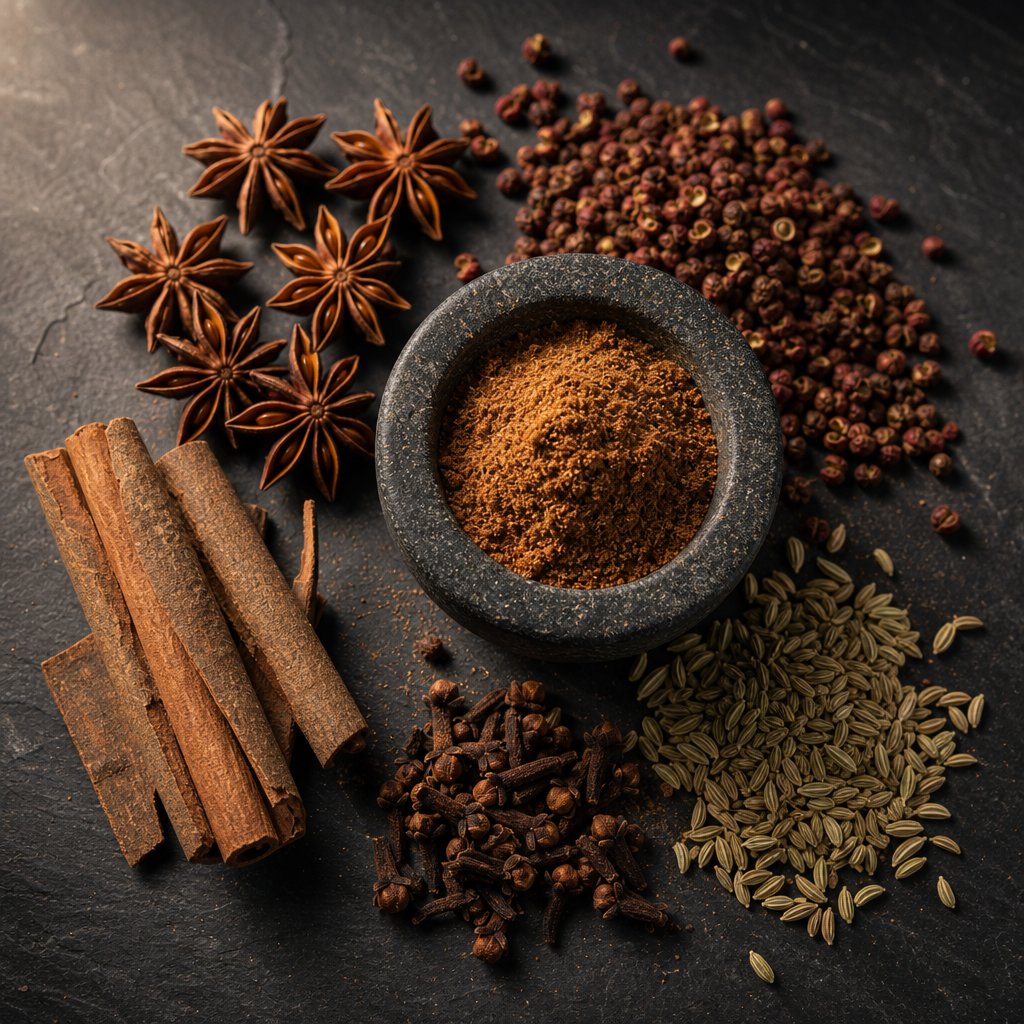
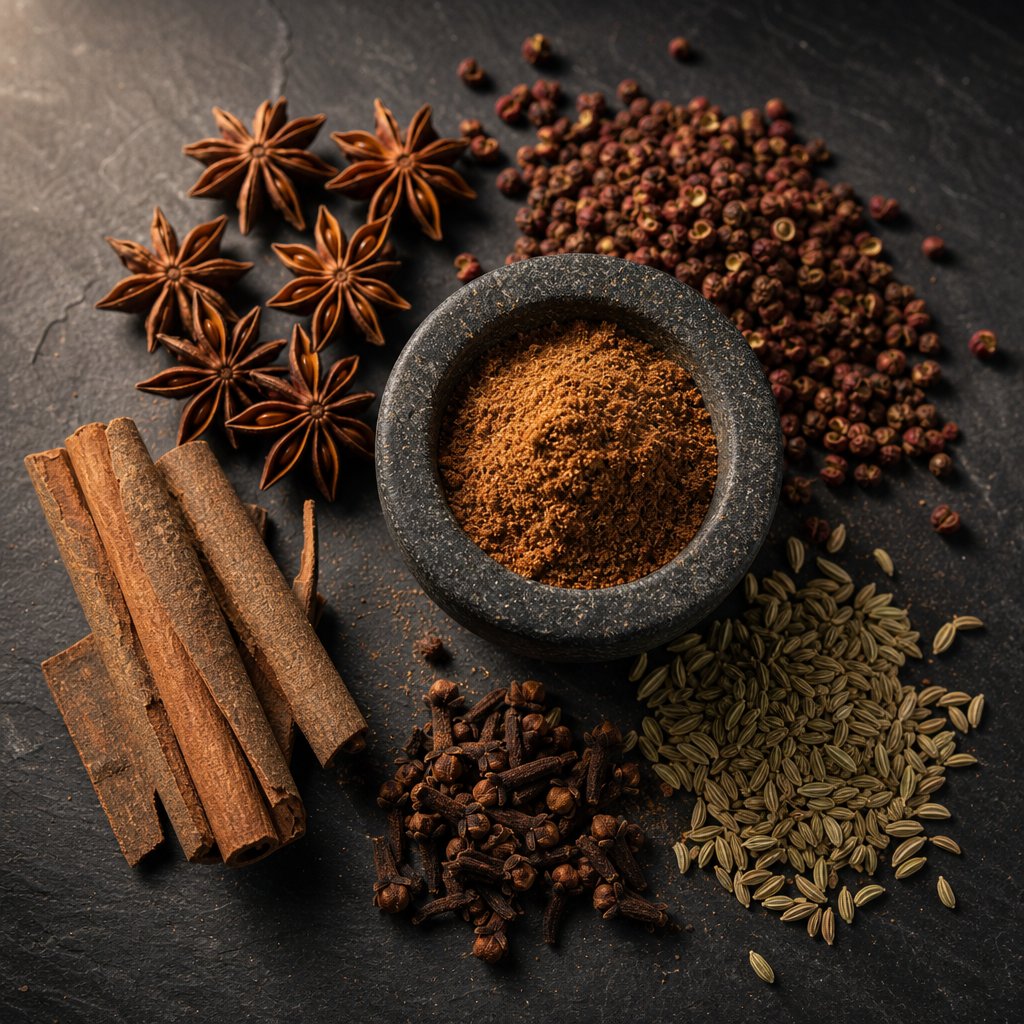
Chinese five spice powder is a finely ground blend of five aromatic spices — star anise, Sichuan peppercorn, cassia (Chinese cinnamon), cloves, and fennel seeds — that forms one of the most recognizable seasonings in Chinese cooking. When you open a jar of this blend, you're hit with a wave of warmth: licorice-like sweetness from the star anise, a tingly citrus bite from the peppercorns, deep woody heat from the cassia and cloves, and a gentle herbal finish from the fennel. It smells complex because it is complex.
This isn't just another spice mix sitting in the back of your cabinet. Chinese five spice has been flavoring roasted meats, marinades, braised dishes, and simmered rice across China for centuries. It's the backbone of Cantonese-style roast pork (char siu), a key player in red-cooked braises, and a quiet force behind countless stir-fries and dry rubs. A little goes a long way — even a quarter teaspoon can transform a dish.
Chinese 5 spice powder is a traditional ground spice blend combining star anise, Sichuan peppercorn, cassia, cloves, and fennel seeds, designed to achieve a harmonious balance of sweet, bitter, pungent, salty, and sour flavors rooted in Chinese five-element philosophy.
A Quick Definition of Five Spice Powder
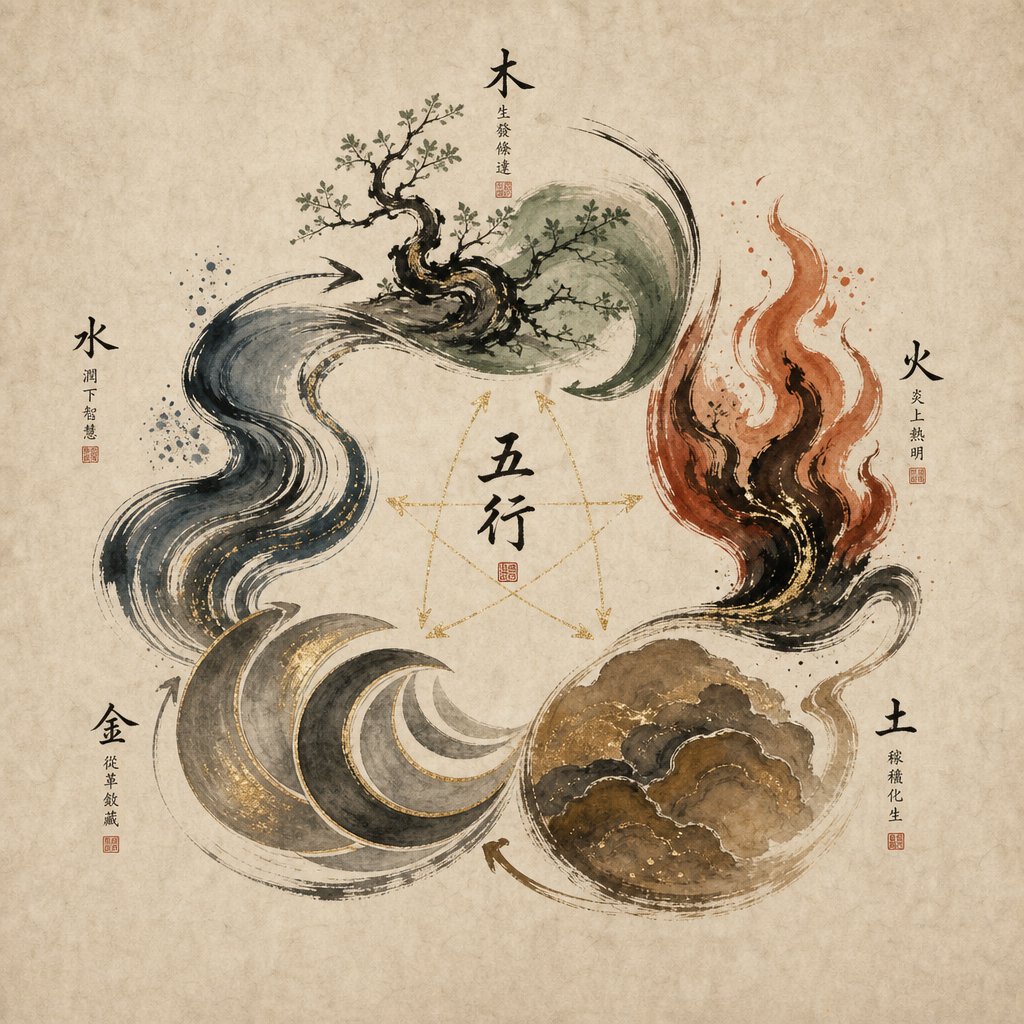
So what is chinese five spice at its core? The name itself offers a clue — but it's not quite what you'd expect. The "five" doesn't strictly refer to the number of ingredients in the jar. It points to the five classical flavors of traditional Chinese cuisine and the five elements (Wu Xing) they represent: wood, fire, earth, metal, and water. Each spice in the blend maps to one of these elements, creating a seasoning that's meant to bring balance to both the dish and the person eating it. Food as medicine, flavor as philosophy.
That philosophical depth is part of what makes five spice powder so different from, say, a generic "seasoning salt" or even a well-crafted garam masala. It was designed with intention — every component pulling its weight, every flavor checking another.
Why This Blend Stands Apart from Other Spice Mixes
Most spice blends aim for a single mood. Pumpkin spice is cozy. Cajun seasoning is bold. Italian herbs are bright. Five spice powder does something unusual: it warms and cools the tongue simultaneously. The cinnamon and anise bring sweetness and heat, while the fennel and cloves add a heady, almost cooling depth. Sichuan peppercorn introduces a numbing tingle that no other common blend replicates. As Serious Eats puts it, the effect on food becomes "positively haunting" — hard to pin down, impossible to ignore.
This layered complexity is why 5 spice powder pairs so naturally with rich, fatty proteins like duck, pork belly, and goose. It enhances the meat's richness while providing enough aromatic bite to cut through the fat. You'll find it equally at home in sweet applications — cookies, fruit galettes, even whipped cream — where its warmth adds depth without sugary heaviness.
Understanding what makes this blend tick, from its philosophical roots to its practical kitchen applications, changes how you use it. And that's exactly where most home cooks go wrong.
The Ancient Philosophy Behind Five Spice Powder
Most spice blends exist because someone thought a few flavors tasted good together. Chinese five spice powder exists because an entire civilization believed flavor could heal the body. The five spice definition goes far deeper than a list of ingredients — it's a culinary expression of one of the oldest philosophical systems in the world.
The Five Elements Theory and Flavor Harmony
The framework behind this blend is Wu Xing (五行), often translated as the "Five Elements" or "Five Phases." Rooted in Taoist philosophy, Wu Xing describes five fundamental forces — wood, fire, earth, metal, and water — that interact in cycles of generation and restraint. Wood feeds fire. Fire creates earth (ash). Earth yields metal. Metal collects water. Water nourishes wood. Each element strengthens one force while keeping another in check, like a self-correcting system built into nature itself.
What does this have to do with cooking? In traditional Chinese thought, each element corresponds to a specific flavor. These five flavors — sour, bitter, sweet, pungent, and salty — are believed to nourish specific organ systems and maintain internal equilibrium. Sour supports the liver. Bitter benefits the heart. Sweet tonifies the spleen. Pungent opens the lungs. Salty strengthens the kidneys. A dish that balances all five flavors, then, isn't just delicious — it's therapeutic.
The name 五香粉 (wuxiang fen) literally translates to "five fragrance powder" or "five spice powder" in Chinese. The "five" references this elemental balance rather than a strict ingredient count. Here's how the traditional mapping works:
| Element | Flavor | Associated Spice | Organ System |
|---|---|---|---|
| Wood | Sour | Star Anise | Liver / Gallbladder |
| Fire | Bitter | Cloves | Heart / Small Intestine |
| Earth | Sweet | Cassia (Cinnamon) | Spleen / Stomach |
| Metal | Pungent | Sichuan Peppercorn | Lung / Large Intestine |
| Water | Salty | Fennel Seeds | Kidney / Bladder |
This isn't a rigid formula — different sources assign the five spices to elements in slightly different ways. The principle matters more than the exact mapping. When you combine these chinese spices into a single blend, you're creating what Wu Xing philosophy considers a complete flavor cycle: each taste intensifying, restraining, and harmonizing the others.
Scholar Hong Guang-zhu noted that Chinese society long believed food flavors group into "salty, sour, bitter, pungent, and sweet," and that combining these base flavors in different ratios would yield entirely new taste profiles. The blend isn't five separate flavors fighting for attention — it's five forces creating something greater than the sum of their parts.
Historical Origins of the Blend
Pinning down exactly when five spice in chinese cooking first appeared is tricky. No single inventor claimed it. Instead, the blend evolved gradually over centuries as trade routes brought new aromatics into Chinese kitchens and as cooks experimented with combining flavors according to Wu Xing principles.
One of the earliest documented references comes from the Song Dynasty (A.D. 960–1279). A cookbook from that era lists spice ingredients for wet fermented soybeans including "star anise, fennel, caoguo, cinnamon, costus root, chenpi, Sichuan peppercorns, dried shredded ginger, and almonds" — a clear ancestor of the modern chinese five spice blend. The ingredients weren't yet distilled into the tight five-component formula we know today, but the philosophy of layering aromatics for balance was already well established.
Interestingly, the five spices weren't always ground into powder. Historically, cooks packed whole spices into small muslin bags and dropped them into braising liquids — similar to how French cooks use a bouquet garni. And where did you buy these spices? Not at a grocery store. As Theresa Lin recalled in Taiwan Panorama, "to buy five-spice we always went to a Chinese herbal medicine shop, where the shopkeeper would make up the mixture on the spot from the individual spices, just like filling a herbal prescription." The line between kitchen and apothecary was essentially nonexistent.
This connection to traditional Chinese medicine reinforced the yin-yang philosophy embedded in the blend. Foods in TCM are classified by their thermal nature — warming or cooling — and their effect on the body's energy. Cinnamon and cloves are warming (yang). Fennel is warm but gentler. Star anise bridges sweet and warm. Sichuan peppercorn disperses and moves energy. Together, the blend was seen as a way to bring internal harmony through everyday cooking, not just through medicinal prescriptions.
It took until the modern era for commercially powdered versions of 五香粉 to become widely available, reducing the need for whole-spice preparation. But the philosophy hasn't changed. Whether you're buying a pre-ground jar or toasting whole spices yourself, the intent behind the blend remains the same: balance in every bite, rooted in a worldview where flavor and wellness are inseparable.
That philosophical foundation explains why the blend works — but it doesn't tell you what each spice actually tastes like on its own, or why removing even one ingredient throws the whole system off.
Breaking Down the Five Core Spices
Knowing the philosophy is one thing. Knowing what each spice actually does on your tongue — and why it belongs in the blend — is what separates a cook who uses five spice powder from one who understands it. So what are the five spices in chinese five spice powder, and what makes each one irreplaceable?
Think of the blend like a five-piece band. Each member plays a distinct role. Remove the drummer and the rhythm collapses. Swap the bassist for a second guitarist and the low end disappears. The same principle applies here. Each spice occupies a specific frequency in the flavor spectrum, and the blend only achieves its signature complexity when all five are present and properly balanced.
- Star Anise — The dominant voice. Provides deep, licorice-like sweetness and warm aromatic depth.
- Sichuan Peppercorn — The wildcard. Delivers numbing, citrusy heat and opens the palate.
- Cassia (Chinese Cinnamon) — The backbone. Contributes bold, woody warmth and spicy sweetness.
- Cloves — The intensifier. Adds pungent, almost medicinal warmth and floral bitterness.
- Fennel Seeds — The bridge. Offers mild, grassy anise flavor that lightens and unifies the blend.
Star Anise and Its Dominant Role
If you've ever wondered what spices are in five spice powder chinese cooking relies on most heavily, star anise is the answer. It's the lead vocalist — the flavor you recognize first and remember longest. Crack open a whole star anise pod and you'll get an immediate rush of sweet, warm licorice aroma with undertones of camphor and a faint woody bitterness at the edges.
On the tongue, star anise delivers a profound sweetness that isn't sugary. It's aromatic sweetness — the kind that lingers in the back of your throat and perfumes fatty meats from the inside out. This is why it pairs so naturally with pork belly and roast duck. The compound responsible for most of this flavor is anethole, the same molecule found in anise seed and fennel, but concentrated far more intensely in star anise.
In the blend, star anise typically makes up the largest proportion. It sets the aromatic baseline that every other spice plays against. Without it, the blend loses its signature warmth and becomes a disjointed collection of sharp, competing flavors. With too much of it, the blend turns cloyingly sweet and one-dimensional — more like a dessert spice than a savory seasoning.
Sichuan Peppercorn, Cloves, Cinnamon, and Fennel
Sichuan Peppercorn: This is the ingredient that confuses people most. It's not a pepper. It's not hot in the chili sense. It's the dried husk of a berry from the prickly ash tree, and it produces a sensation called ma — a tingling, buzzing numbness that feels almost electric on the lips and tongue. Imagine biting into a mild lemon zest that vibrates. That's Sichuan peppercorn.
The aroma is citrusy and piney, with a faint floral quality. What makes it essential to the blend isn't just its own flavor — it's what it does to your perception of everything else. The numbing effect literally opens up taste receptors, making the sweetness of star anise taste sweeter, the warmth of cassia feel warmer, and the pungency of cloves hit deeper. Remove Sichuan peppercorn and the blend goes flat. It still tastes good, but it loses that three-dimensional quality that makes five spice powder feel alive in your mouth.
Cassia (Chinese Cinnamon): Forget the delicate, papery Ceylon cinnamon you sprinkle on oatmeal. Cassia is its bolder, rougher cousin — thicker bark, more aggressive flavor, and a spicy bite that Ceylon doesn't have. When you smell cassia, you get warm brown sugar, red-hot candy, and a woody depth that borders on savory. It's the spice that grounds the blend, preventing the floral and sweet notes from floating away into perfume territory.
Cassia provides what you might call the rhythmic foundation. It's steady, warm, and persistent. In the blend, it bridges the gap between the sweet aromatics (star anise, fennel) and the sharper, more pungent elements (cloves, Sichuan peppercorn). It also contributes a slight astringency that dries the palate just enough to keep rich dishes from feeling heavy.
Cloves: Intense is the word. Cloves are dried flower buds packed with eugenol, an essential oil so potent it's used as a dental anesthetic. On the nose, cloves smell sweet, warm, and slightly medicinal — like a spiced candle turned up to eleven. On the tongue, they deliver a sharp, almost biting warmth followed by a lingering numbness (different from Sichuan peppercorn's tingle — more of a deep, dull ache).
In the blend, cloves serve as the intensifier. They add depth and a dark, brooding quality that prevents the mix from reading as simply "sweet and warm." But they're a bully if you let them dominate. Too much clove and the entire blend tastes like a dentist's office. The key is restraint — just enough to add complexity without overwhelming the other four players.
Fennel Seeds: The quiet hero. Fennel seeds share the anise family's licorice character, but at a fraction of star anise's intensity. Where star anise is bold and heavy, fennel is light, grassy, and slightly sweet with a green, herbal freshness. Imagine the difference between a bass drum and a snare — same rhythmic family, completely different energy.
Fennel's role in the blend is to lift and unify. It echoes star anise's sweetness at a higher, brighter register, creating continuity across the flavor profile. It also has a unique ability to cut through richness, which is why the spices in chinese 5 spice work so well with fatty proteins. Without fennel, the blend feels heavier and darker. With it, there's a sense of lightness and digestibility that rounds out the experience.
How the Five Spices Work Together
Here's the critical point most people miss when asking what spices are in chinese five spice: the blend isn't meant to taste like any single ingredient. A well-made five spice powder should hit your palate as a unified, almost unidentifiable warmth — sweet but not sugary, spicy but not hot, aromatic but not perfumy. If you can pick out individual spices easily, the ratio is off.
The interaction works on multiple levels. Star anise and fennel create a sweet anise foundation at two different intensities. Cassia adds warmth and structure beneath them. Cloves inject depth and a touch of bitterness that prevents the sweetness from becoming cloying. And Sichuan peppercorn activates the entire palate, amplifying every other flavor while adding its own citrusy spark.
Remove any one element and the balance collapses. Take out the Sichuan peppercorn and you lose dimension. Drop the fennel and the blend becomes too heavy. Skip the cloves and it reads as flat and one-note. This is what makes the chinese five spice ingredients so carefully chosen — each one exists not just for its own flavor, but for what it does to the flavors around it.
Understanding these individual roles is what separates someone who sprinkles five spice from a jar and hopes for the best from someone who knows exactly how to adjust the blend for a specific dish. And that's precisely where regional cooks across China have taken the concept in wildly different directions.
Regional Variations Across China and Asia
There is no single "correct" recipe for chinese five spice blend. Walk into a kitchen in Guangzhou and you'll encounter a sweeter, more anise-forward mix built for lacquered roast meats. Cross into Sichuan province and the peppercorn ratio jumps dramatically, delivering that signature numbing punch. Head south to Fujian and you might find additional aromatics sneaking into the formula entirely. The blend is a living tradition — shaped by local ingredients, regional palates, and the specific dishes each cuisine demands.
Cantonese, Sichuan, and Fujian Variations
Cantonese cooks lean heavily on star anise and cassia bark, producing a chinese spice mix that's warm, sweet, and fragrant. This makes sense when you consider what it's seasoning: char siu pork, roast goose, and soy-braised duck — dishes where caramelized sweetness and aromatic depth define the experience. Cloves and fennel play supporting roles, and Sichuan peppercorn stays restrained.
In Sichuan kitchens, the priorities flip. Sichuan peppercorn takes center stage, sometimes doubled or tripled relative to Cantonese proportions. The result is a blend with more bite, more tingle, and a citrusy edge that complements the region's chili-heavy cooking. You'll taste the 5 spices chinese cooks in this region favor most clearly in dry-rubbed meats and spicy braises where numbing heat is the point, not an afterthought.
Fujian variations get more creative. Some versions incorporate white pepper, dried ginger, or even sand ginger (galangal) alongside the core chinese 5 spices. These additions reflect Fujian's coastal cuisine, where seafood and lighter proteins benefit from brighter, more complex aromatics rather than the heavy sweetness that works on fatty roast pork.
| Region | Dominant Spices | Flavor Profile | Typical Dishes |
|---|---|---|---|
| Cantonese (Guangdong) | Star anise, cassia bark | Sweet, warm, fragrant | Char siu, roast goose, soy-braised duck |
| Sichuan | Sichuan peppercorn, star anise | Numbing, citrusy, bold | Dry-rubbed meats, spicy braises, mapo tofu |
| Fujian | Star anise, white pepper, sand ginger | Bright, aromatic, complex | Braised seafood, pork belly stews, spring rolls |
| Taiwanese | Star anise, cassia, black pepper | Savory-sweet, robust | Lu rou fan (braised pork rice), tea eggs |
| Vietnamese (pho spice) | Star anise, coriander, black cardamom | Warm, smoky, layered | Pho broth, meatballs, hoisin sauce |
Five Spice Adaptations Across Asia
The concept travels well beyond China's borders. Taiwan's version often mirrors Cantonese proportions but adds black pepper for a sharper savory edge — you'll taste it in lu rou fan (braised pork rice) and the deeply spiced tea eggs sold at every convenience store.
Vietnam takes the asian five spice concept in a distinctly different direction. The pho spice blend shares star anise, cloves, and fennel with its Chinese cousin but swaps in coriander seeds, black peppercorns, and Chinese black cardamom for a smokier, more savory profile. Cookbook author Andrea Nguyen notes that this blend can even substitute for Chinese five spice — you just need about 20 to 25 percent more because the grind is fluffier and less concentrated than commercial 5 spice chinese blends.
What connects all these asian 5 spice variations isn't a fixed ingredient list — it's the underlying principle of aromatic balance. Each regional adaptation asks the same question the original chinese five spices formula asked centuries ago: how do you create harmony in a single spoonful? The answers differ, but the philosophy holds.
Knowing these variations exist raises a practical question: if the blend is this flexible, what ratio should you actually use when making it at home?
How to Make Homemade Five Spice Powder
The flexibility of regional variations means you can tailor this blend to your own kitchen. Making a chinese five spice powder recipe from scratch takes about ten minutes, requires no special equipment beyond a skillet and a grinder, and produces a result that's dramatically more aromatic than anything sitting on a store shelf. Once you've done it once, you'll understand why serious cooks rarely go back to pre-ground jars.
The Standard Ratio for Balanced Five Spice
A good starting point is a balanced ratio that gives each spice room to contribute without any single flavor dominating. Based on Red House Spice's tested formula, here's the base ratio by weight:
1 part star anise : 1 part fennel seeds : 1/2 part Sichuan peppercorn : 1/2 part cassia cinnamon : 1/5 part cloves
In practical terms, that translates to 10g star anise, 10g fennel seeds, 5g Sichuan peppercorn, 5g cassia cinnamon, and 2g cloves. This yields roughly one-third cup of finished powder — enough for several weeks of cooking without the blend losing its punch.
Here's the step-by-step 5 spice powder recipe:
- Prep the spices. Separate star anise into individual pods. Remove any black seeds and stems from the Sichuan peppercorns. Break cassia sticks into smaller pieces so they toast evenly.
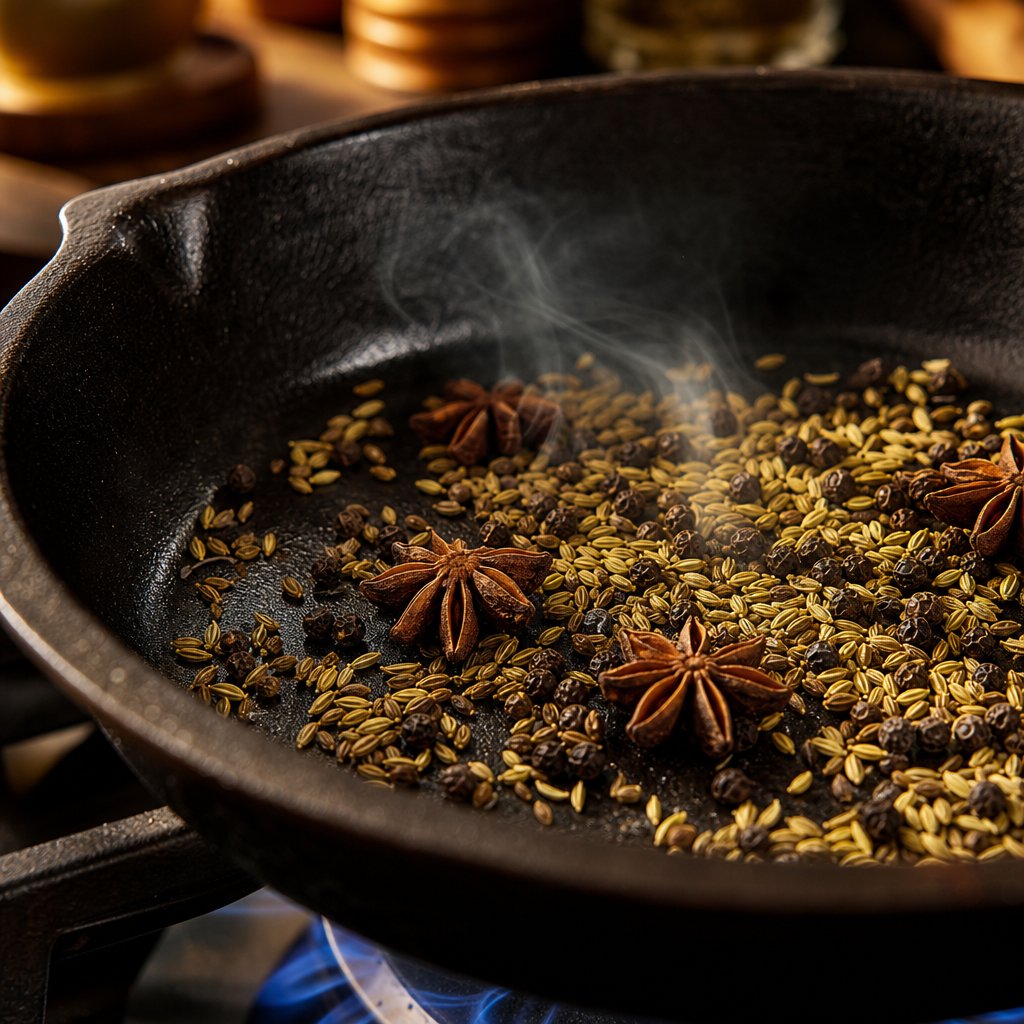
- Toast in a dry pan. Add all spices to a cool, dry skillet (cast iron or stainless steel works best). Turn heat to medium-low and shake the pan occasionally. When the fennel seeds darken slightly and you hear faint popping — usually 3 to 5 minutes — the volatile oils have activated. Transfer immediately to a plate to cool.
- Cool completely. This step matters. Grinding warm spices creates steam inside the grinder, introducing moisture that shortens shelf life and clumps the powder.
- Grind in short bursts. Pulse in a spice grinder or dedicated coffee grinder for a few seconds at a time. Pause between pulses to prevent overheating. Repeat until you have a fine, uniform powder.
- Sift (optional). Pass the powder through a fine-mesh sieve to catch any stubborn cassia bark fragments or peppercorn husks. Re-grind the larger bits if desired.
Why toast first? Heating whole spices in a dry pan wakes up their essential oils — the compounds responsible for aroma and flavor. The Spice House notes that toasting for 3 to 5 minutes transforms spices from "naturally flavorful" to "deeper and more complex," and also drives out residual moisture that would otherwise dull the grind. Skip this step and your homemade blend will taste flat compared to its potential.
How to Adjust Ratios for Different Dishes
The standard ratio is a starting point, not a rule. Imagine you're building a five spice recipe for a specific purpose — you'd shift the proportions the same way a bartender adjusts a cocktail for different palates:
- For roasted duck or char siu pork: Increase star anise to 1.5 parts. The extra sweetness caramelizes beautifully against fatty skin and complements hoisin-based glazes.
- For stir-fries and numbing dishes: Double the Sichuan peppercorn to 1 full part. This pushes the blend toward that electric, citrusy tingle that cuts through high-heat wok cooking.
- For milder applications (tofu, vegetables, baking): Increase fennel to 1.5 parts and reduce cloves to a pinch. The result is gentler, more herbal, and less likely to overpower delicate ingredients.
- For braised meats and stews: Bump cassia to 3/4 part. The extra cinnamon warmth deepens over long cooking times without turning bitter.
This chinese spice powder recipe flexibility is exactly why homemade beats store-bought for anyone cooking regularly with the blend. You're not locked into one manufacturer's interpretation of balance.
Store-Bought vs Freshly Ground Blends
Is there really a meaningful difference? Yes — and it comes down to volatile oils. Ground spices lose potency faster because their increased surface area accelerates oxidation. Those essential oils that give five spice its complexity? They start evaporating the moment the spices are ground. A freshly made batch hits your nose with an intensity that a six-month-old jar simply cannot match.
Store-bought blends also vary widely in quality. Some contain fillers, anti-caking agents, or stale spices ground months before packaging. Others are perfectly fine — especially from specialty spice retailers that grind in small batches. The key difference isn't necessarily "homemade good, store-bought bad." It's freshness. A store-bought jar opened last week will outperform a homemade batch ground six months ago.
For storage, keep your finished five spice recipe in an airtight glass jar, away from direct sunlight and heat. Ethan Frisch of Burlap & Barrel recommends keeping spices visible and accessible rather than buried in the back of a cabinet — you'll use them more often, which matters more than any storage trick. Ground blends stay at peak potency for about three to six months. After that, they won't spoil, but the aroma fades noticeably.
One practical tip: make small batches. The recipe above yields just enough for several weeks of regular use. Grinding fresh every few weeks takes minutes and guarantees you're always working with the most vibrant version of the blend.
With a jar of freshly ground five spice on your counter, the next question becomes the one that trips up most home cooks: how much to use, when to add it, and which dishes actually benefit from it.
Cooking with Five Spice Powder Like a Pro
A jar of freshly ground blend on your counter is only half the equation. The other half is knowing how to deploy it — which proteins love it, how much to use, and when during the cooking process it should hit the pan. Most chinese 5 spice recipes rely on restraint rather than generosity. This is a seasoning that whispers loudly; a quarter teaspoon can shift an entire dish, and a full tablespoon can ruin one.
Best Proteins and Dishes for Five Spice
Fatty, rich proteins are where chinese five spice seasoning truly shines. The blend's aromatic complexity cuts through richness the way acidity does — by providing contrast that keeps your palate engaged bite after bite. Lean proteins work too, but they need a lighter hand.
Here's a practical breakdown of chinese five spice uses organized by protein and cooking method, with recommended amounts per pound of meat:
| Protein | Cooking Method | Amount per Pound | Notes |
|---|---|---|---|
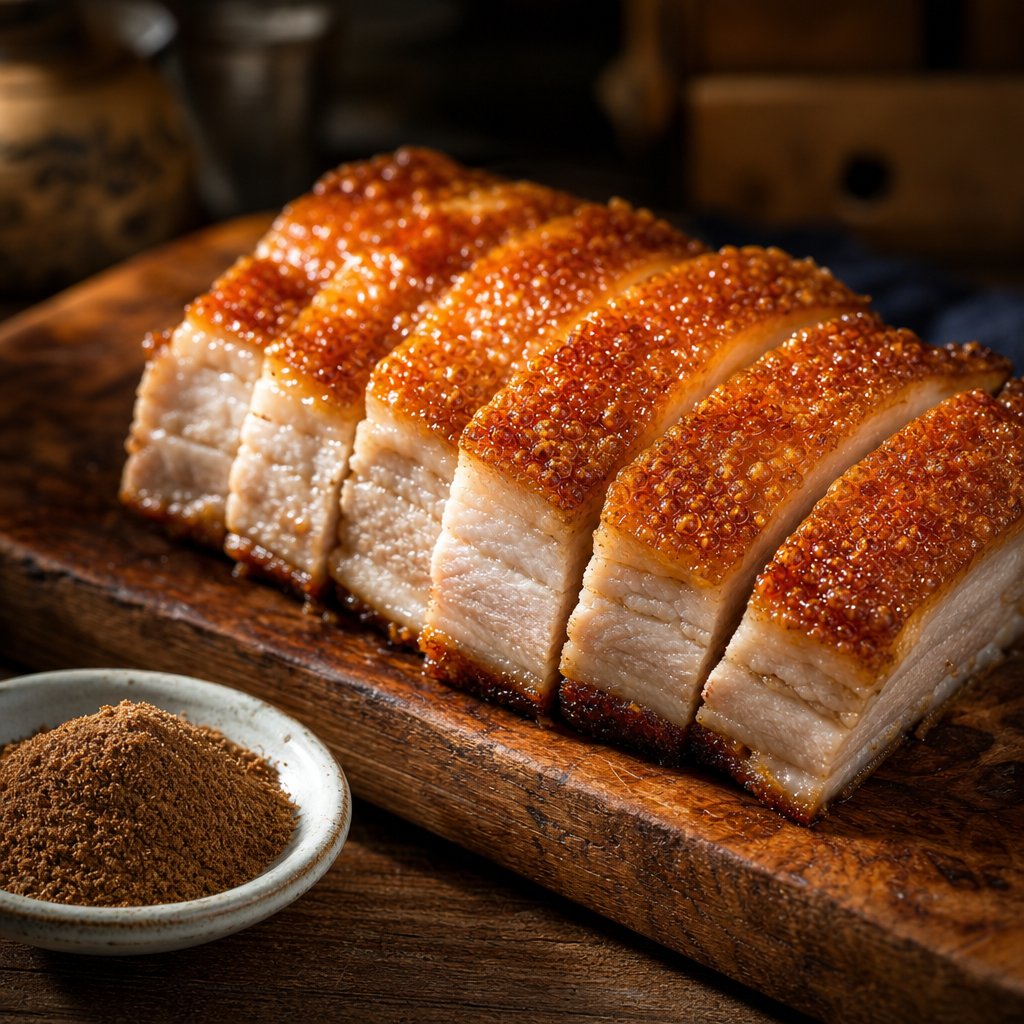
| Pork belly | Braising, roasting | 3/4 - 1 tsp | Rub into scored skin; pairs with soy, sugar, rice wine |
| Roast duck | Roasting, smoking | 1 - 1.5 tsp | Apply inside cavity and on skin; classic Peking duck approach |
| Chicken wings | Dry rub, grilling, air frying | 1/2 - 3/4 tsp | Mix with salt, black pepper, and optional cayenne |
| Spare ribs | Braising, slow roasting | 1 tsp | Combine with brown sugar and salt for a quick BBQ rub |
| Tofu (firm) | Stir-frying, baking | 1/4 - 1/2 tsp | Press tofu dry first; bloom spice in oil before adding tofu |
| Ground pork | Stir-frying, dumpling filling | 1/2 tsp | Mix directly into meat with soy sauce and sesame oil |
| Whole chicken | Roasting, poaching | 1.5 - 2 tsp | Season inside and out; pairs well with honey-soy glaze |
For stir-fries, the approach changes slightly. Rather than rubbing the 5 spice seasoning directly onto protein, add about 1 teaspoon to your sauce mixture — soy sauce, garlic, a splash of water, and oyster sauce — then deglaze the wok with it after searing your meat and vegetables. This distributes the flavor evenly without creating hot spots of concentrated spice.
Common Mistakes to Avoid
The number one error? Using too much. Five spice seasoning is concentrated. Its essential oils are potent enough that even a small excess tips a dish from "complex and aromatic" into "medicinal and overwhelming." Start with half the amount you think you need. You can always add more; you can't take it back.
Other common pitfalls that undermine chinese five spice powder uses:
- Adding at the wrong stage. Ground spices burn quickly over high heat. If you're stir-frying, add the blend to your sauce or liquid component rather than sprinkling it directly into screaming-hot oil. For roasting and braising, applying it as a rub before cooking works perfectly because the lower, slower heat develops flavor without scorching.
- Not blooming in oil. When you do add five spice to a pan, give it 15 to 30 seconds in warm (not smoking) oil first. This step — called blooming — dissolves the fat-soluble flavor compounds and distributes them throughout the dish. Skip it and the powder sits on the surface, tasting dusty rather than integrated.
- Pairing with competing aromatics. Chinese 5 spice seasoning already contains multiple bold flavors. Layering it with equally complex blends like garam masala or Italian seasoning creates muddy, confused dishes. Pair it with simple companions instead: soy sauce, ginger, garlic, rice wine, honey, or citrus.
- Treating it as a finishing spice. Unlike flaky salt or fresh herbs, ground five spice needs heat to fully express itself. Sprinkling it raw over a finished dish gives you a powdery, slightly bitter taste rather than the warm, rounded flavor that cooking unlocks.
Using Five Spice in Western Cooking
Here's where chinese 5 spice uses get genuinely surprising. The blend's warm, sweet profile overlaps significantly with the spices Western bakers already reach for — cinnamon, cloves, and anise all appear in holiday baking traditions. Swapping five spice into those contexts adds depth without feeling foreign.
Try a half teaspoon in apple pie filling instead of plain cinnamon. The Sichuan peppercorn adds a subtle citrus lift that brightens the fruit, while the star anise deepens the caramel notes of brown sugar. The Spice House recommends it for snickerdoodle cookies and cinnamon rolls, where the blend's complexity elevates familiar flavors without making them taste "Asian" — just more interesting.
Roasted root vegetables — carrots, sweet potatoes, butternut squash — respond beautifully to a light dusting of five spice tossed with olive oil before roasting. The natural sugars in the vegetables caramelize against the blend's warmth, creating something that reads as sophisticated rather than exotic. Even a simple butternut squash fry becomes a standout side dish with just a pinch.
The crossover works because the blend was designed for balance, not for any single cuisine's boundaries. Once you internalize that principle — restraint, heat activation, and pairing with simple companions — the question stops being "what can I put this on?" and becomes "what can't I?"
Of course, flavor is only part of the story. Each spice in the blend carries its own history of medicinal use, and modern wellness science is starting to catch up with what traditional Chinese medicine practitioners understood centuries ago.
Health Benefits and Wellness Properties of Five Spice
Every spice in this chinese spice blend was selected not just for flavor but for what it does inside the body. In traditional Chinese medicine, the line between kitchen and pharmacy barely exists. Foods are categorized by their flavor, temperature, and function — not just their nutritional profile. A warming spice doesn't just taste warm; it generates internal heat, moves stagnant energy, and supports specific organ systems. The five spice blend, then, isn't merely a seasoning. It's a daily dose of functional aromatics designed to keep the body in equilibrium.
Traditional Chinese Medicine View of Each Spice
TCM practitioners have long classified herbs and foods by their thermal effects on the body — cool, neutral, warm, or hot. Most spices in the chinese 5 spice blend fall squarely in the warming category, which is why the blend has historically been associated with strengthening digestion, dispelling cold, and supporting yang energy. Here's what each spice powder component brings to the table from a wellness perspective:
- Star Anise — Digestive support and cold relief. Star anise relieves cold stagnation in the body and helps with digestion. TCM practitioners use it for abdominal bloating, nausea, and sluggish gut motility. It's also the primary botanical source of shikimic acid, the precursor compound used in antiviral medications.
- Cassia (Cinnamon) — Metabolic warmth and kidney yang support. Cinnamon helps treat kidney yang deficiency, which manifests as cold extremities, fatigue, frequent urination, and poor appetite. Modern research echoes this traditional use, with studies linking cassia consumption to improved insulin sensitivity and blood sugar regulation.
- Cloves — Antioxidant powerhouse and stomach warmer. Cloves warm the center of the body and the kidneys while harmonizing stomach qi. Their eugenol content gives them one of the highest antioxidant capacities of any spice — measured by ORAC value, cloves outperform blueberries by a wide margin. TCM uses them for vomiting related to stomach cold and for strengthening weak digestion.
- Sichuan Peppercorn — Anti-inflammatory and qi-moving. This chinese spice disperses stagnant energy and promotes circulation. Its hydroxy-alpha-sanshool compounds have demonstrated anti-inflammatory and analgesic properties in laboratory studies. In TCM, it's prescribed for abdominal pain, parasites, and damp-cold conditions in the digestive tract.
- Fennel Seeds — Gut comfort and bloating relief. Fennel warms the liver and kidneys while calming intestinal spasms. It's one of the oldest remedies for gas, bloating, and colic — used across both Eastern and Western herbal traditions. Its gentle warming nature makes it the mildest member of the blend, suitable even for sensitive digestive systems.
Notice the pattern: every spice targets the digestive system in some way. This isn't coincidental. The blend was formulated during an era when food was the first line of medicine, and daily cooking was an act of preventive care. Eating a dish seasoned with all five powdered spices meant you were simultaneously nourishing multiple organ systems — liver, heart, spleen, lungs, and kidneys — in a single meal.
Modern Wellness Applications of Heritage Spice Blends
Consumer interest in functional foods has surged. Food and beverage products with functional claims increased by 28% in the first half of 2024 alone, driven by demand for anti-inflammatory, antioxidant, and gut-health ingredients. Spices that were once confined to the kitchen — turmeric, ginger, cinnamon — now appear in capsules, drink mixes, and wellness powders. The five spice blend is following the same trajectory.
What makes this particular blend attractive to the functional food industry is its built-in diversity. Rather than isolating a single compound from one spice, the blend delivers multiple bioactive compounds — anethole, eugenol, cinnamaldehyde, sanshool, and anethole from fennel — in a single powder spice format. This aligns with the growing "food synergy" philosophy in nutrition science, which suggests that whole-food combinations often outperform isolated extracts.
Brands and supplement companies are now formulating products based on traditional Chinese spice blends, recognizing their heritage credibility and documented wellness properties. OEM/ODM manufacturers like ZhuFeng offer powder and granule formats that allow nutrition brands to bring heritage-inspired health products to market with customized formulations and scalable production. This kind of infrastructure makes it possible for private label sellers and functional food businesses to translate centuries-old spice wisdom into modern product lines — capsules, drink mixes, or seasoning-supplement hybrids — without building manufacturing capability from scratch.
The trend reflects something deeper than marketing. It's a recognition that the chinese 5 spice blend wasn't just good cooking — it was good medicine, packaged in a form people actually enjoyed consuming every day. That accessibility is exactly what modern wellness brands are trying to replicate.
Still, not everyone has access to the blend itself — or all five of its components. When you're missing a key ingredient or can't find the powder at all, knowing your substitution options becomes essential.
Substitutes and Alternatives for Five Spice Powder
Maybe you're mid-recipe and realize the jar is empty. Maybe your grocery store doesn't carry it. Or maybe you're missing just one component and wondering if the blend still works without it. Whatever the situation, knowing your alternatives to chinese 5 spice saves a dish from falling flat — as long as you understand what each substitute can and can't replicate.
Substituting Individual Spices Within the Blend
If you're making the blend from scratch and missing a single ingredient, you don't need to scrap the whole project. Each spice has a reasonable stand-in that preserves the overall balance:
- Missing Sichuan peppercorn: Combine regular black pepper with a pinch of lemon or orange zest. You won't get the numbing ma sensation, but you'll approximate the citrusy heat and mild bite. White pepper plus a tiny amount of ground coriander also works.
- Missing cloves: Ground allspice is your closest match — it naturally contains clove-like flavor notes alongside cinnamon and nutmeg. Use about half the amount the recipe calls for, since allspice is concentrated.
- Missing star anise: Anise seed delivers a similar licorice character at lower intensity. Use 1.5 times the amount to compensate. A few drops of anise extract work in baking applications.
- Missing cassia/cinnamon: Ceylon cinnamon works but tastes milder and more delicate. Increase the quantity slightly, or add a pinch of allspice to restore the spicy warmth that cassia provides.
- Missing fennel seeds: Anise seed or caraway seed can fill the gap. Caraway shifts the flavor profile slightly toward savory, which works well in meat rubs but less so in sweet applications.
One important note from Greedy Girl Gourmet: if you only have one or two of the five spices on hand, just toast and grind what you have. The blend is flexible enough that a partial version still outperforms no five spice at all. Start with a quarter of the amount the recipe calls for and taste from there, since individual spices like cloves can overwhelm when used solo.
Replacing Five Spice Powder Entirely
When you need a chinese 5 spice powder substitute and don't have any of the individual components, these whole-blend alternatives get you closest:
Allspice is your most accessible option. Despite the name, it's a single spice — dried berries from the Pimenta dioica tree — that naturally tastes like a combination of cloves, cinnamon, and nutmeg. It covers three of the five flavor notes in one ingredient. Substitute at a 1:1 ratio, keeping in mind you'll lose the licorice sweetness of star anise and the numbing quality of Sichuan peppercorn.
Garam masala shares several ingredients with five spice — cloves, cinnamon, and sometimes fennel — making it a solid chinese five spice substitute for savory dishes. The catch: it contains coriander, cumin, and cardamom, which push the flavor toward Indian rather than Chinese. For best results, mix two-thirds garam masala with one-third ground star anise to restore that missing licorice backbone. Substitute at a 1:1 ratio.
Pumpkin pie spice works in a pinch for sweet applications — it contains cinnamon, nutmeg, ginger, and cloves. It lacks the anise and peppercorn notes entirely, so it reads as "holiday baking" rather than "Chinese aromatic." Best reserved for desserts or when nothing else is available.
Five Spice vs Allspice vs Garam Masala
A common confusion: people assume five spice and allspice are the same thing, or that garam masala is interchangeable without adjustment. They're not. Here's how they actually compare:
| Blend | Origin | Key Flavors | Licorice/Anise Notes | Heat Profile | Best For |
|---|---|---|---|---|---|
| Chinese Five Spice | China | Sweet, warm, numbing, pungent, herbal | Strong (star anise + fennel) | Numbing tingle, not spicy-hot | Roasted meats, braises, stir-fries |
| Allspice | Caribbean | Warm, sweet, peppery, nutmeg-like | None | Mild peppery warmth | Jerk seasoning, baking, stews |
| Garam Masala | India | Warm, earthy, savory, slightly floral | Minimal (some blends include fennel) | Black pepper warmth, no numbing | Curries, lentils, rice dishes |
| Pumpkin Pie Spice | United States | Sweet, warm, ginger-forward | None | Gentle ginger warmth | Baked goods, lattes, desserts |
The critical distinction: Chinese five spice is not spicy-hot. There's no chili, no capsaicin, no burning sensation. The Sichuan peppercorn creates a numbing tingle — a completely different sensory experience from heat. If someone tells you they can't handle spicy food, five spice is still perfectly safe to serve them.
One more thing worth clarifying — is the blend the same across brands? Not even close. Different manufacturers emphasize different spices, and some include extras like ginger, white pepper, or dried tangerine peel. A chinese 5 spice substitution between brands can taste noticeably different. If you switch brands and your go-to recipe suddenly tastes off, the blend ratio likely shifted. Taste a pinch of any new jar before committing it to a dish, and adjust your quantity accordingly.
Whether you're working with a substitute or the real thing, sourcing quality spices — and knowing what "quality" actually looks like on a label — makes all the difference in the final result.
Where to Buy and How to Choose Quality Five Spice
Knowing what to substitute is useful in a pinch, but nothing replaces the real thing. The difference between a vibrant, freshly packaged five spice powder and a stale, filler-laden jar is the difference between a dish that sings and one that just tastes vaguely "spiced." Where you buy matters, and what you look for on the label matters even more.
Best Places to Buy Five Spice Powder
If you're searching for five spice powder near me, you have more options than you might think. The blend is no longer confined to specialty shops — it's crossed into mainstream retail. Here's where to look:
- Asian grocery stores — Your best bet for authentic blends with proper spice ratios. Stores like 99 Ranch, H Mart, or local Chinese markets typically carry multiple brands at lower prices than mainstream retailers. You'll also find whole spices for making your own blend.
- Mainstream supermarkets — Check the spice aisle or the international foods section. Brands like McCormick, Simply Organic, and Spice Islands stock five spice in most major chains. Availability varies by location, but larger stores almost always carry at least one option.
- Online retailers — Amazon, specialty spice shops like The Spice House and Penzeys, and direct-from-brand websites offer the widest selection. Online is particularly useful if you want artisanal, small-batch blends or need to compare ingredient lists before buying.
- Bulk spice stores — Shops like Whole Foods or local co-ops with bulk sections sometimes carry five spice by weight. This lets you buy exactly what you need without committing to a full jar.
For anyone wondering where to buy chinese 5 spice in a hurry, the international aisle of your nearest grocery chain is the fastest path. For the best quality, an Asian grocery store or a reputable online spice retailer will consistently deliver fresher, more aromatic products.
Reading Labels and Choosing Quality Blends
Not all jars are created equal. Mass-produced blends from large manufacturers prioritize shelf stability over flavor intensity, and some cut corners with fillers or stale spices ground months before packaging. Here's a quick checklist for evaluating any five spice powder before you buy:
- Ingredient list should name real spices. Look for star anise, Sichuan peppercorn (or "prickly ash"), cassia or cinnamon, cloves, and fennel. If you see vague terms like "spices" or "natural flavors" without specifics, move on.
- No fillers or anti-caking agents. Silicon dioxide, calcium silicate, or rice flour sometimes appear in cheaper blends. They won't harm you, but they dilute flavor and indicate a product optimized for shelf life rather than taste.
- Recent packaging or "best by" date. Ground spices lose potency over time as volatile oils evaporate. A jar with a best-by date more than two years out was likely packaged recently. Anything approaching its expiration has already lost significant aroma.
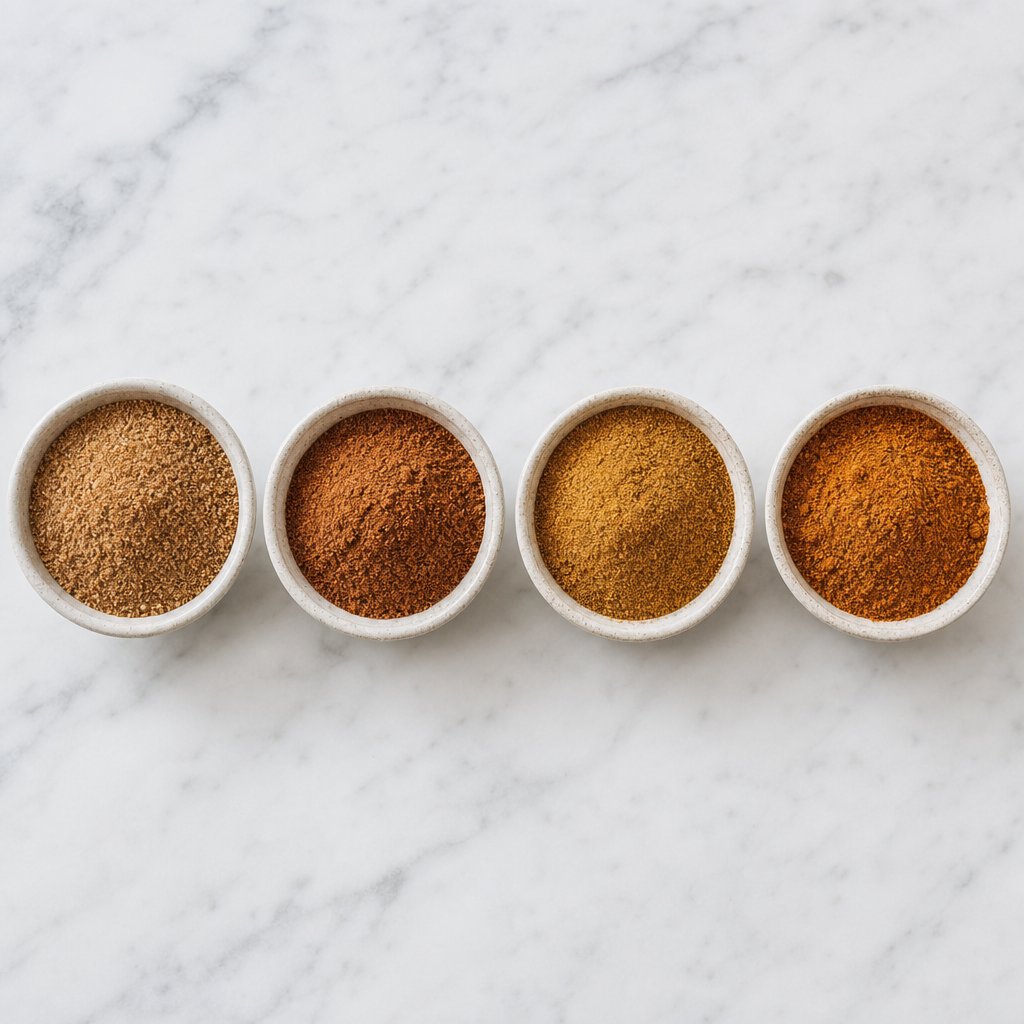
- Color and appearance. Quality five spice powder should look warm brown with reddish undertones — not gray, not uniformly tan. Dull color suggests old spices or excessive filler content.
- Aroma through the seal. If you can smell the blend through the jar's seal, that's actually a good sign — it means the essential oils are still potent. No smell at all? The spices are likely past their prime.
Artisanal and specialty brands tend to grind in smaller batches, source whole spices directly, and package closer to the grind date. They cost more, but the flavor difference is immediately noticeable. If you're wondering where to buy 5 spice powder that actually performs in cooking, prioritize freshness over brand recognition.
For businesses or brands looking to source five spice powder at scale — or develop custom spice-based products like seasoning blends, functional powders, or supplement formulations — working with established manufacturers ensures consistency, food safety compliance, and reliable supply. Private label sellers and functional food businesses seeking to develop five-spice-inspired product lines can partner with OEM/ODM manufacturers like ZhuFeng for scalable powder and granule production with customized formulations, making it possible to bring heritage-inspired products to market without building production infrastructure from scratch.
Storage Tips to Keep Five Spice Fresh
Even the highest-quality blend degrades if stored poorly. Heat, light, and humidity are the three enemies of ground spices — they accelerate the evaporation of volatile essential oils and can introduce moisture that leads to clumping or mold. A few simple habits keep your five spice at peak potency:
- Use an airtight container. Glass jars with tight-fitting lids or sealed metal tins work best. Avoid leaving the blend in a bag with a loose fold — air exposure is the fastest route to flavor loss.
- Store in a cool, dark place. A closed cupboard or drawer away from the stove is ideal. The spice rack above your range looks nice, but the heat and steam from cooking degrade ground spices rapidly.
- Use within six months. Ground five spice won't become unsafe after six months, but its aromatic intensity drops noticeably. Whole spices retain their essential oils longer because their natural shells protect the volatile compounds — so if you grind your own, store the whole spices separately and grind only what you need every few weeks.
- Label with the purchase or grind date. You'll forget when you opened it. A small piece of tape with a date takes two seconds and prevents you from cooking with a blend that's lost its punch.
- Test freshness with your nose. Rub a pinch between your fingers and inhale. If the aroma is faint or flat, the blend has faded. A fresh five spice should hit you immediately with warm, sweet, complex fragrance.
One final tip: buy smaller quantities more frequently rather than a large jar you'll take a year to finish. A two-ounce jar refreshed every couple of months will always outperform a bulk purchase that sits slowly losing its soul in the back of your cabinet. Quality five spice is about freshness first, brand second, and price last.
Frequently Asked Questions About Chinese 5 Spice Powder
1. What are the five spices in Chinese five spice powder?
The five core spices are star anise, Sichuan peppercorn, cassia (Chinese cinnamon), cloves, and fennel seeds. Star anise provides the dominant licorice-like sweetness, Sichuan peppercorn adds a numbing citrusy tingle, cassia contributes bold woody warmth, cloves deliver intense pungent depth, and fennel seeds offer a mild herbal finish that unifies the blend. Together they represent the five elemental flavors in traditional Chinese philosophy: sour, bitter, sweet, pungent, and salty.
2. Is Chinese five spice powder the same as allspice?
No, they are completely different. Allspice is a single dried berry from the Pimenta dioica tree that naturally tastes like a mix of cloves, cinnamon, and nutmeg. Chinese five spice powder is a blend of five distinct spices with a strong licorice note from star anise and a numbing tingle from Sichuan peppercorn that allspice lacks entirely. Allspice can serve as an emergency substitute at a 1:1 ratio, but it won't replicate the full aromatic complexity of the original blend.
3. How much Chinese 5 spice powder should I use in cooking?
Start with less than you think. For most proteins, use 1/2 to 1 teaspoon per pound of meat. Fatty cuts like pork belly and duck can handle up to 1.5 teaspoons, while delicate ingredients like tofu or vegetables need only 1/4 teaspoon. The blend contains concentrated essential oils that intensify during cooking, so adding too much creates a medicinal, overwhelming flavor. Always bloom the powder briefly in warm oil to distribute its fat-soluble compounds evenly through the dish.
4. Can I make Chinese five spice powder at home?
Yes, and homemade versions are significantly more aromatic than store-bought jars. Toast whole spices in a dry skillet for 3 to 5 minutes until fragrant, let them cool completely, then grind in short pulses using a spice grinder. A balanced starting ratio is 1 part star anise, 1 part fennel seeds, 1/2 part Sichuan peppercorn, 1/2 part cassia, and 1/5 part cloves. Store in an airtight glass jar and use within three to six months for peak flavor.
5. Does Chinese five spice powder have health benefits?
Each spice in the blend carries documented wellness properties rooted in traditional Chinese medicine. Star anise supports digestion, cassia aids metabolic health and blood sugar regulation, cloves offer potent antioxidant activity, Sichuan peppercorn has anti-inflammatory compounds, and fennel relieves bloating and gut discomfort. The blend was historically formulated as functional food designed to nourish multiple organ systems simultaneously. Modern functional food companies, including OEM/ODM manufacturers like ZhuFeng, now produce heritage-inspired powder and granule formulations for nutrition brands seeking to bring these traditional benefits into supplement and health product formats.