What Is a Disintegrating Tablet
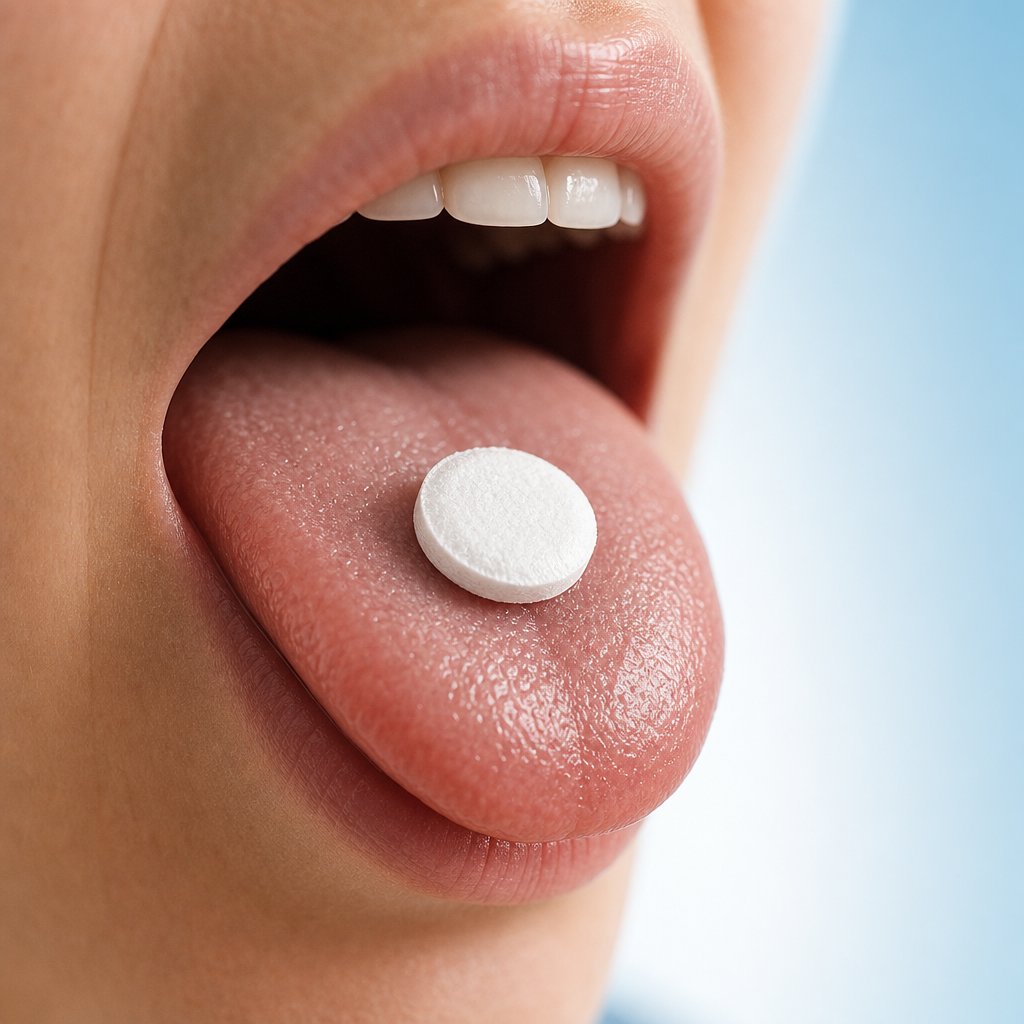
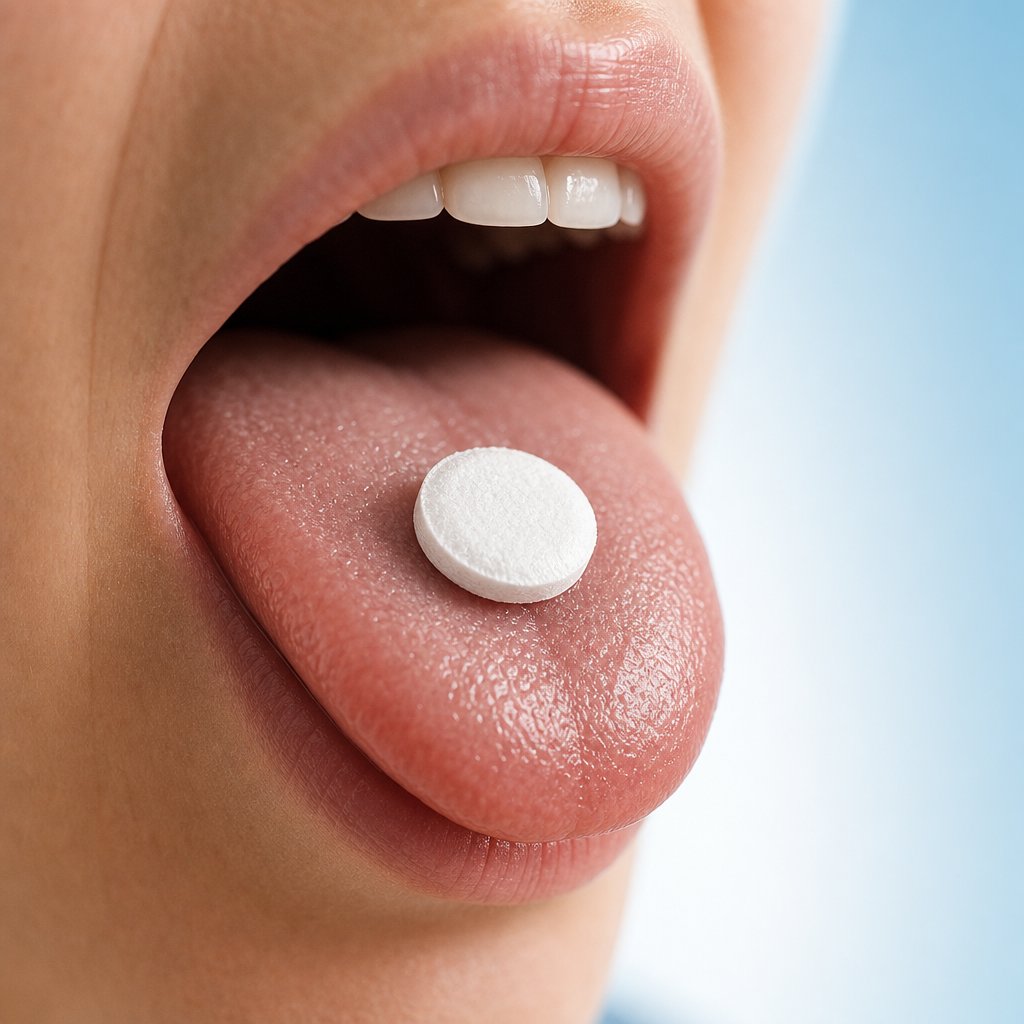
A disintegrating tablet is a solid medication designed to dissolve rapidly on your tongue, usually within seconds, without needing water. Known formally as an orally disintegrating tablet (ODT), it breaks apart on contact with saliva and is swallowed naturally — no glass of water, no struggling to get a pill down your throat.
Plain-Language Definition of a Disintegrating Tablet
So what is a disintegrating tablet in everyday terms? Imagine placing a thin wafer on your tongue. Within moments, it softens, breaks apart, and essentially melts away. That is exactly how an ODT works. You place it on your tongue, your saliva does the rest, and the medication is on its way.
The disintegrating tablet meaning is right there in the name: it is a tablet engineered to disintegrate — to fall apart into tiny particles — the instant it touches a wet surface like your tongue. Unlike a standard pill you swallow whole with a gulp of water, an orally disintegrating tablet eliminates that step entirely. This makes it especially practical when you are on the go, feeling nauseous, or simply have trouble swallowing conventional pills.
Official Regulatory Standards for ODTs
This is not just a marketing label. Regulatory agencies hold ODTs to specific, measurable standards.
The FDA defines an ODT as "a solid dosage form containing a medicinal substance which disintegrates rapidly, usually within a matter of seconds, when placed upon the tongue."
Beyond that definition, the FDA's Guidance for Industry recommends that an oral disintegrating tablet show an in vitro disintegration time of approximately 30 seconds or less, based on the United States Pharmacopeia (USP) disintegration method. The agency also recommends that tablet weight not exceed 500 mg, keeping patient safety and ease of use in mind.
These benchmarks separate a genuine ODT from a regular tablet that just happens to crumble easily. When you see "ODT" on a prescription label, you are looking at a product that met strict criteria before reaching your hands.
The real question, though, is how does a tablet break apart that quickly? The answer lies in some clever formulation science happening inside every single dose.
ODT Meaning in Medical Terms Explained
You pick up a new prescription from the pharmacy, glance at the label, and spot three letters you have never seen before: ODT. No explanation, no context — just an abbreviation sitting next to your medication name. If that has ever left you puzzled, you are not alone.
What Does ODT Stand For on Your Prescription
ODT stands for Orally Disintegrating Tablet. In medical and pharmacy contexts, this abbreviation tells the pharmacist — and you — that the medication is formulated to dissolve on the tongue rather than being swallowed whole with water. When you see it printed after a drug name (for example, "ondansetron ODT 4 mg"), it identifies the specific dosage form your doctor prescribed.
So what does ODT mean on a prescription in practical terms? It signals that you should not swallow this tablet like a conventional pill. Instead, you place it on your tongue and let saliva do the work. The abbreviation functions as a quick shorthand that distinguishes this format from standard tablets (often labeled "tab"), extended-release versions (ER or XR), or sublingual forms (SL).
Understanding ODT in Medical and Pharmacy Settings
Healthcare professionals rely on abbreviations to communicate efficiently across prescriptions, electronic medical records, and insurance paperwork. According to Drugs.com's reference on prescription abbreviations, dosage form abbreviations like "tab" for tablet, "cap" for capsule, and "SL" for sublingual are standard practice in pharmacy systems. ODT fits into this same shorthand framework.
You will encounter the ODT abbreviation in several places:
- On your prescription bottle label, typically right after the drug name
- In pharmacy computer systems when your pharmacist processes the order
- On insurance documents and prior authorization forms that specify the exact dosage form covered
- On the original manufacturer's blister packaging inside the box
- In your electronic health records or patient portal medication list
What does ODT mean in pharmacy day-to-day? For pharmacists, it determines how they counsel you at the counter. A medication labeled ODT comes with different instructions than a regular tablet — different handling, different administration, and sometimes different storage requirements. It also matters for insurance coverage, since an ODT version of a drug may have a different copay or require separate authorization from the standard oral tablet.
What does ODT mean in medical terms beyond the pharmacy? Physicians choose this dosage form deliberately. It is not interchangeable with a regular tablet without a prescriber's approval, because the formulation, release profile, and patient instructions differ. If your prescription says ODT, that is exactly what your doctor intended you to take.
Understanding this single abbreviation removes a layer of confusion from your medication routine. But knowing what the letters stand for is only part of the picture — the real ingenuity is in how these tablets manage to fall apart so quickly once they hit your tongue.
How Disintegrating Tablets Dissolve on Your Tongue
A tablet that falls apart in seconds sounds almost like a magic trick. But the science behind tablet disintegration is surprisingly elegant — and once you understand it, you will appreciate just how much engineering goes into every orally disintegrating dose you take.
The Science Behind Rapid Tablet Disintegration
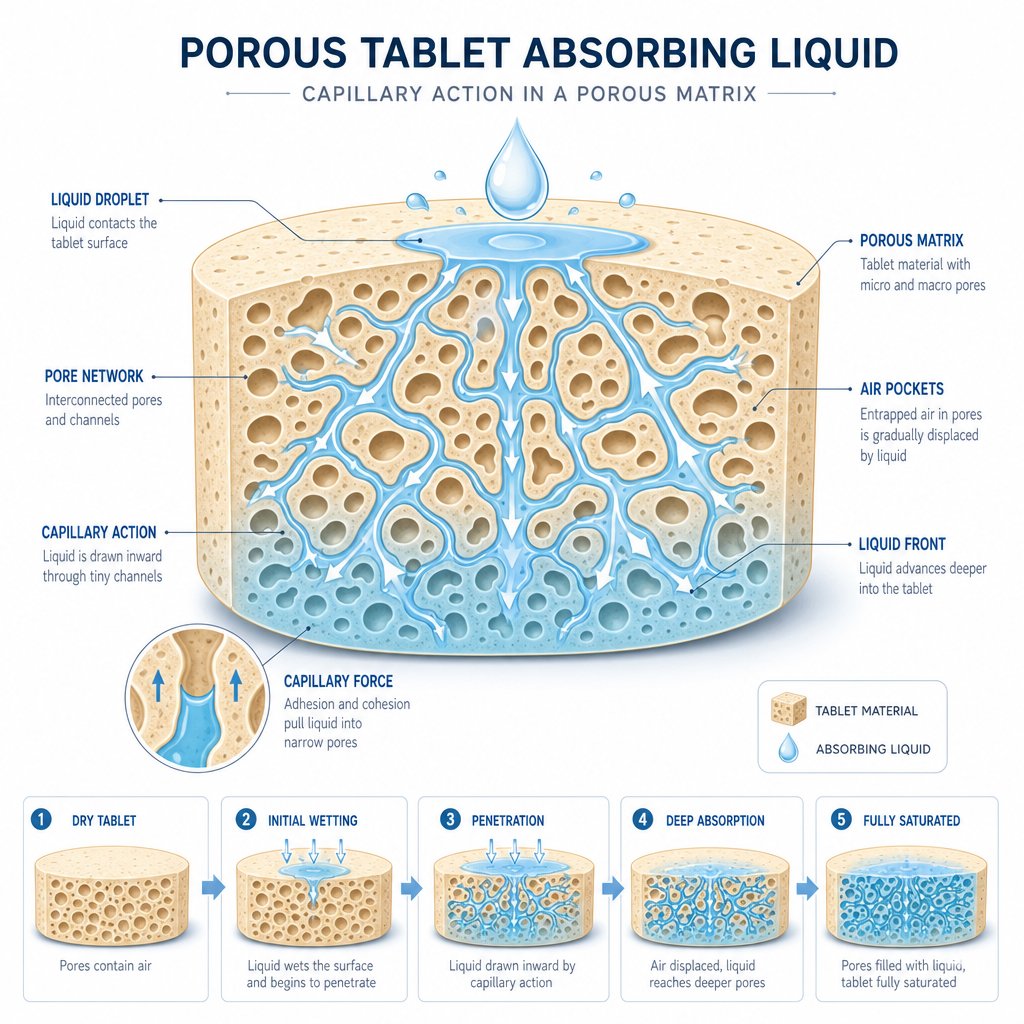
Every dissolving tablet starts with a deliberate structural choice: porosity. Imagine a kitchen sponge versus a solid block of rubber. Drop water on the rubber and it just sits there. Drop water on the sponge and it gets absorbed instantly. An ODT is built more like that sponge — its internal structure is riddled with tiny channels and air pockets that invite moisture in the moment saliva makes contact.
This porous architecture is not accidental. Manufacturers create it through specific compression techniques and ingredient choices during production. The result is a tablet that looks solid in your hand but is actually full of microscopic pathways ready to pull liquid inward. That structural openness is what makes the entire tablet dissolving process possible in under 30 seconds.
The actual disintegration follows a predictable three-step sequence:
- Wicking (water penetration): The instant the tablet touches your tongue, saliva begins traveling into those tiny internal channels through capillary action — the same force that draws water up a paper towel when you dip just the corner into a puddle. Moisture rapidly spreads throughout the tablet's porous network without needing any external pressure.
- Swelling: Once water reaches the special ingredients inside (called superdisintegrants), those particles begin absorbing moisture and expanding dramatically. Picture a compressed sponge dropped into water — it swells to many times its original size. This expansion generates enormous internal pressure within the rigid tablet structure.
- Rupture: The swelling pressure becomes too great for the tablet to hold together. Particle bonds break, the structure fractures from the inside out, and the tablet rapidly crumbles into fine granules that mix with your saliva and are easily swallowed.
This entire sequence — wicking, swelling, rupture — happens almost simultaneously across thousands of microscopic sites within the tablet. That is why the disintegration appears so fast to you: it is not dissolving from the outside in like a sugar cube. It is breaking apart everywhere at once, from the inside out.
Superdisintegrants and How They Work
The real heroes of rapid tablet disintegration are a class of ingredients called superdisintegrants. These are specialized polymers engineered to react aggressively with water. Three are used most commonly in ODT formulations:
- Croscarmellose sodium (CCS): A cross-linked cellulose derivative that swells 4 to 8 times its size in under 10 seconds. It works through both swelling and wicking — pulling water in while simultaneously expanding. Research published in the Turkish Journal of Pharmaceutical Sciences notes that CCS and sodium starch glycolate disintegrate tablets almost instantaneously upon contact with even a slight amount of saliva.
- Sodium starch glycolate (SSG): A modified starch that swells 7 to 12 times its volume in less than 30 seconds and can absorb over 20 times its weight in water. Its three-dimensional swelling generates powerful internal pressure that fractures the tablet structure rapidly.
- Crospovidone: Unlike the other two, crospovidone relies primarily on wicking rather than swelling. Its highly porous, irregular particle structure draws water in quickly through capillary action — like a network of tiny straws pulling liquid inward — causing the tablet to burst apart without significant volume expansion.
A study in AAPS PharmSciTech confirmed these distinct mechanisms: sodium starch glycolate and croscarmellose sodium disintegrate compacts primarily through swelling, while crospovidone relies on water wicking similar to capillary-driven materials. Interestingly, combining superdisintegrants can produce additive or even synergistic effects — one study found that a 1:1 blend of CCS and SSG achieved the fastest disintegration time of just 19 seconds, outperforming either ingredient used alone.
What does this mean for you as a patient? It means the tablet dissolving on your tongue is not just crumbling randomly. It is executing a precisely engineered sequence — saliva enters, specialized ingredients swell or wick, and the structure breaks apart in a controlled, rapid cascade. Every component has a job, and they work together in fractions of a second.
Of course, this rapid-dissolve mechanism raises an obvious question: if an ODT breaks apart on the tongue, how is it different from sublingual tablets, dispersible tablets, or other fast-acting formats you might have heard of?
Disintegrating Tablets vs Other Fast-Dissolving Forms
The pharmacy shelf is full of tablets that dissolve, disintegrate, fizz, or melt — and the labels do not always make the differences obvious. You might see "sublingual," "dispersible," "effervescent," or "ODT" and assume they all work the same way. They do not. Each format dissolves in a different location, follows a different absorption route, and serves a different clinical purpose. Confusing them can mean taking your medication incorrectly or missing out on its intended benefit.
Here is how to tell them apart.
ODTs vs Sublingual vs Dispersible Tablets
An orally dissolving tablet (ODT) disintegrates on the surface of your tongue, mixes with saliva, and is swallowed naturally. Once swallowed, the drug is absorbed through the gastrointestinal tract — the same route as a conventional oral tablet you take with water. The convenience factor is the key advantage: no water needed, no swallowing a whole pill. But the absorption pathway remains gastrointestinal. As SA Health's clinical guidance clarifies, ODTs are different from sublingual and buccal tablets because the medication is absorbed from the GI tract after swallowing, not directly through the oral mucosa.
A sublingual tablet, by contrast, is placed under the tongue and held there. It dissolves in the saliva pooling beneath your tongue, and the drug passes directly through the thin mucosal membrane into your bloodstream. You do not swallow it — at least not intentionally. This route bypasses the stomach and liver entirely (avoiding what pharmacologists call first-pass metabolism), which is why sublingual nitroglycerin for chest pain works within minutes. The sublingual route enters systemic circulation directly and has a rapid onset of action, making it favorable for emergency medication.
A dispersible tablet takes yet another approach. You drop it into a glass of water, wait for it to break apart and form a suspension or solution, then drink the entire liquid. The drug is absorbed through the GI tract after you drink it — similar to an ODT in terms of absorption route, but the administration method is completely different. Dispersible tablets require water and a container, making them less portable but useful for patients who need flexible dosing or cannot handle solid forms at all.
Buccal films work similarly to sublingual tablets but are placed against the inner cheek. The thin film adheres to the cheek mucosa and delivers medication directly into the bloodstream through that tissue. Like the sublingual route, buccal delivery bypasses first-pass metabolism and is used for drugs that would lose effectiveness if processed through the liver first.
Effervescent tablets are the ones that fizz. You drop them into water, they react with the liquid to release carbon dioxide (that familiar bubbling), and you drink the resulting solution. They are designed for GI absorption after drinking, and they require a full glass of water — the opposite of an ODT's water-free convenience. According to pharmaceutical manufacturing references, effervescent tablets are uncoated preparations containing acid substances and carbonates that react rapidly when submerged in water, producing a dissolved solution that is then consumed.
Chewable tablets round out the list. You chew them like food, break them into smaller pieces mechanically with your teeth, and swallow the fragments. They rely on flavorings and sweeteners to mask taste, and they are absorbed through the GI tract after swallowing. No dissolving on the tongue, no water needed — just chewing.
When Each Dosage Form Is Appropriate
The right format depends on the clinical goal and the patient's situation. Here is a side-by-side comparison:
| Form Type | Where It Dissolves | Water Needed? | Absorption Route | Best For |
|---|---|---|---|---|
| Orally Disintegrating Tablet (ODT) | On the tongue | No | GI tract (swallowed with saliva) | Patients with dysphagia, nausea, or no water access |
| Sublingual Tablet | Under the tongue | No | Oral mucosa (directly into bloodstream) | Emergency medications needing rapid systemic action |
| Buccal Film | Against the inner cheek | No | Cheek mucosa (directly into bloodstream) | Sustained local or systemic delivery bypassing the liver |
| Dispersible Tablet | In a glass of water | Yes | GI tract (after drinking) | Flexible dosing, pediatric patients, those who cannot swallow solids |
| Effervescent Tablet | In a glass of water (fizzes) | Yes | GI tract (after drinking) | Rapid dissolution and absorption, taste masking |
| Chewable Tablet | Chewed in the mouth | No | GI tract (after swallowing fragments) | Pediatric and geriatric patients who dislike swallowing pills |
Notice the critical distinction: only sublingual tablets and buccal films deliver medication directly into your bloodstream through oral tissue. Every other format on this list — including the orally dissolving tablet — ultimately relies on your GI tract for absorption. That means if your doctor prescribes a sublingual tablet, you cannot substitute an ODT and expect the same rapid, liver-bypassing effect. They look similar in your hand, but they work through fundamentally different pathways.
The practical takeaway? Always check your label. If it says "ODT," place it on your tongue and swallow with saliva. If it says "sublingual" or "SL," hold it under your tongue and do not swallow. If it says "dispersible," reach for a glass of water first. These are not interchangeable instructions — each one matches the specific engineering of that dosage form.
With these distinctions clear, a natural follow-up question emerges: which medications actually come in ODT format, and what therapeutic advantages do they offer over their conventional counterparts?
Common Medications Available as Disintegrating Tablets
You might already be taking an ODT without realizing it. These formulations span a wide range of therapeutic categories — from nausea relief to mental health treatment. Understanding what is ODT medication in your specific situation starts with recognizing which drugs commonly come in this format and why manufacturers chose it for them.
Antiemetic and Migraine ODT Medications
Two categories where ODT pills make the most intuitive sense are nausea treatment and migraine relief. Think about it: if you are actively vomiting or battling a debilitating headache, the last thing you want is to swallow a conventional tablet with a full glass of water.
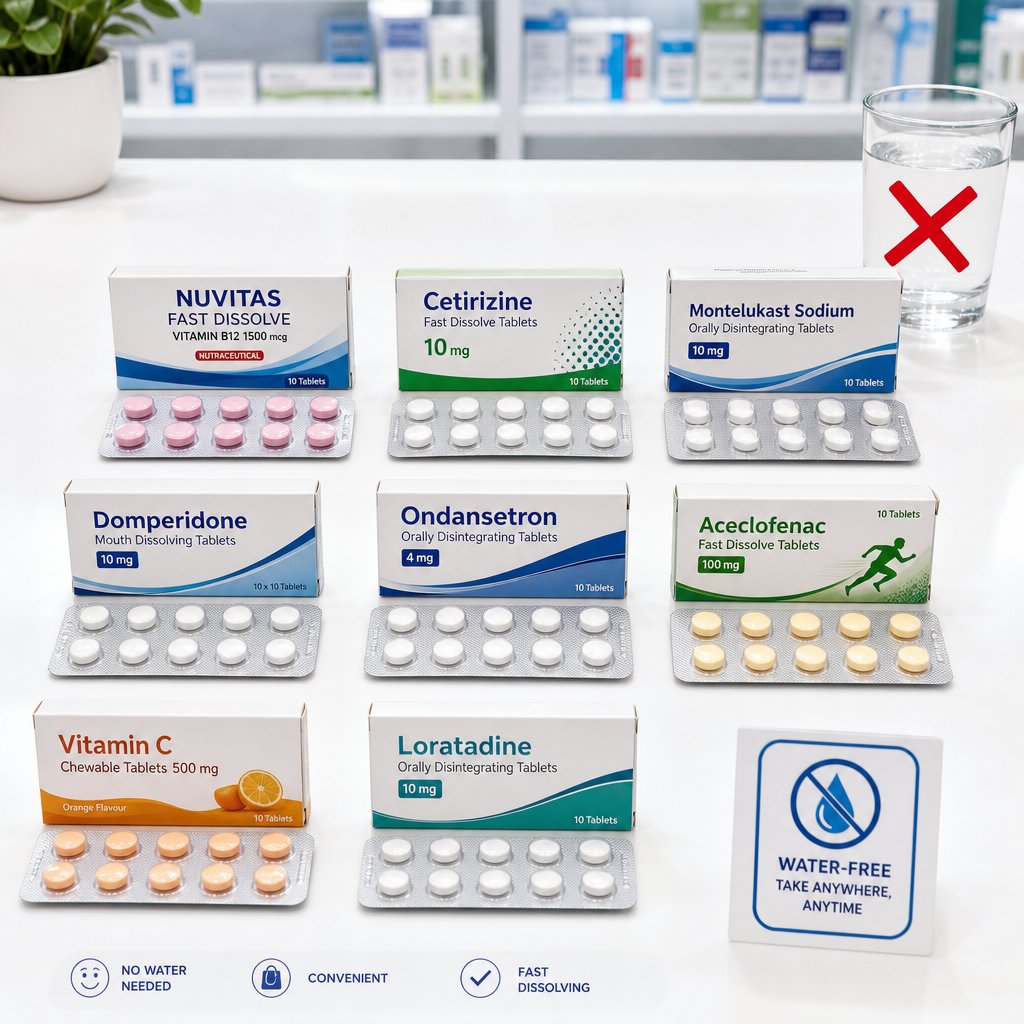
- Antiemetics (nausea and vomiting): Ondansetron, marketed as Zofran ODT, is one of the most widely prescribed ODT meds. Used to prevent nausea from chemotherapy, surgery, and gastroenteritis, it dissolves on the tongue in seconds — critical when a patient cannot keep anything down. It is approved for patients aged 4 years and older.
- Migraine treatments: Rizatriptan (Maxalt-MLT) and zolmitriptan (Zomig-ZMT) are triptan medications formulated as orally disintegrating tablets specifically because migraine attacks often come with nausea. Taking medication ODT format means you can dose at the first sign of an attack without needing water or worrying about vomiting up a pill before it absorbs.
- Antipsychotics: Olanzapine (Zyprexa Zydis), risperidone (Risperdal M-Tab), and aripiprazole (Abilify Discmelt) are available as ODTs primarily for compliance reasons. In psychiatric care settings, clinicians can confirm the tablet has dissolved on the tongue, reducing the risk of patients hiding or discarding their medication.
Allergy and Acid Reflux Disintegrating Tablets
Everyday conditions benefit from the ODT format too — especially when convenience and speed matter.
- Allergy medications: Loratadine (Claritin RediTabs), desloratadine (Clarinex RediTabs), fexofenadine (Allegra ODT), and cetirizine (Zyrtec Dissolve Tabs) all come in disintegrating tablet form. These are popular for travelers, outdoor workers, or anyone who needs fast allergy relief without hunting for a water bottle.
- Acid reflux and ulcers: Lansoprazole (Prevacid SoluTab) is a proton pump inhibitor available as an ODT for patients aged 1 year and older with gastroesophageal reflux disease (GERD). While omeprazole ODT formulations have been explored in compounding pharmacy settings, lansoprazole remains the most established commercially available option in this class.
- Other notable categories: Donepezil (Aricept ODT) for Alzheimer's disease, carbidopa/levodopa (Parcopa) for Parkinson's disease, and mirtazapine (Remeron SolTab) for depression round out the list of widely used ODT medications.
What is orally disintegrating tablets used for beyond simple convenience? For certain medications, the ODT format offers a genuine pharmacokinetic advantage. When a drug dissolves on the tongue, some of it can be absorbed through the oral mucosa — the thin tissue lining your mouth — before you even swallow. This pre-gastric absorption allows a portion of the active ingredient to enter your bloodstream directly, bypassing the liver's first-pass metabolism. In practical terms, more of the drug reaches its target without being broken down first. Research on ODT formulations has demonstrated this effect with selegiline (Zelapar), where a 1.25 mg ODT achieved the same blood levels as a conventional 10 mg tablet — an eightfold dose reduction made possible by avoiding liver metabolism entirely.
Not every ODT achieves this level of pre-gastric absorption. Many still rely primarily on GI tract absorption after swallowing, with the main advantage being ease of administration rather than enhanced bioavailability. Your pharmacist can clarify whether your specific medication ODT version offers an absorption advantage or is primarily a convenience-driven format.
Knowing which medications come as ODT pills is useful, but it raises a practical concern that trips up many patients: how exactly should you handle and take one of these fragile, fast-dissolving tablets?
How to Take a Disintegrating Tablet Correctly
You have the prescription, you understand what ODT means, and you know which medication you are dealing with. But the actual moment of taking it trips people up more than you would expect. These tablets are not like regular pills — they require a slightly different routine, and skipping a step can compromise the dose or damage the tablet before it reaches your tongue.
Step-by-Step Guide to Taking ODT Tablets
Here is how to take orally disintegrating tablets properly, from package to absorption:
- Wash and thoroughly dry your hands. ODTs are extremely sensitive to moisture. Even slightly damp fingers can cause the tablet to start dissolving before you place it on your tongue, crumbling in your hand and wasting part of the dose.
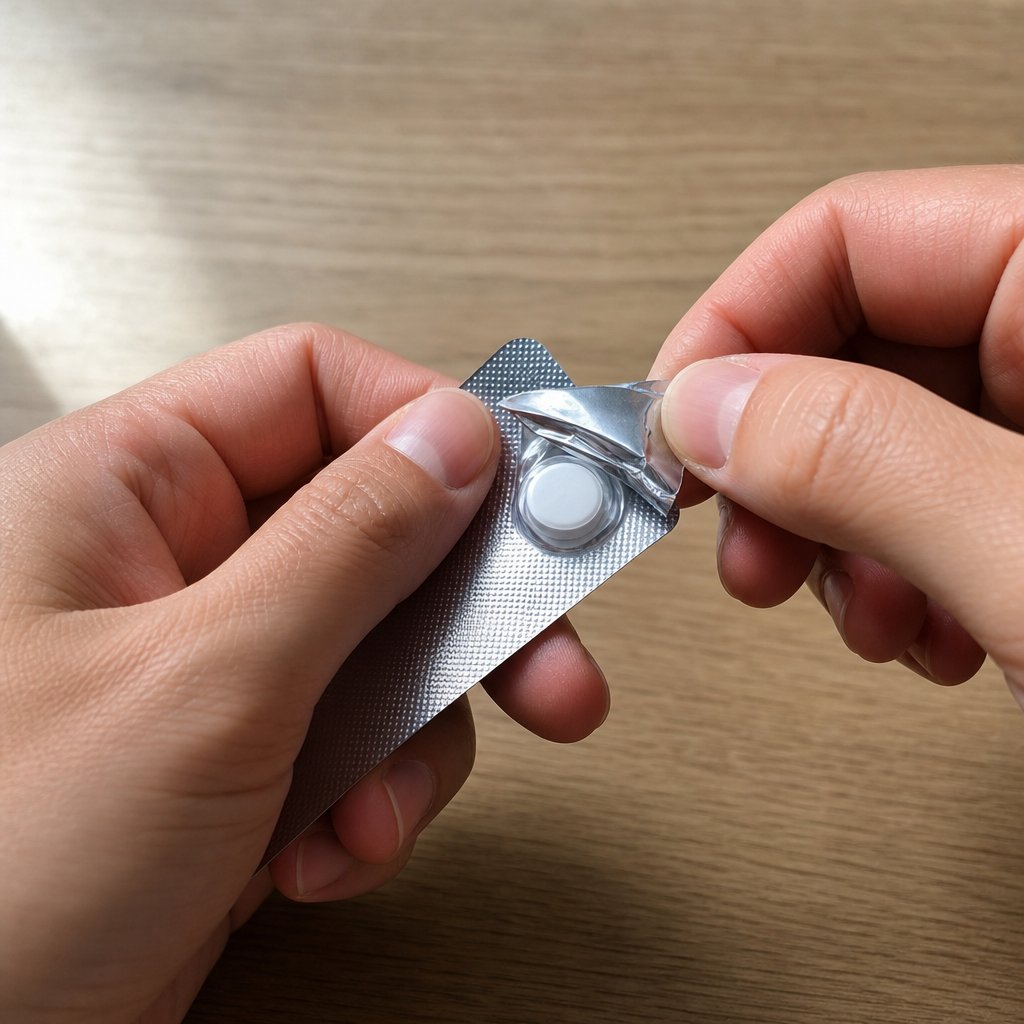
- Peel back the blister foil — never push through it. Unlike conventional tablets packaged in push-through blisters, ODTs are too fragile for that approach. Kaiser Permanente's drug guidance for Zofran ODT specifically instructs patients to peel back the foil on the blister pack rather than pushing the tablet through, which would crush it.
- Place the tablet on your tongue immediately after removing it. Do not leave it sitting on a countertop or in your palm. The moment it is out of its protective packaging, it is exposed to ambient moisture and begins degrading.
- Allow the tablet to dissolve completely with saliva. This typically takes anywhere from a few seconds to one minute. Do not chew, bite, or break the tablet — let your saliva do the work. The medication is designed to disintegrate on its own.
- Swallow naturally. Once the tablet has fully dissolved into a fine residue, swallow it with your saliva. You do not need water. In fact, Kaiser Permanente's guidance notes that taking Zofran ODT with water may actually increase your chance of getting a headache.
That is how an oral disintegrating tablet is administered in practice — no water glass, no head-tilt swallowing technique, no chasing it with juice. The entire process takes under a minute and can be done anywhere: on a plane, in bed during a nausea episode, or at your desk without interrupting a meeting.
This simplicity is exactly why the format works so well for travelers without water access, bedridden patients who cannot sit upright to swallow, or anyone mid-vomiting episode who needs antiemetic medication to stay down.
Common Questions About Taking ODTs
Can you swallow dissolvable tablets whole? Yes — if you accidentally swallow one before it fully dissolves, the medication will still work. It simply follows the same absorption route as a conventional tablet, passing through your stomach and GI tract. You will not be harmed, though you may lose the convenience benefits (faster onset, no water needed) that the ODT format provides. SA Health's clinical guidance confirms that ODTs may alternatively be swallowed whole.
What happens if you swallow a dissolvable tablet without letting it dissolve? The drug still reaches your system — it just takes the longer gastrointestinal route instead of beginning to break down on your tongue. You are not in danger, but you are not using the tablet as designed.
Do ODTs taste bad? Most manufacturers include flavoring agents and sweeteners (commonly mannitol, which has a natural cooling sweetness) to make the experience pleasant. You may notice a mild mint, berry, or citrus flavor. Some patients report a slight grittiness as the tablet breaks apart, but it passes quickly.
Can I swallow a dissolvable tablet with water if I prefer? Unless your prescribing information specifically advises against it, a small sip of water after the tablet dissolves is generally fine. However, the whole point of learning how to take ODT medication is that water is unnecessary — and for some drugs, adding water may alter the intended experience.
Storage and Handling Tips for Disintegrating Tablets
The same moisture sensitivity that makes ODTs dissolve instantly on your tongue also makes them vulnerable during storage. A disintegrating tablet how to take guide is incomplete without covering how to keep them intact until you need them.
- Keep tablets in their original packaging until the moment of use. Do not pop them out ahead of time or transfer them to a weekly pill organizer. SA Health explicitly warns that ODTs are not appropriate for dosage administration aids like Webster packs or dosette boxes.
- Store in a dry location. Bathrooms — with their steam and humidity — are the worst place for ODTs. A bedroom drawer or kitchen cabinet away from the stove works better.
- Never split or break an ODT in half. These tablets are not scored for division. Breaking them compromises the engineered porous structure and can result in uneven dosing.
- Check your specific brand's storage instructions. Different ODT products have different temperature and humidity requirements. Some need refrigeration; most do not. The product packaging will specify.
- Discard any tablet that has been exposed to moisture or appears crumbled. If the foil is torn or the tablet looks partially dissolved in the package, do not use it.
Proper handling ensures that when you do place the tablet on your tongue, it performs exactly as designed — dissolving rapidly, delivering the full dose, and getting your medication working without delay.
With the practical how-to covered, a broader question remains: who actually benefits most from this format, and are there situations where a conventional tablet might still be the better choice?
Who Should Use Disintegrating Tablets and Why
Disintegrating tablets were not invented as a novelty. They were engineered to solve a real clinical problem: millions of patients who simply cannot — or will not — swallow a conventional pill. Understanding what are disintegrating tablets at their core means recognizing that this format exists because traditional dosage forms fail entire patient populations.
Patient Populations Who Benefit Most from ODTs
The original motivation traces back to the 1980s, when R.P. Scherer (now part of Catalent) developed Zydis ODT technology — the first commercially viable freeze-dried orally disintegrating tablet platform. The first products reached patients in the early 1990s, and the technology has since launched more than 35 products across 60 countries. The driving question was straightforward: how do you deliver medication to people who cannot swallow pills?
Several groups benefit most from oral disintegrating tablets:
- Pediatric patients: Infants and young children lack the coordination to swallow tablets safely. Conventional pills pose a genuine choking hazard, and persuading a toddler to swallow one is often impossible. ODTs dissolve before a child can choke on them.
- Elderly patients with dysphagia: Difficulty swallowing affects a significant portion of older adults, particularly those with neurological conditions. Patients with Parkinson's disease, stroke survivors, and those with age-related muscle weakness in the throat find orally disintegrating tablets far safer and easier to manage.
- Psychiatric patients: In mental health settings, medication compliance is critical. ODTs allow clinicians to visually confirm that a tablet has dissolved on the tongue, reducing the risk of patients hiding or spitting out their medication — a common challenge with conventional pills in inpatient psychiatric care.
- Patients experiencing nausea or vomiting: When you are actively vomiting, swallowing a tablet with water is counterproductive. An antiemetic ODT dissolves on the tongue and begins its journey without requiring you to keep a glass of water down.
- Anyone without water access: Travelers, commuters, outdoor workers, and bedridden patients all encounter situations where water is unavailable or impractical. ODTs eliminate that dependency entirely.
A Catalent overview notes that beyond these specific groups, a significant proportion of the general population finds swallowing tablets difficult — making ODTs a compliance booster even for otherwise healthy adults who simply dislike pills.
Advantages and Limitations to Consider
No dosage form is perfect for every situation. Here is an honest look at where disintegrating tablets excel and where they fall short.
Advantages
- No water required: You can take your medication anywhere — on a plane, in a meeting, in bed — without needing a drink.
- Faster onset for some medications: When pre-gastric absorption occurs through the oral mucosa, the drug can reach the bloodstream more quickly than a conventional tablet processed through the GI tract.
- Improved compliance: Patients who dread swallowing pills are more likely to take their medication consistently when it dissolves painlessly on the tongue.
- Reduced choking risk: Because the tablet disintegrates before swallowing, there is no solid mass that can lodge in the throat — a meaningful safety advantage for children and elderly patients.
- Reduced side effects in select cases: For drugs like selegiline, bypassing liver metabolism via pre-gastric absorption means fewer harmful metabolites and a lower required dose.
Limitations
- Generally more expensive: The specialized manufacturing processes (freeze-drying, advanced taste-masking) make ODTs costlier to produce than standard compressed tablets. That cost often passes to the patient.
- Moisture sensitivity: The same porous structure that enables rapid disintegration makes these tablets vulnerable to humidity. They require careful storage in sealed blister packs — no weekly pill organizers.
- Limited drug loading capacity: Most ODTs work best with doses under 400-500 mg. Drugs requiring large doses per tablet are difficult to formulate in this format without making the tablet uncomfortably large.
- Insurance coverage may differ: Some insurance plans treat the ODT version of a medication as a separate product with a different copay or prior authorization requirement than the standard oral tablet.
- Not suitable for all patients: Those taking anticholinergic medications or experiencing severe dry mouth may not produce enough saliva for the tablet to disintegrate properly.
The bottom line? ODTs are a legitimate, clinically validated dosage form — not a gimmick. They solve real problems for real patients. But they come with tradeoffs in cost, storage, and formulation flexibility that make them a targeted solution rather than a universal replacement for conventional tablets.
These tradeoffs are largely driven by how orally disintegrating tablets are manufactured. The production technology behind each ODT determines its fragility, its disintegration speed, and ultimately its price — which raises the question of what actually happens during manufacturing to create such a uniquely engineered product.
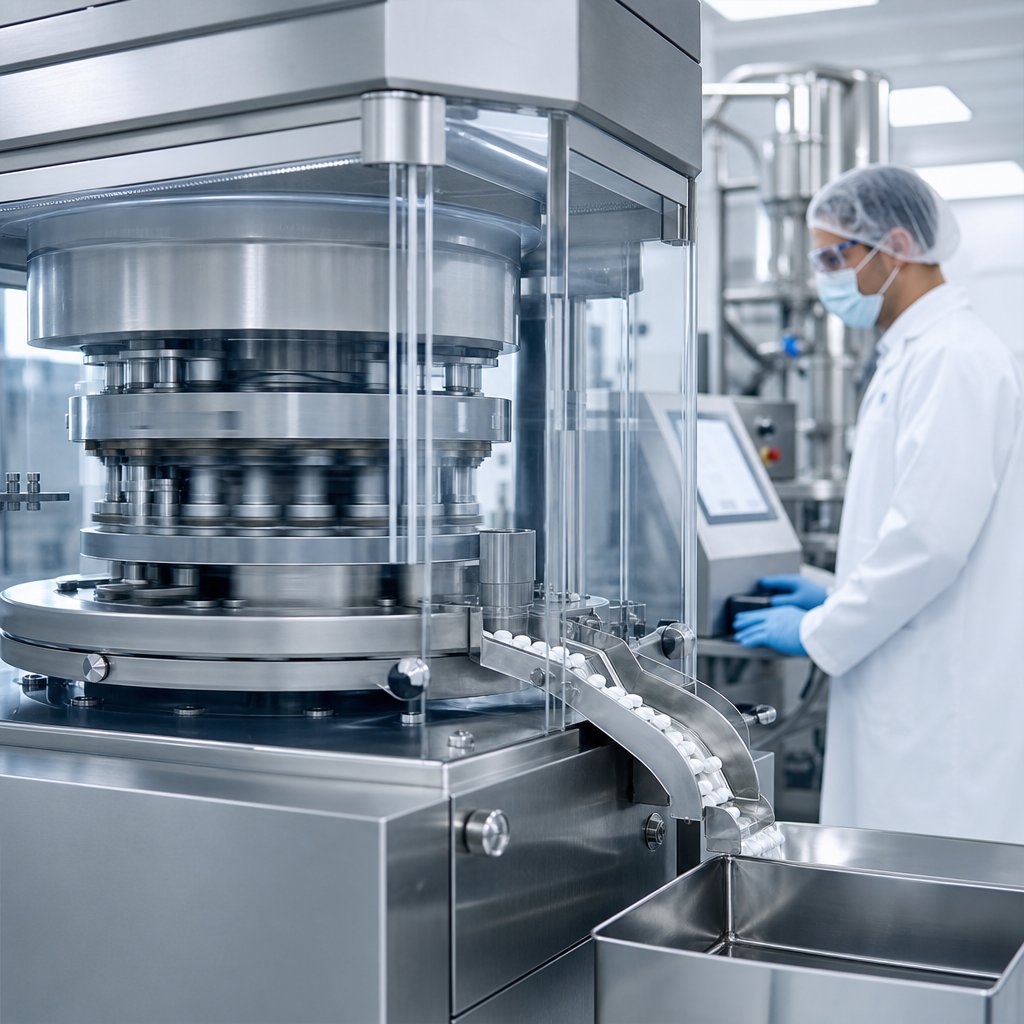
How Disintegrating Tablets Are Manufactured
Ever notice that some ODT tablets feel light and airy — almost like a freeze-dried candy — while others are firmer and more compact in your hand? That difference is not random. It comes down to the manufacturing technology used to produce each oral disintegrating tablet. The method chosen during production shapes everything about the final product: how fast it dissolves, how strong it feels between your fingers, how well it masks bitter flavors, and how much it costs.
Manufacturing Technologies Behind ODTs
Four primary methods dominate ODT production, each with distinct strengths and tradeoffs:
- Freeze-drying (lyophilization): This is the technology behind the original Zydis platform from the 1980s. The process involves dissolving or suspending the drug in a water-based matrix, pouring it into blister molds, freezing it, and then removing the ice under vacuum. What remains is an extremely porous, lightweight tablet that dissolves almost instantly — often in under 5 seconds. The downside? These odt tablets are incredibly fragile. They crumble under minimal pressure, require specialized aluminum blister packaging, and are expensive to produce. If your ODT feels like it could break apart just from handling it, lyophilization is likely how it was made.
- Direct compression: The most widely used method today. Powder blends containing the drug, superdisintegrants, and specialized excipients are compressed into tablets using conventional tablet presses — the same equipment used for standard pills. The key difference is the excipient selection. Research published in the Journal of Pharmaceutical Innovation evaluated co-processed excipients like Ludiflash, Parteck ODT, and Ceolus UF-702 specifically designed for direct compression ODT manufacturing. These materials combine flowability, compressibility, and rapid disintegration into a single ingredient, allowing manufacturers to produce odt orally disintegrating tablet formulations at scale without specialized freeze-drying equipment. Direct compression ODTs are firmer, more durable, and cheaper to produce — though they typically disintegrate in 15 to 30 seconds rather than the near-instant dissolution of lyophilized versions.
- Molding: This technique uses moisture or heat to shape a powder mixture into tablets within molds, then dries them. The resulting tablets are porous and dissolve quickly, but they tend to be mechanically weak and less uniform than compressed versions. Molding is less common in large-scale commercial production.
- Sublimation: A volatile substance (like ammonium bicarbonate or camphor) is mixed into the tablet blend, compressed, and then removed by heating or vacuum. As the volatile material evaporates, it leaves behind a highly porous internal structure — like removing the scaffolding from a building. This creates fast-dissolving tablets with good mechanical strength, though the extra processing step adds cost and complexity.
Each method produces a different balance of speed, strength, and cost. Lyophilized ODTs dissolve fastest but break easiest. Direct compression ODTs are the most practical for high-volume manufacturing. Sublimation and molding fall somewhere in between, offering niche advantages for specific formulations.
How Formulation Choices Shape the Patient Experience
Beyond the manufacturing method itself, formulators make dozens of ingredient decisions that directly affect what you experience when you place an odt tablet on your tongue.
Taste masking is arguably the biggest challenge. Most active pharmaceutical ingredients taste bitter, metallic, or otherwise unpleasant — and since an ODT sits on your tongue for several seconds, that bitterness hits your taste buds directly. Research from Tablets & Capsules demonstrates one common solution: coating the drug particles with an aqueous ethylcellulose dispersion before compressing them into tablets. This thin, hydrophobic polymer layer physically traps the bitter compound, preventing it from contacting your taste buds during the brief seconds the tablet spends in your mouth. Plasticizers like dibutyl sebacate fine-tune the coating's flexibility and dissolution behavior, while pore formers ensure the coating eventually breaks down in your stomach so the drug can absorb normally.
Other taste-masking strategies include using sweeteners like mannitol (which also functions as a filler and provides a pleasant cooling sensation), adding flavoring agents, and complexing the drug with cyclodextrins that encapsulate bitter molecules. The goal is always the same: make the 10 to 30 seconds of tongue contact palatable enough that patients do not avoid their medication.
Disintegration speed depends on the type and concentration of superdisintegrants, the tablet's porosity, and the compression force used during manufacturing. Lower compression forces create more porous tablets that dissolve faster — but they also produce weaker tablets that may crumble during shipping. Formulators constantly balance these competing demands.
Tablet strength matters for practical reasons: the tablet needs to survive packaging, transportation, and handling by patients without breaking apart prematurely. Co-processed excipients solve this by combining multiple functional properties — binding, disintegration, and flow — into a single engineered particle. This allows manufacturers to achieve adequate hardness while maintaining the rapid disintegration that defines the ODT format.
Custom Formulation and Scalable Production
The same manufacturing principles that produce prescription ODTs also apply to the nutrition and supplement industry. Brands developing fast-dissolving vitamin tablets, mineral supplements, or functional health products face identical formulation challenges: achieving rapid disintegration, masking ingredient flavors, and maintaining tablet integrity during storage and shipping.
This is where OEM/ODM (Original Equipment Manufacturer/Original Design Manufacturer) partnerships become relevant. Rather than investing in specialized equipment and formulation expertise in-house, nutrition brands and private label sellers increasingly work with contract manufacturers who already have the infrastructure and technical knowledge to produce these formats at scale.
For businesses exploring disintegrating tablet or other innovative dosage forms for health products, manufacturers like ZhuFeng offer OEM/ODM services that span customized formulation development through scalable production — covering formats from tablets and capsules to granules and oral liquids. Their model allows supplement importers and functional food companies to bring market-ready products to shelf without building manufacturing capability from scratch.
The manufacturing method ultimately determines what lands on your tongue — its texture, its taste, its speed. Whether produced through freeze-drying for ultra-rapid dissolution or direct compression for cost-effective scale, every ODT tablet reflects a series of deliberate engineering choices made long before it reaches your blister pack.
Making Informed Decisions About Your Medications
You started with a simple question — what is an ODT — and now you have the full picture. From the regulatory standards that define the format, to the superdisintegrant science that powers it, to the step-by-step technique for taking one correctly, you are equipped to use these medications with confidence rather than confusion.
Key Takeaways About Disintegrating Tablets
Here is what matters most:
An ODT is a regulated, clinically validated dosage form — not a marketing gimmick. It meets strict FDA and USP standards, dissolves in under 30 seconds, and delivers your medication through a precisely engineered mechanism. Proper handling (dry hands, peeled foil, no pill organizers) ensures it works exactly as designed.
The odt medication meaning is straightforward: it tells you the tablet dissolves on your tongue, requires no water, and should not be swallowed whole like a conventional pill. When you see the medical term ODT on a label, you now know exactly what it means and how to respond.
When to Ask Your Pharmacist About ODT Options
Consider bringing up ODT alternatives with your healthcare provider if any of these apply to you:
- You regularly struggle to swallow your current tablets or capsules
- You frequently skip doses because water is not available when you need to take your medication
- You experience nausea that makes swallowing pills unreliable
- You care for a child or elderly family member who resists taking conventional pills
- You travel often and want a more portable medication routine
Your pharmacist can check whether an ODT version of your current medication exists, whether your insurance covers it, and whether switching requires a new prescription from your doctor. Not every drug has an ODT equivalent, but the list continues to grow as manufacturers expand into this format — and as businesses interested in developing health products in disintegrating tablet or other innovative formats partner with OEM/ODM manufacturers like ZhuFeng for customized formulation support.
What does ODT stand for in medicine? Three letters that represent decades of pharmaceutical engineering, all designed to make one moment easier: the moment you take your medication. Whether you are managing allergies, migraines, nausea, or a chronic condition, knowing what an ODT is — and how to use it properly — puts you in control of your treatment rather than at the mercy of a pill you cannot swallow.
Frequently Asked Questions About Disintegrating Tablets
1. What happens if you swallow a dissolvable tablet without letting it dissolve?
If you swallow an orally disintegrating tablet whole, the medication still reaches your system safely. It simply follows the standard gastrointestinal absorption route, similar to a conventional pill taken with water. You will not experience harm, but you may lose some benefits the ODT format provides, such as faster onset or pre-gastric absorption through the oral mucosa. For medications like ondansetron ODT used during nausea, letting it dissolve on the tongue is preferable since swallowing water or a whole tablet may be difficult when vomiting.
2. What is the difference between an ODT and a sublingual tablet?
An ODT dissolves on the tongue surface and is swallowed with saliva, with the drug absorbed through the gastrointestinal tract after swallowing. A sublingual tablet is placed under the tongue and absorbs directly through the thin mucosal membrane into the bloodstream, bypassing the stomach and liver entirely. This distinction matters clinically because sublingual medications like nitroglycerin rely on that direct bloodstream entry for rapid emergency action, while ODTs primarily offer convenience by eliminating the need for water.
3. Can you put a disintegrating tablet in a weekly pill organizer?
No. ODTs are extremely moisture-sensitive due to their porous internal structure, which is designed to absorb liquid rapidly. Removing them from their sealed blister packaging and placing them in a pill organizer exposes them to ambient humidity, causing premature degradation or partial disintegration before use. Clinical guidelines specifically warn against storing ODTs in dosage administration aids like Webster packs or dosette boxes. Always keep them in their original foil packaging until the moment you are ready to take them.
4. Are disintegrating tablets more effective than regular tablets?
In most cases, ODTs deliver the same amount of active drug as their conventional tablet counterparts and are considered therapeutically equivalent. However, certain ODT formulations offer a pharmacokinetic advantage through pre-gastric absorption. For example, selegiline ODT (Zelapar) achieves equivalent blood levels at one-eighth the dose of the conventional tablet because it bypasses liver metabolism via oral mucosal absorption. Whether an ODT is more effective depends on the specific drug and its formulation rather than the format alone.
5. Why are disintegrating tablets more expensive than regular pills?
ODTs require specialized manufacturing processes such as freeze-drying (lyophilization), advanced taste-masking coatings, co-processed excipients, and moisture-protective blister packaging that standard compressed tablets do not need. These additional production steps, quality controls, and packaging materials increase manufacturing costs. Insurance plans may also classify the ODT version as a separate product with different coverage tiers or prior authorization requirements, further affecting out-of-pocket cost for patients.