What Arrowroot Powder Actually Is and Why Names Vary
You've seen it on ingredient lists, spotted it in gluten-free recipes, and maybe even grabbed a bag off the shelf without fully knowing what it does. So what is arrowroot powder, exactly, and why does it show up under so many different names?
Arrowroot Powder Defined
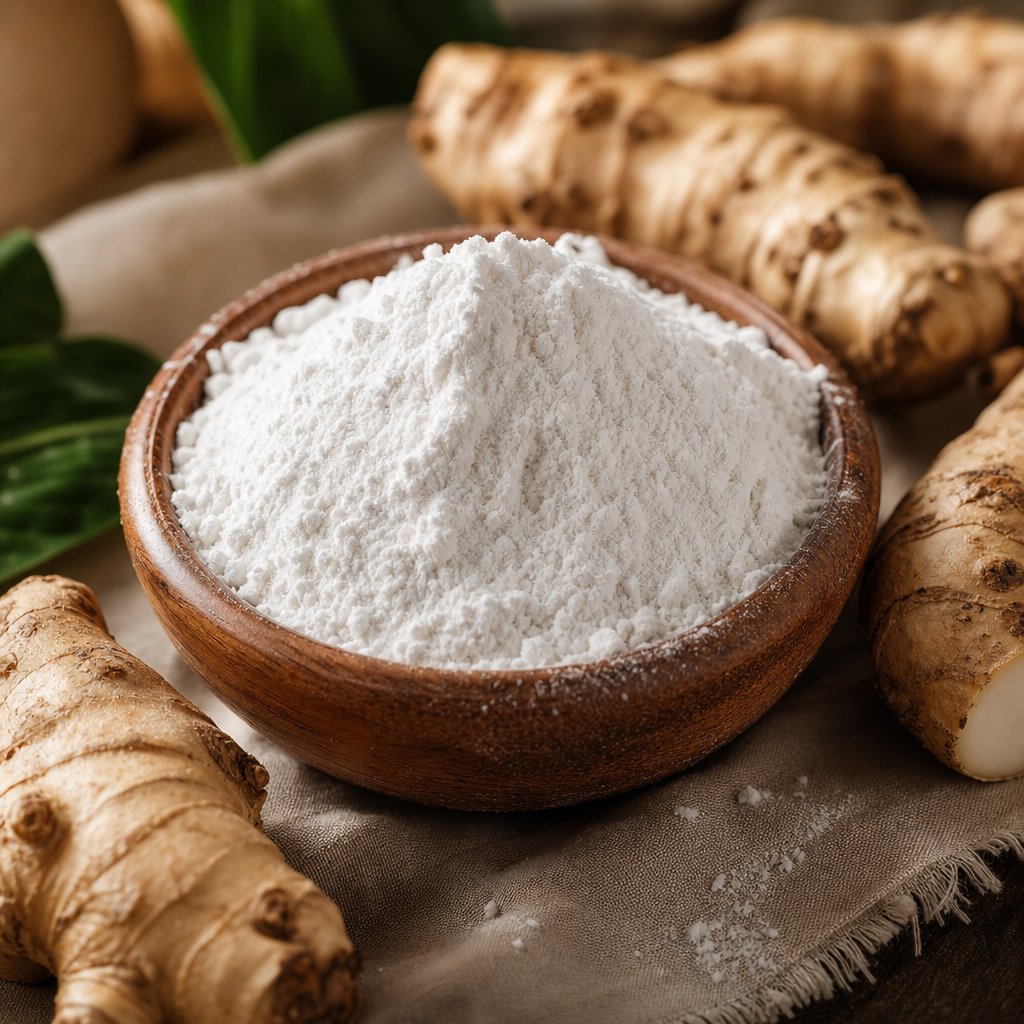
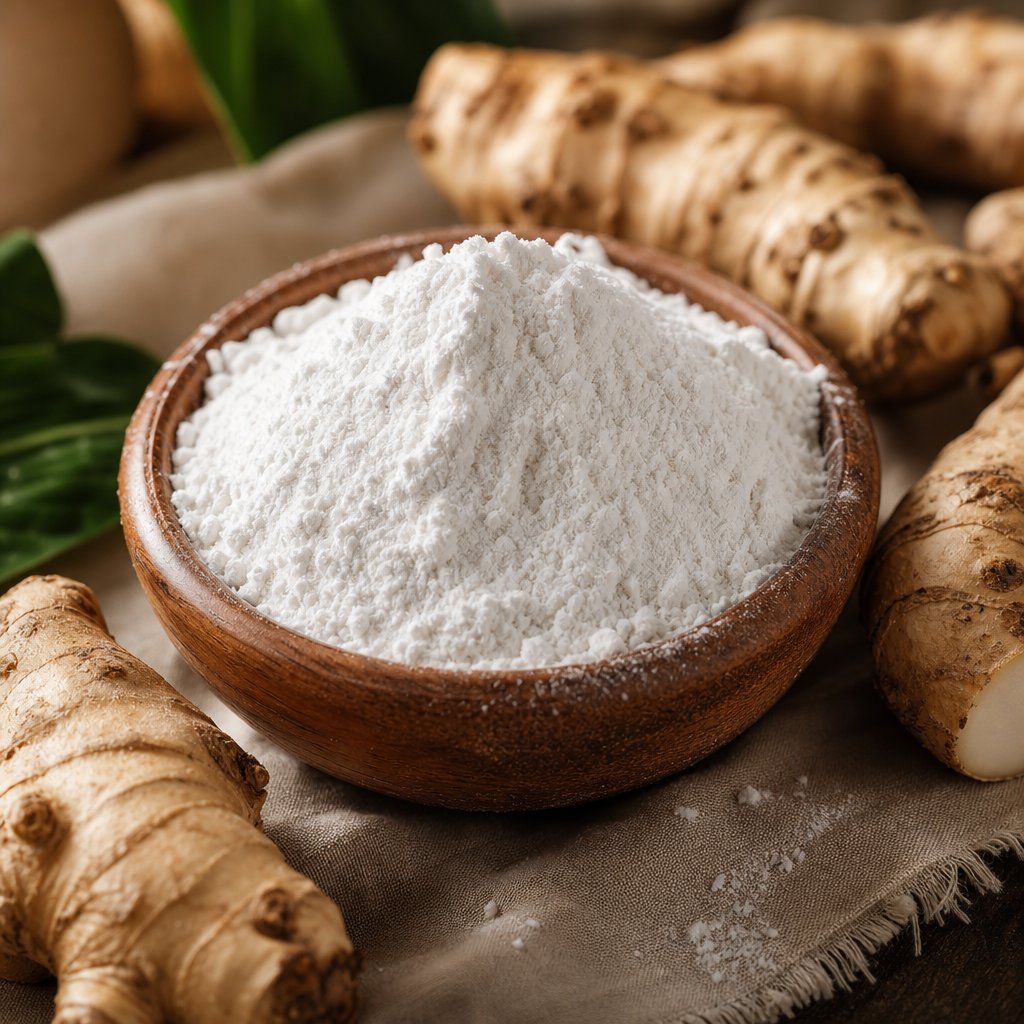
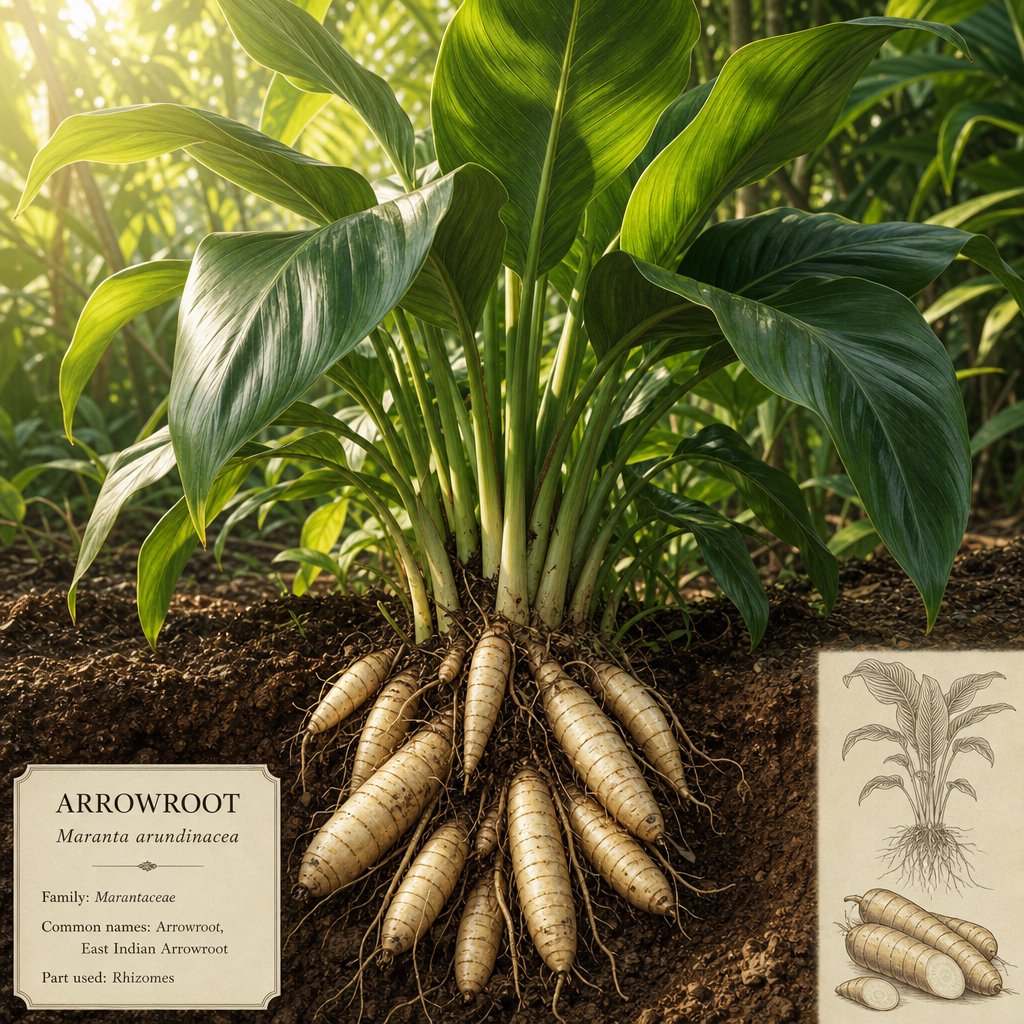
Arrowroot powder is a fine, pure white starch extracted from the rhizomes of the tropical plant Maranta arundinacea. It is flavorless, odorless, and naturally gluten-free, grain-free, and paleo-friendly. Unlike cornstarch, which relies on chemical processing, arrowroot starch is produced through simple mechanical extraction, making it a clean-label ingredient with roots in Caribbean and South American traditional food cultures stretching back thousands of years.
The Arawak peoples of the Caribbean were among the first to cultivate and process the plant, originally using it both as a food source and a wound treatment. European explorers later brought it to global markets, where it evolved into the versatile kitchen staple you'll find today.
Arrowroot Powder vs Arrowroot Flour vs Arrowroot Starch
Here's where things get confusing for shoppers. Walk down the baking aisle and you might see three different labels: arrowroot powder, arrowroot flour, and arrowroot starch. Is arrowroot powder the same as arrowroot flour? In nearly every case, yes. These terms are interchangeable in commercial labeling, and the products inside the bags perform identically in recipes.
Some brands use "flour" to suggest a slightly less refined grind, but the functional difference is negligible. When you ask what is arrowroot starch or what is arrowroot flour, you're really asking about the same ingredient packaged under different marketing names.
Arrowroot powder, arrowroot flour, and arrowroot starch are the same product. The name on the label varies by brand, not by function or composition.
This naming overlap trips up home cooks and health-conscious shoppers alike. The good news: you can grab whichever version your store carries and expect the same results in thickening, baking, and beyond.
What makes this ingredient worth a deeper look goes well beyond its identity. Its nutritional makeup, the way it behaves at different temperatures, and the specific scenarios where it outperforms cornstarch all deserve attention, and that's exactly what the rest of this guide covers.
From Tropical Rhizome to Fine White Powder
Knowing the name is one thing. Understanding where arrowroot actually comes from and how it ends up as that silky powder in your pantry gives you a much clearer picture of why it behaves the way it does in recipes.
The Maranta Arundinacea Plant
So what is arrow root at its source? It starts as a herbaceous perennial belonging to the Marantaceae family. The arrowroot plant grows up to 1.5 meters tall, with smooth, dark green lanceolate leaves and fleshy, cylindrical rhizomes that sit 20 to 45 cm below the soil surface. Those rhizomes are the starch storage organs, and they're the entire reason the plant is cultivated.
Maranta arundinacea is native to the West Indies and Central and South America, but it's now grown across tropical and subtropical regions including India (Kerala, Tamil Nadu), Sri Lanka, Indonesia, Thailand, the Philippines, and parts of Africa. The plant thrives in temperatures between 25 and 35 degrees Celsius with moderate annual rainfall of 1,200 to 1,500 mm, preferring loose, well-drained sandy loam soils with a pH of 5.5 to 6.5.
Climate and soil conditions directly influence starch content. Rhizomes contain approximately 23 to 25% starch on a fresh weight basis, but that percentage shifts depending on growing conditions, maturity at harvest, and regional variety. Plants grown in humus-rich soils with proper organic amendments tend to produce higher granule purity and better gelatinization performance. This is why tropical sourcing matters: the right environment produces maranta arundinacea root powder with superior functional properties.
How Arrowroot Powder Is Extracted
The extraction process is refreshingly simple, and that simplicity is a big part of arrowroot's appeal. Unlike corn-based starches that may involve chemical solvents or alkali treatments, arrowroot relies on purely mechanical separation. Here's how it works from harvest to finished powder:
- Harvesting - Mature rhizomes are manually uprooted after 10 to 12 months of growth.
- Washing - Rhizomes are thoroughly cleaned to remove soil and debris.
- Peeling - The outer skin is removed to prevent off-flavors in the final starch. Peeled rhizomes oxidize quickly, turning reddish-brown on exposure to air.
- Pulping - Rhizomes are grated or crushed into a fine mush using mechanical graters or stone mills.
- Washing and straining - The pulp is mixed with water and filtered through fine mesh or cheesecloth, separating starch from fibrous material. This step is repeated to maximize yield.
- Settling - The starch-water mixture is left undisturbed, allowing pure starch granules to settle to the bottom.
- Drying - The settled starch layer is sun-dried or dehydrated until moisture is fully removed.
- Milling - The dried starch is ground and sieved into the fine, silky powder you find on store shelves.
No chemical solvents. No bleaching agents. This clean processing chain is exactly why arrowroot appeals to clean-label consumers and brands formulating allergen-friendly products. Starch purity levels from this process exceed 95%, with minimal ash and protein content, resulting in a neutral-tasting powder that won't interfere with the flavor of your finished dish.
That purity and simplicity raise an obvious next question: what does this clean starch actually deliver in terms of nutrition compared to the alternatives already sitting in your cabinet?
Nutritional Profile and How It Stacks Up Against Other Starches
A starch is a starch, right? Not quite. When you look at arrowroot powder nutrition facts side by side with other thickeners, subtle but meaningful differences emerge, especially if you're managing dietary restrictions or tracking micronutrients.
Arrowroot Powder Nutrition Per Serving
Arrowroot is primarily a carbohydrate source with minimal fat and protein. A single tablespoon (approximately 8 grams) of arrowroot powder delivers roughly:
- Calories: 29 kcal
- Carbohydrates: 7 g
- Fiber: 0.3 g
- Protein: 0.3 g
- Fat: 0 g
- Iron: approximately 1.5% DV
- Potassium: approximately 1% DV
- Folate (B9): trace amounts
Those numbers look modest, and they are. You're not eating arrowroot for its protein content. But compared to other pure starches, arrowroot nutrition stands out for containing measurable amounts of iron, potassium, phosphorus, and B vitamins that cornstarch simply doesn't offer. Arrowroot carbs are almost entirely digestible starch, though a small portion qualifies as resistant starch, which feeds beneficial gut bacteria rather than spiking blood sugar.
How Arrowroot Compares Nutritionally to Other Starches
Here's where context makes the difference. When you line up the four most common thickening starches per tablespoon, arrowroot holds its own:
| Nutrient (per 1 tbsp) | Arrowroot Powder | Cornstarch | Tapioca Starch | Potato Starch |
|---|---|---|---|---|
| Calories | 29 kcal | 30 kcal | 35 kcal | 40 kcal |
| Carbohydrates | 7 g | 7 g | 9 g | 10 g |
| Fiber | 0.3 g | 0 g | 0 g | 0 g |
| Protein | 0.3 g | 0 g | 0 g | 0 g |
| Iron | Trace | Negligible | Negligible | Negligible |
| Potassium | Trace | Negligible | Negligible | Trace |
| Glycemic Index | ~65 (moderate) | ~85-90 (high) | ~85 (high) | ~95 (very high) |
The calorie differences are small at tablespoon quantities, but the glycemic index gap is significant. Arrowroot's GI of approximately 65 makes it the gentlest option on blood sugar among these four starches. That matters for anyone monitoring glucose response or following low-glycemic eating patterns.
Is arrowroot powder gluten free? Absolutely. It's naturally free of gluten, grains, and common allergens, which is why it fits cleanly into multiple restrictive dietary protocols. For those wondering "arrowroot is it gluten free" in the context of celiac disease, the answer is yes, and it's also compliant with paleo, AIP (Autoimmune Protocol), and low-FODMAP frameworks. Cornstarch is gluten-free too, but it's grain-derived and excluded from paleo and AIP plans. Tapioca passes the grain-free test but gets excluded from strict AIP protocols by some practitioners.
These nutritional advantages are real but modest. Where arrowroot truly separates itself from the pack is in what it does for your body beyond basic macros, particularly for digestive health and allergen-sensitive individuals.
Health Benefits Supported by Research and Traditional Use
Modest mineral content and a favorable glycemic index are useful starting points, but arrowroot powder benefits extend into territory that other starches can't touch. For centuries, traditional healers across the Caribbean and South America reached for this ingredient when digestive trouble struck. Modern research is beginning to explain why.
Digestive Health and Gut-Soothing Properties
Imagine a starch that doesn't just thicken your soup but actually calms your gut. That's arrowroot's traditional reputation, and it's not unfounded. The powder acts as a demulcent, meaning it forms a soothing film over irritated mucous membranes in the digestive tract. This coating effect helps reduce inflammation and discomfort in the stomach and intestines, which is why arrowroot has been a go-to remedy for upset stomachs, infant feeding, and recovery from illness for generations.
A pilot clinical study published in Arquivos de Gastroenterologia examined arrowroot's effectiveness in patients with irritable bowel syndrome (IBS). Participants took 10 mL of arrowroot powder three times daily for one month. The results showed that arrowroot reduced diarrhea, eased abdominal pain, and even had a longer-term positive effect on constipation. Researchers suggested its action relates to increased fecal bulk, promoting more efficient bowel function.
The study was small (11 patients), and the authors noted that further research is needed to substantiate these preliminary findings. Still, it provides clinical backing for what traditional practitioners have observed for centuries. Arrowroot's easy digestibility also makes it suitable for sensitive populations, including infants transitioning to solid foods, elderly individuals with weakened digestion, and anyone recovering from gastrointestinal illness.
Gluten-Free and Allergen-Friendly Advantages
For people navigating celiac disease, grain allergies, or autoimmune conditions, finding safe thickeners and baking ingredients can feel like a minefield. Arrowroot clears every hurdle. It contains zero gluten, zero grains, and no common allergens like soy, dairy, or nuts.
This makes it compatible with an unusually wide range of elimination diets:
- Celiac and gluten-free diets - completely safe with no cross-reactivity concerns
- Paleo diet - grain-free and minimally processed
- AIP (Autoimmune Protocol) - permitted during both elimination and reintroduction phases
- Low-FODMAP - well-tolerated in standard cooking quantities
- Corn-free diets - a direct replacement for cornstarch without triggering corn sensitivities
Cornstarch, while technically gluten-free, is grain-derived and excluded from paleo and AIP protocols. Wheat flour is obviously off the table for celiac patients. Arrowroot sidesteps all of these restrictions simultaneously, which is why it shows up so frequently in specialty diet cookbooks and allergen-friendly product formulations.
Potential Side Effects and Safety Considerations
Is arrowroot healthy for everyone? The safety profile is reassuring. WebMD classifies arrowroot as "likely safe" when consumed in food amounts. No significant drug interactions have been identified, and it's considered possibly safe for pregnant and breastfeeding women at typical dietary quantities.
That said, a few considerations are worth noting:
- Overconsumption - eating large amounts may cause constipation or stomach discomfort, as with any concentrated starch
- Starch sensitivity - individuals who react poorly to concentrated starches should introduce arrowroot gradually
- Medicinal doses - there isn't enough reliable data to confirm safety at doses significantly above normal food use
- Skin application - insufficient research exists to fully evaluate topical safety, though adverse reactions are rarely reported
The honest takeaway on arrowroot benefits and side effects: the benefits of arrowroot powder are well-supported by traditional use and early clinical evidence, particularly for digestive comfort and allergen avoidance. The side effects are minimal and dose-dependent. However, while traditional applications are well-documented, more large-scale clinical research is needed before making definitive medical claims about arrowroot powder health benefits.
These health advantages matter most when you actually use the ingredient correctly in your kitchen. And that's where arrowroot's behavior gets interesting, because it doesn't act like cornstarch at all once heat and acid enter the picture.
Culinary Uses from Thickening Sauces to Gluten-Free Baking
Heat, acid, dairy, timing. These four variables determine whether arrowroot delivers a silky, glossy sauce or a gloppy mess. Understanding how this starch behaves in real cooking scenarios is the difference between loving it and swearing it off after one bad experience. So what is arrowroot powder used for in the kitchen, and how do you get the best results every time?
Using Arrowroot as a Thickening Agent
The most common of all arrowroot powder uses is thickening liquids, and the technique matters more here than with cornstarch. You can't just dump it into a hot pot and hope for the best.
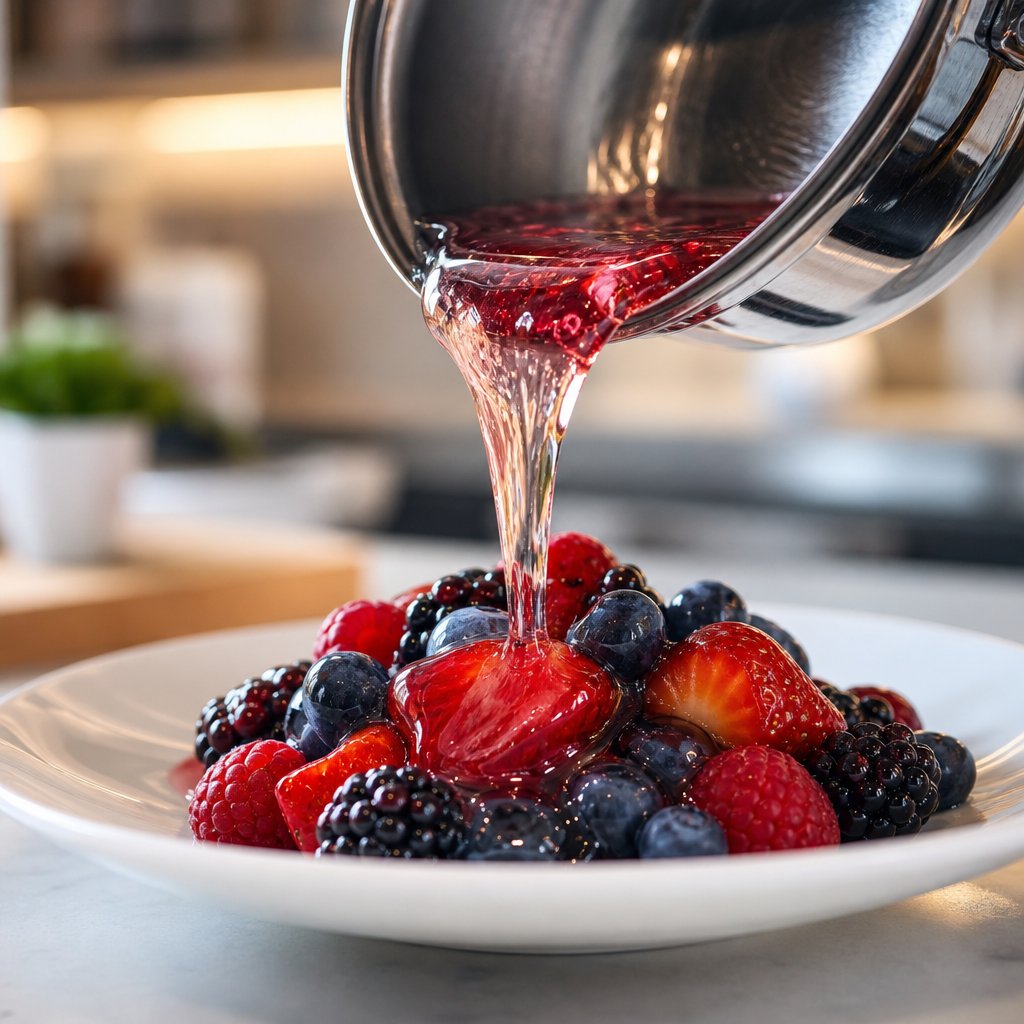
Start by making a slurry. Mix one to two teaspoons of arrowroot powder with an equal amount of cold liquid, whether that's water, broth, or fruit juice. Whisk until completely smooth. Then stir the slurry into your sauce or soup at the very end of cooking, ideally with the heat turned down or off entirely. Within 30 to 60 seconds, you'll see the liquid thicken into a clear, glossy finish that lets the natural color of your food shine through.
This is where arrowroot powder as a thickener truly separates itself from cornstarch. Cornstarch produces an opaque, slightly cloudy result and needs a few minutes of boiling to lose its raw starchy taste. Arrowroot activates at lower temperatures, requires no extended cooking, and leaves sauces looking transparent and jewel-toned.
Another advantage: arrowroot stands up beautifully to acidic ingredients. Fruit sauces, citrus glazes, cranberry compotes, and vinegar-based dressings all thicken cleanly without breaking down. Cornstarch struggles in acidic environments, often thinning out or producing an uneven texture. This makes arrowroot the go-to thickener for fruit pie fillings and tangy Asian-style sauces.
Arrowroot also handles freezing far better than cornstarch. Sauces thickened with it maintain their consistency through freeze-thaw cycles, while cornstarch-thickened mixtures tend to weep and separate after defrosting.
Arrowroot in Baking and Coating
Beyond sauces, baking arrowroot into gluten-free recipes opens up textures that almond flour or coconut flour alone can't achieve. When blended with other grain-free flours, arrowroot acts as a structure enhancer, giving baked goods a lighter, more tender crumb. Think of it as the ingredient that prevents dense, heavy results in paleo cookies, scones, and quick breads.
Arrowroot in baking works best at ratios of 25 to 50 percent of the total flour blend. Too much and your baked goods become gummy. The right amount creates that delicate, slightly crisp edge on cookies and a soft interior in cakes.
For coatings, arrowroot delivers a crunch that rivals traditional flour dredging. Dust tofu, chicken, fish, or vegetables with a thin layer before pan-frying or baking, and you'll get a crispy golden exterior without any gluten. It also works beautifully on sweet potato fries and roasted vegetables when you want extra crispness from the oven.
How Arrowroot Reacts with Dairy and Prolonged Heat
Here's the critical knowledge that most recipes fail to mention: arrowroot does not play well with dairy or extended cooking times. If you stir it into a cream-based sauce, the result is often an unpleasant, slimy consistency rather than the smooth thickness you'd expect. This reaction occurs because arrowroot interacts poorly with the casein proteins in milk and cream.
Prolonged heat is equally problematic. Unlike cornstarch, which tolerates simmering, arrowroot breaks down when cooked too long. The starch molecules lose their structure, and your beautifully thickened sauce reverts to a thin liquid. This is why timing is everything: add it at the end, serve promptly, and don't reheat aggressively.
Quick-reference tips for ideal arrowroot thickener applications:
- Fruit sauces, pie fillings, and glazes (clear, glossy finish)
- Stir-fry sauces added in the final 30 seconds of cooking
- Gravies and pan sauces served immediately
- Frozen dishes that will be thawed and reheated gently
- Crispy coatings for frying or oven-roasting
- Gluten-free baking blends at 25-50% of total flour weight
What is arrowroot used for when you understand these rules? Everything from a shimmering blueberry compote to a perfectly crisp schnitzel coating. The key is knowing its strengths and respecting its limits, particularly around dairy and heat exposure.
Those limits naturally raise the next question: if arrowroot can't handle every situation, how does it compare head-to-head with cornstarch across specific applications, and what are the exact substitution ratios you need?
Arrowroot vs Cornstarch and Complete Substitution Ratios
Side by side, arrowroot powder vs cornstarch looks like a simple swap. Both are white, flavorless, and thicken liquids. But put them to work in an actual recipe and the differences become obvious fast. One gives you a crystal-clear fruit glaze; the other turns it cloudy. One survives the freezer; the other falls apart after thawing. Knowing exactly where each starch excels, and the precise ratios for swapping between them, saves you from ruined sauces and wasted ingredients.
Key Differences Between Arrowroot and Cornstarch
When you compare cornstarch vs arrowroot powder across the factors that actually matter in cooking, a clear pattern emerges. Each starch owns specific territory:
| Factor | Arrowroot Powder | Cornstarch |
|---|---|---|
| Sauce clarity | Crystal clear, glossy | Opaque, matte when cooled |
| Thickening temperature | Low (activates quickly) | High (requires boiling) |
| Freeze-thaw stability | Excellent, holds texture | Poor, weeps and separates |
| Flavor | Completely neutral | Slight cereal-like taste if undercooked |
| Acid tolerance | Strong, thickens acidic liquids well | Weak, can thin out in acidic sauces |
| Dairy compatibility | Poor, turns slimy | Excellent, smooth in cream sauces |
| Extended cooking | Breaks down, loses thickening | Holds up to simmering |
| Allergen status | Grain-free, paleo, AIP compliant | Grain-derived, excluded from paleo/AIP |
| GMO concerns | Naturally non-GMO | Often GMO unless certified organic |
| Cost | Higher per ounce | Budget-friendly, widely available |
The takeaway? Neither starch is universally better. Arrowroot wins on clarity, freeze stability, allergen safety, and acid tolerance. Cornstarch wins on dairy compatibility, heat endurance, and price. Your recipe dictates the right choice, not brand loyalty.
Substitution Ratios for Every Application
This is where most guides fall short. They give you a single generic ratio and call it done. But the correct arrowroot powder cornstarch substitute ratio actually shifts depending on what you're making. A sauce behaves differently than a pie filling, and a frying coating has different demands than a baking recipe.
Use this table as your go-to reference for swapping between the four most common thickening starches:
| Application | Cornstarch (baseline) | Arrowroot Powder | Tapioca Starch | Potato Starch | Best Use Case | Limitations |
|---|---|---|---|---|---|---|
| Thickening sauces | 1 tbsp | 2 tsp | 2 tbsp | 1 tbsp | Arrowroot for clear sauces; cornstarch for dairy-based | Arrowroot breaks down with prolonged heat |
| Pie fillings | 1 tbsp | 2 tsp | 2 tbsp | 1 tbsp | Arrowroot or tapioca for fruit pies; cornstarch for cream pies | Arrowroot won't set firm enough for sliceable cream pies |
| Frying coatings | 1 tbsp | 1 tbsp | 1 tbsp | 1 tbsp | Cornstarch for maximum crispness; arrowroot for grain-free diets | Arrowroot produces slightly less golden color |
| Baking (flour blend) | 1 tbsp | 1 tbsp | 1 tbsp | 1 tbsp | Arrowroot for lighter crumb; tapioca for chewier texture | Too much arrowroot creates gummy results |
| Frozen dishes | 1 tbsp | 2 tsp | 2 tbsp | 1 tbsp | Arrowroot or tapioca (both freeze-thaw stable) | Cornstarch separates after thawing |
The key ratio to remember: 2 teaspoons of arrowroot replaces 1 tablespoon of cornstarch for most thickening applications. Arrowroot has slightly stronger thickening power per gram, so you need less. For frying and baking, the swap is a straightforward 1:1 ratio since you're relying on coating and structure rather than gel formation.
If you're looking for a substitute for arrowroot powder because you've run out, reverse the math: use 1.5 tablespoons of cornstarch for every 1 tablespoon of arrowroot in sauces. Tapioca works as an arrowroot starch substitute at a 2:1 ratio (2 tablespoons tapioca for 1 tablespoon arrowroot), and potato starch swaps in at roughly 1:1 with cornstarch.
When to Choose Arrowroot Over Cornstarch
Ratios only help if you're reaching for the right starch in the first place. Here's when arrowroot is the clear winner:
- Fruit pie fillings, berry compotes, and citrus glazes where clarity matters
- Dishes you plan to freeze and reheat later
- Acidic sauces containing lemon juice, vinegar, wine, or tomatoes
- Allergen-free cooking for paleo, AIP, or corn-sensitive individuals
- Quick pan sauces served immediately without extended simmering
- Stir-fries where you want a glossy, restaurant-style finish
And here's when cornstarch is the smarter pick:
- Cream sauces, bechamels, and cheese-based dishes
- Recipes requiring prolonged simmering (stews, braises, slow-cooker meals)
- Dishes that need reheating multiple times on the stovetop
- Budget-conscious cooking where cost per ounce matters
- Frying batters where maximum golden crispness is the goal
- Thick, sliceable pie fillings like coconut cream or banana cream
Think of it this way: arrowroot is your finishing starch, added at the end for clarity and elegance. Cornstarch is your workhorse starch, built for heat, dairy, and long cooking times. Keeping both in your pantry means you always have the right arrowroot substitute or cornstarch alternative on hand, no matter what the recipe demands.
Of course, knowing the right ratios doesn't protect you from the mistakes that trip up even experienced cooks. Arrowroot has specific failure modes that cornstarch doesn't, and ignoring them turns a promising dish into something you'd rather not serve.
Common Mistakes and When NOT to Use Arrowroot Powder
Every failed arrowroot experiment follows the same pattern: someone treats it like cornstarch, applies the same technique, and ends up with lumps, slime, or a sauce that mysteriously thins out mid-dinner. Knowing how to use arrowroot powder correctly means understanding exactly where it breaks down, both literally and figuratively.
Common Mistakes That Ruin Your Results
These four errors account for nearly every arrowroot disaster in the kitchen. Each one has a straightforward fix once you understand what does arrowroot powder do at a molecular level when exposed to heat and liquid.
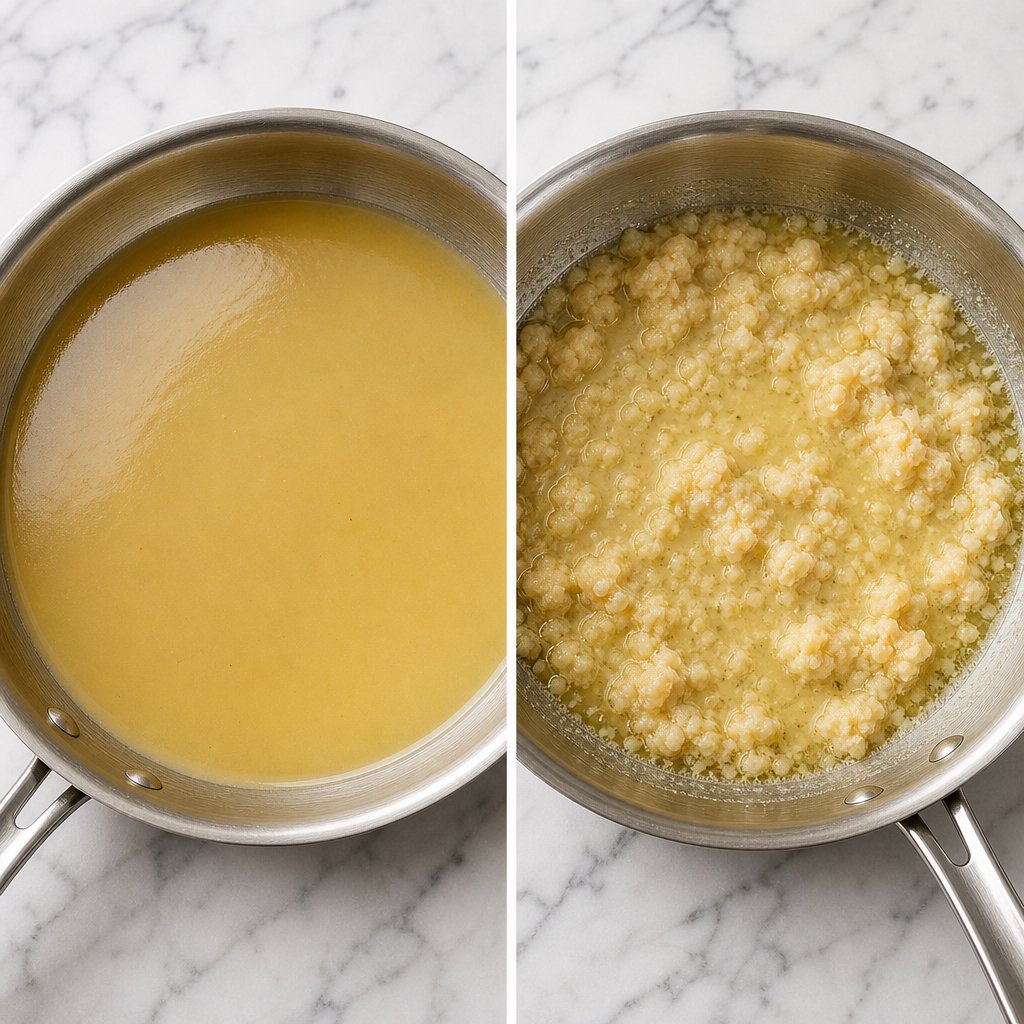
Mistake 1: Adding arrowroot directly to boiling liquid. Dump dry arrowroot powder straight into a bubbling pot and you'll get instant clumps. The outer layer of each particle gelatinizes on contact, trapping dry starch inside. No amount of whisking will smooth it out.
The fix: Always make a slurry first. Combine arrowroot with an equal amount of cold or room-temperature liquid, whisk until smooth, then stir the slurry into your sauce. This ensures even dispersion before heat activates the starch.
Mistake 2: Cooking too long after adding arrowroot. Unlike cornstarch, which tolerates simmering, arrowroot's thickening power breaks down with extended heat. Leave it on the burner for more than a minute or two and your beautifully thickened sauce reverts to a thin, watery liquid. The gel structure collapses irreversibly.
The fix: Add your arrowroot slurry at the very end of cooking, ideally with the heat turned low or off entirely. Once the sauce thickens (30 to 60 seconds), remove it from the heat and serve. Thickening with arrowroot powder is a finishing move, not a building block.
Mistake 3: Using too much arrowroot. More isn't better here. Excess arrowroot creates a slimy, gelatinous texture that feels unpleasant in the mouth. You'll notice a stringy, almost mucilaginous quality that no one wants in a gravy or glaze.
The fix: Start with less than you think you need. For a medium-consistency sauce, 2 teaspoons of arrowroot per cup of liquid is a reliable starting point. You can always add more slurry in small increments, but you can't undo over-thickening without diluting your entire dish.
Mistake 4: Combining arrowroot with dairy. Stir arrowroot into a cream sauce, milk-based pudding, or cheese sauce and the result is an undesirable slimy consistency rather than the smooth, velvety thickness you'd expect. The interaction between arrowroot starch and casein proteins in dairy produces this off-putting texture.
The fix: Use cornstarch or wheat flour for any dairy-based sauce. Arrowroot as a thickening agent works brilliantly in water-based, broth-based, and fruit-based liquids, but dairy is its kryptonite. If you must stay grain-free in a cream sauce, tapioca starch handles dairy slightly better than arrowroot.
When Arrowroot Is the Wrong Choice
Honesty about limitations builds better results than blind enthusiasm. There are specific scenarios where reaching for arrowroot will consistently disappoint, no matter how perfect your technique. If your recipe falls into any of these categories, choose a different starch from the start:
- Cream-based sauces - bechamels, alfredos, cheese sauces, and chowders all require a thickener that cooperates with dairy proteins
- Dishes requiring extended simmering - stews, braises, and slow-cooker meals that cook for hours will break down arrowroot long before serving time
- Recipes needing multiple reheats - arrowroot-thickened leftovers lose viscosity each time they're warmed, leaving you with progressively thinner results
- High-fat preparations - butter sauces and oil-heavy dressings don't emulsify well with arrowroot's gel structure
- Stovetop puddings and custards - the dairy plus extended cooking combination is a double disqualifier
- Dishes served from a warming tray or buffet - prolonged holding temperatures will thin the sauce over time
For all of these situations, cornstarch or a traditional flour roux will outperform arrowroot for thickening every time. Arrowroot excels in fast, last-minute applications with non-dairy liquids. Trying to force it into roles it wasn't designed for is the single biggest reason home cooks give up on it entirely.
The practical lesson? Keep both arrowroot and cornstarch in your pantry. Arrowroot handles the elegant finishing work: glossy fruit sauces, clear gravies, and freeze-stable dishes. Cornstarch handles the heavy lifting: dairy sauces, long braises, and anything that sits on the stove. Knowing which tool fits which job is what separates a frustrating kitchen experience from a seamless one.
Interestingly, arrowroot's usefulness extends well beyond the stovetop. Its fine particle size and oil-absorbing properties have made it a staple in an entirely different industry: natural skincare and health product formulations.
Arrowroot Powder for Skin and Health Formulations
Its fine particle size, neutral scent, and natural oil-absorbing capacity make arrowroot powder for skin applications just as compelling as its culinary uses. The same properties that create silky sauces and light baked goods translate directly into personal care, where texture, absorbency, and gentle performance on sensitive skin are non-negotiable.
Arrowroot Powder for Skin and Natural Beauty
Why does arrowroot show up in so many DIY beauty recipes and clean-label cosmetics? The answer comes down to physics. Arrowroot particles are exceptionally fine and smooth, even silkier than cornstarch, which allows them to glide across skin without clogging pores or creating a chalky residue. This makes arrowroot powder uses for skin remarkably versatile across multiple product categories.
As a natural dry shampoo, arrowroot absorbs excess sebum from the scalp and hair roots, instantly refreshing greasy strands between washes. Unlike aerosol dry shampoos loaded with propellants and synthetic fragrances, a light dusting of arrowroot disappears into hair without leaving visible flakes or buildup.
In body powders and talc alternatives, arrowroot powder skin benefits really shine. Talcum powder has faced scrutiny over potential asbestos contamination, pushing consumers toward plant-based options. Arrowroot delivers the same moisture-wicking, friction-reducing performance without the safety concerns. It's gentle enough for baby powder formulations and soothing enough for adults with sensitive or irritation-prone skin.
Other common arrowroot benefits for skin in personal care include:
- Natural deodorant base - absorbs underarm moisture while providing a smooth application texture when blended with coconut oil and baking soda
- Mattifying face powder - controls shine in the T-zone without caking, working as a translucent setting powder for all skin tones
- DIY foundation ingredient - lightens and softens mineral pigments in homemade powder makeup
- Body balm de-greaser - added to anhydrous balms and butters to reduce the heavy, oily finish and leave skin feeling dry and silky
The arrowroot powder benefits for skin extend beyond simple oil absorption. The powder contains trace minerals like zinc and potassium that contribute mild soothing properties, making it suitable for formulations targeting irritated, acne-prone, or post-shave skin. Its non-comedogenic nature means it won't trigger breakouts even when applied directly to the face.
Arrowroot in Functional Health Products
Step outside the beauty aisle and arrowroot plays an equally important role in supplement manufacturing. Its neutral taste, easy digestibility, and clean-label status make it an ideal excipient, the inactive ingredient that serves as a carrier or filler in health product formulations.
In the supplement industry, arrowroot starch functions as:
- A capsule shell component - research published in the Journal of Advanced Pharmaceutical Technology & Research demonstrated that arrowroot starch combined with sodium alginate can serve as a viable alternative to gelatin capsule shells, offering a plant-based, allergen-friendly option for vegetarian and halal-compliant supplements
- A powder blend base - its smooth flow properties and neutral flavor make it an effective carrier for active ingredients in powdered supplement formulations
- A granulation agent - arrowroot's binding capacity helps form stable granules that dissolve predictably in the digestive tract
Contract manufacturers specializing in health foods rely on ingredients like arrowroot to build allergen-friendly formulations across multiple product formats. For brands developing private-label supplements, OEM/ODM manufacturers such as ZhuFeng use arrowroot powder as a base ingredient in customized health product lines, including powder and granule blends, hard capsules, and other formats where clean-label appeal and digestive gentleness matter. This kind of scalable production with built-in ingredient sourcing helps emerging nutrition brands bring arrowroot-based products to market without managing complex supply chains independently.
The growing demand for plant-derived, non-GMO excipients in supplement manufacturing mirrors the same clean-label movement driving arrowroot's popularity in food and cosmetics. Whether it's absorbing oil from your forehead or carrying vitamin D into a capsule shell, arrowroot's versatility keeps expanding into new commercial territory.
All of these applications, from kitchen to vanity to supplement shelf, depend on one thing: starting with quality arrowroot powder. And that's where buying decisions and storage practices become just as important as knowing how to use it.
Buying Quality Arrowroot Powder and Storing It Right
A perfectly executed recipe or a carefully formulated skincare product means nothing if the arrow root powder you started with isn't actually arrowroot. Adulteration is a documented problem in this market, and knowing what to look for before you buy protects both your results and your investment.
How to Identify Quality Arrowroot Powder
Here's a reality check most brands won't tell you: not all products labeled "arrowroot" contain genuine Maranta arundinacea starch. A case study published in Current Developments in Nutrition tested three commercially available arrow root starch samples from US distributors. All three came with authentication certificates. On microscopy, only one actually contained starch granules characteristic of true arrowroot. The other two could not be identified, suggesting adulteration with cheaper starches like potato or tapioca.
That finding should make you a more careful shopper. When evaluating arrowroot powder flour products on the shelf, look for these quality signals:
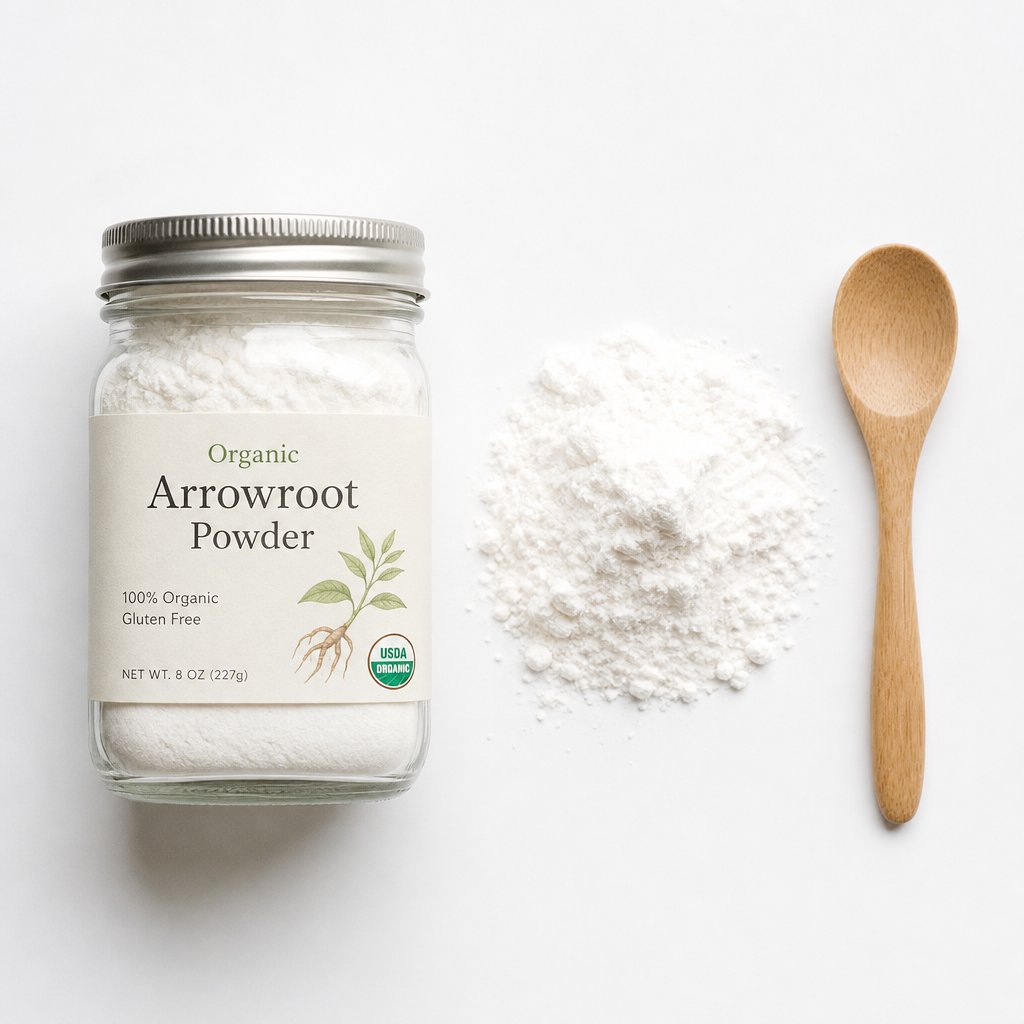
- Pure white color - genuine arrowroot is bright white with no yellowing or gray tones
- Silky, ultra-fine texture - rub it between your fingers and it should feel smoother than cornstarch with zero grittiness
- Single-ingredient label - the only ingredient listed should be arrowroot starch or Maranta arundinacea, with no fillers like potato starch or tapioca
- Organic certification - while not a guarantee of purity, USDA Organic or equivalent certification adds a layer of supply chain traceability
- Third-party testing - brands that invest in independent identity verification (microscopy or DNA testing) are far less likely to sell adulterated product
- Reputable sourcing origin - look for products specifying Caribbean, South American, or Southeast Asian origin rather than vague "tropical" claims
If you're buying organic arrowroot specifically to avoid GMO concerns or chemical residues, certification matters even more. Organic arrow root flour undergoes auditing at the farm and processing level, reducing the chance that cheaper starches get blended in during manufacturing.
Storage Conditions and Shelf Life
The good news about arrowroot: it's one of the longest-lasting pantry staples you can own. When stored under optimal conditions, arrow root powder maintains peak quality for 3 to 4 years unopened. Once you break the seal, expect 1 to 2 years of reliable performance before gradual degradation begins.
Optimal storage looks like this:
- Container - airtight glass jar, snap-lid plastic container, or metal tin with a snug seal
- Temperature - room temperature between 68 and 72 degrees Fahrenheit (20 to 22 degrees Celsius)
- Location - cool, dry pantry or cupboard away from the stove, dishwasher steam, or direct sunlight
- Humidity - below 50% relative humidity to prevent moisture absorption
Signs your arrowroot has degraded past usability include visible clumping (moisture has entered the container), off-odors (fresh arrowroot is completely odorless), yellowing or discoloration, and any visible mold growth. If you notice any of these, discard the powder rather than risk compromised thickening performance or food safety issues.
Sourcing Arrowroot for Commercial and Brand Use
For entrepreneurs developing nutrition brands or private-label products that use arrowroot for flour replacement or as a functional base ingredient, sourcing at scale introduces challenges that retail buying doesn't. You need consistent granule size, verified botanical identity, batch-to-batch uniformity, and documentation that satisfies regulatory requirements.
OEM/ODM health food manufacturers like ZhuFeng offer scalable production with ingredient sourcing and quality control built into the process. Their manufacturing capabilities span multiple formats, from powder and granule blends to hard capsules, gummy candy, and oral liquids, giving brands flexibility to develop arrowroot-based products without managing raw material procurement independently. For businesses exploring customized formulations that leverage arrowroot's clean-label appeal and allergen-friendly profile, this kind of integrated production partnership simplifies the path from concept to market-ready product.
Whether you're buying a single bag for your kitchen or sourcing bulk arrow root starch for a supplement line, the principle stays the same: verify what you're getting, store it properly, and choose suppliers who can prove authenticity. Quality arrowroot powder rewards you with years of reliable performance. Adulterated product wastes your money and undermines every recipe or formulation it touches.
Frequently Asked Questions About Arrowroot Powder
1. Is arrowroot powder the same as arrowroot flour?
Yes, arrowroot powder, arrowroot flour, and arrowroot starch are commercially interchangeable terms for the same product extracted from Maranta arundinacea rhizomes. Some brands label less refined grinds as flour, but functionally they perform identically in cooking and baking. You can use whichever version your store carries and expect the same thickening power, texture, and nutritional profile in your recipes.
2. Can I use arrowroot powder instead of cornstarch in all recipes?
Not in all recipes. Arrowroot works best in clear fruit sauces, acidic liquids, frozen dishes, and quick pan sauces served immediately. However, it performs poorly in dairy-based sauces where it turns slimy, dishes requiring prolonged simmering where it breaks down, and recipes needing multiple reheats. For cream sauces, stews, and custards, cornstarch remains the better choice. The standard substitution ratio is 2 teaspoons of arrowroot for every 1 tablespoon of cornstarch in thickening applications.
3. What are the health benefits of arrowroot powder?
Arrowroot powder offers several evidence-backed benefits. It acts as a demulcent that soothes irritated digestive tract membranes, making it suitable for sensitive stomachs and IBS management. It has a lower glycemic index (approximately 65) compared to cornstarch (85-90), making it gentler on blood sugar. It is naturally free of gluten, grains, and common allergens, fitting into celiac, paleo, AIP, and low-FODMAP diets. It also contains trace minerals like iron and potassium that cornstarch lacks.
4. How do I use arrowroot powder without getting lumps or slime?
Always mix arrowroot with an equal amount of cold liquid to form a smooth slurry before adding it to your dish. Stir the slurry in at the very end of cooking with heat turned low or off, and serve within minutes since prolonged heat breaks down its thickening structure. Use no more than 2 teaspoons per cup of liquid to avoid a slimy texture, and never combine it with dairy-based sauces where it reacts poorly with casein proteins.
5. How can I tell if my arrowroot powder is genuine and not adulterated?
Research has shown that many commercial arrowroot products contain cheaper starches like potato or tapioca instead of true Maranta arundinacea. Look for pure white color with no yellowing, an ultra-fine silky texture with zero grittiness, a single-ingredient label listing only arrowroot starch, and organic or third-party testing certifications. Reputable products specify their sourcing origin such as Caribbean, South American, or Southeast Asian regions rather than vague tropical claims.