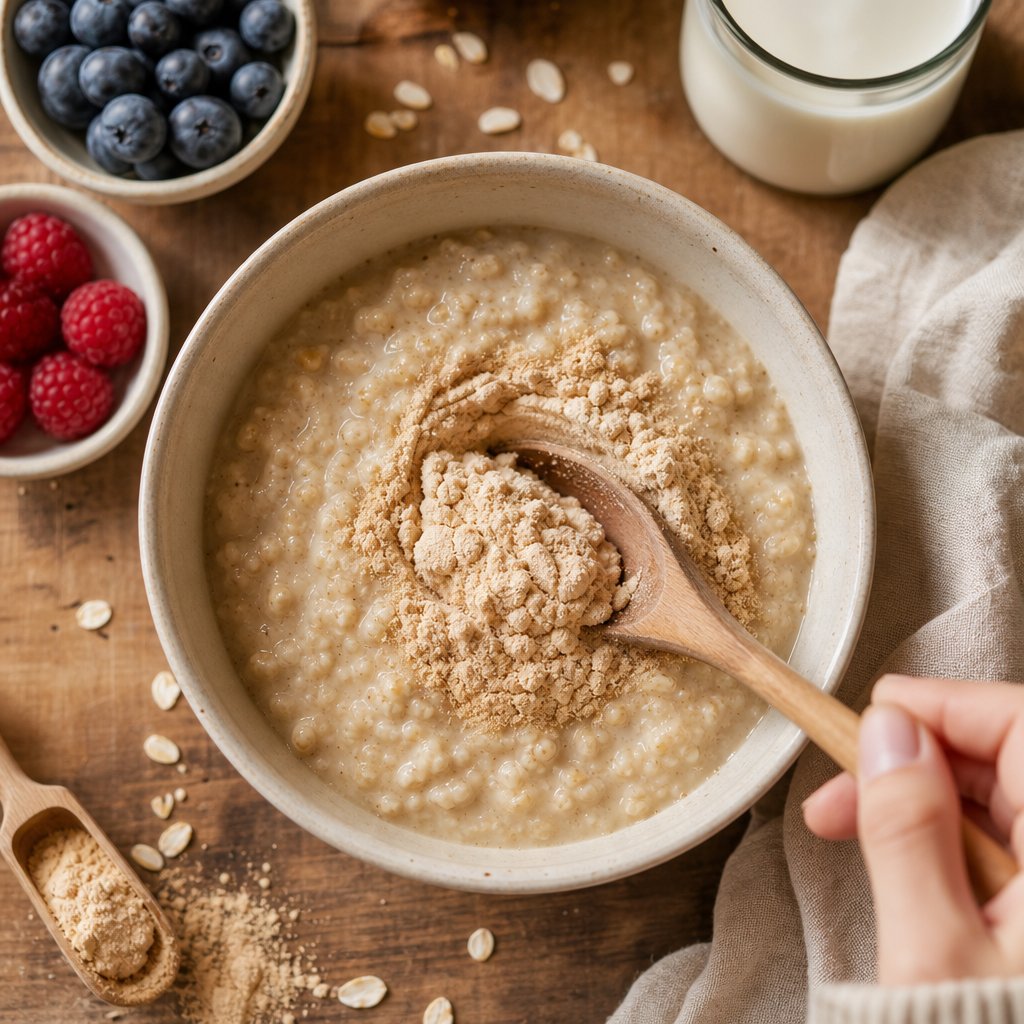
Adding Protein Powder to Oatmeal Actually Works
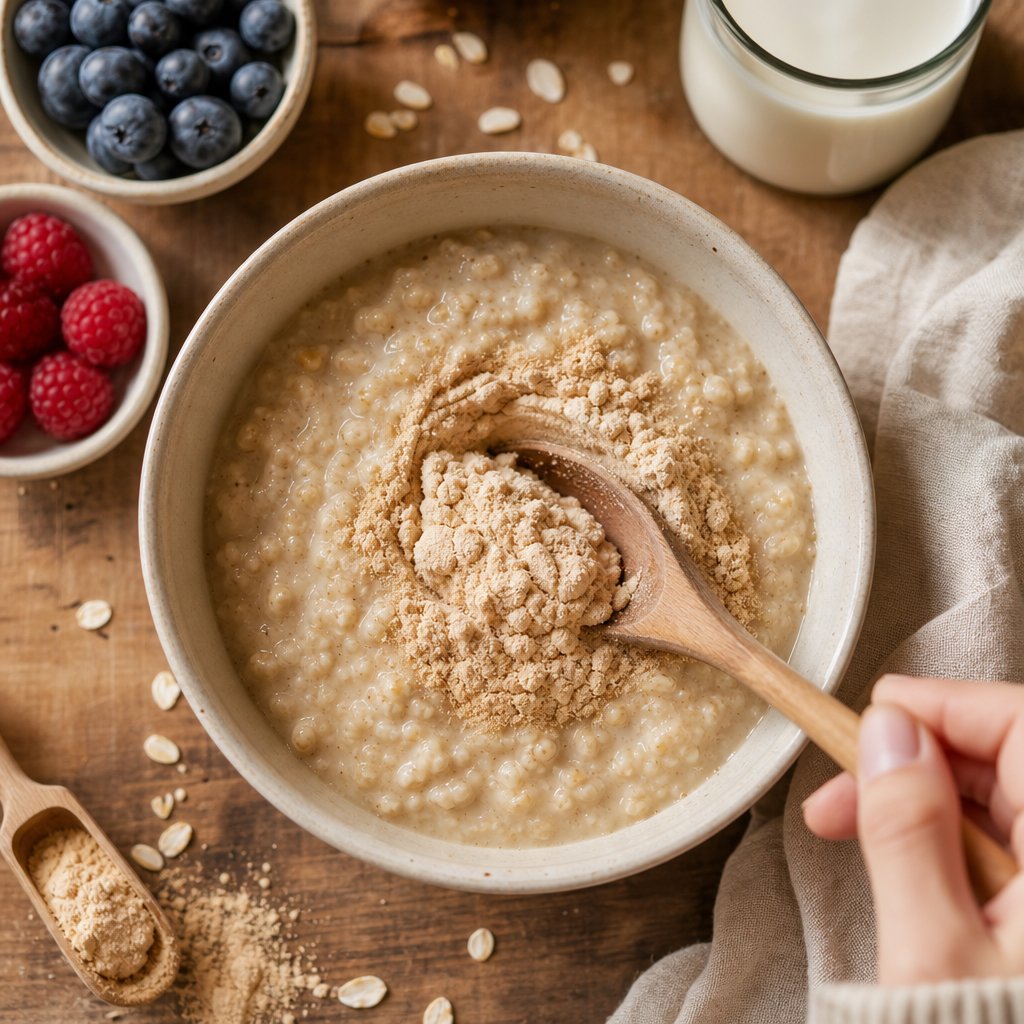
Can you add protein powder to oatmeal? Yes, and it works remarkably well. A standard bowl of cooked oats delivers roughly 5 to 6 grams of protein per serving. Stir in one scoop of protein powder, and you jump to 25-30 grams without adding a second dish or spending extra time at the stove. It turns a carb-forward breakfast into a balanced meal that actually keeps you full past mid-morning.
But here is the thing most people really want to know: how do you do it without ending up with a chalky, lumpy mess? That is the real question behind the search, and the answer comes down to three variables: timing, temperature, and the type of powder you use. Get any one of those wrong, and your oatmeal with protein powder goes from creamy to clumpy in seconds.
The Short Answer and Why It Works
Oatmeal is already a whole-grain powerhouse loaded with fiber, complex carbohydrates, and key minerals like manganese and magnesium. What it lacks is enough protein to sustain energy and support muscle recovery on its own. Adding protein powder to oatmeal fills that gap without requiring you to cook eggs on the side or prep a separate shake. The oats provide slow-digesting carbs and beta-glucan fiber, while the protein powder delivers amino acids your body needs for satiety and repair. Together, they create a high protein oatmeal that covers multiple nutritional bases in a single bowl.
Adding protein powder to oatmeal is safe, effective, and can boost a single serving from 5g to 25-30g of protein when done correctly.
What Most People Get Wrong on Their First Try
The most common mistake? Dumping protein powder directly into boiling-hot oatmeal and stirring aggressively. That is the one step you skip at your own risk. High heat causes protein molecules to bond together and form clumps, leaving you with a gritty texture no amount of stirring can fix. The solution is simple once you understand the science, but it is not obvious the first time you try it.
Throughout this guide, you will learn exactly how to add protein to oatmeal the right way. We cover the science behind clumping, how different powder types behave, step-by-step mixing methods, ideal ratios for your goals, and flavor combinations that make protein powder oatmeal something you genuinely look forward to eating. Whether you prefer hot stovetop oats or cold overnight prep, the oatmeal protein boost you are after is easier than you think once you know the rules.
The Science Behind Protein Powder in Hot Oatmeal
That gritty, lumpy texture you get when mixing protein powder in oatmeal too early is not random bad luck. It is a predictable chemical reaction, and understanding it gives you full control over the outcome every single time.
Why Protein Powder Clumps in Hot Oatmeal
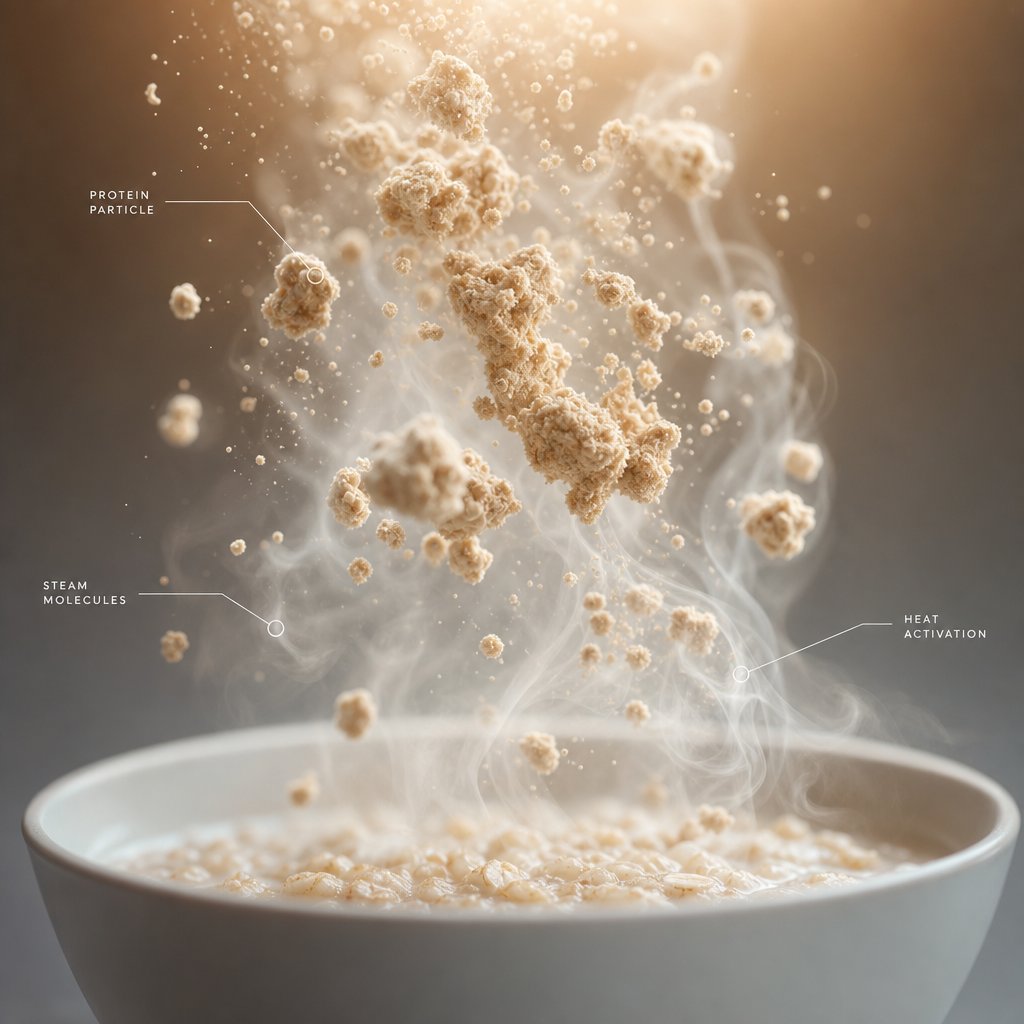
Protein molecules in their natural state are tightly folded into compact three-dimensional shapes. Think of them like coiled springs held together by weak internal bonds. When you put protein powder in oatmeal that is still steaming hot, the heat energy breaks those internal bonds. The protein molecules unfold, exposing sticky hydrophobic regions that were previously tucked inside. These exposed surfaces immediately bond to each other, forming tangled clusters that trap dry powder in the center.
This process is called protein denaturation, and it happens rapidly in hot environments. Research on whey protein shows that as temperature rises, the protein structures unfold and aggregate through both reversible and irreversible interactions. The result in your bowl? Rubbery clumps surrounded by otherwise smooth oatmeal. The outer layer of each powder particle gets wet and forms a sticky barrier that prevents the inside from dissolving, making the problem worse the longer you wait to address it.
Does Heat Destroy Protein Powder Nutrients
Here is where a widespread myth needs correcting. Many people avoid combining oatmeal and protein powder in hot preparations because they believe heat destroys the protein itself. It does not. Denaturation changes the physical shape of protein molecules, but it does not break the peptide bonds that hold amino acids together. Your body still digests and absorbs the same amino acids regardless of whether the powder was mixed into cold milk or warm oats.
Protein denaturation changes the structure and texture of your powder, but it does not reduce its nutritional value or amino acid availability. The protein in oatmeal cooked with powder is just as bioavailable as protein consumed cold.
Consider this: cooking an egg denatures its proteins completely, yet nobody questions whether a cooked egg still delivers protein. The same logic applies when you can you mix protein powder with oatmeal at higher temperatures. You are not losing nutrition. You are only risking texture.
The Temperature Threshold You Need to Know
So at what point does clumping become a real problem? Research indicates that whey protein begins denaturing at approximately 70°C (158°F), with the rate and severity increasing as temperature and exposure time climb. By 85°C (185°F), nearly all whey protein in a solution has denatured. For context, oatmeal fresh off the stove or out of the microwave typically sits between 190-212°F (88-100°C), well above that critical threshold.
This is why timing matters so much. If you can you mix protein powder in oatmeal after letting it cool for just 60 to 90 seconds, you bring the temperature closer to that 160°F zone where clumping is manageable. Pair that brief wait with a splash of cold liquid, and you drop below the danger zone entirely. The science is straightforward: control the heat, and your oatmeal protein powder blends in smoothly every time.
Knowing the temperature threshold is useful, but different protein types react to heat in different ways. Whey, casein, plant blends, and collagen each have unique behaviors that affect how they integrate into a warm bowl of oats.
How Different Protein Powder Types Behave in Oatmeal
Not all protein powders are created equal, especially when you stir them into a warm, starchy base. The type of powder you choose changes everything about the final texture, thickness, and flavor of your bowl. Some dissolve seamlessly. Others turn your oats into pudding. And a few will fight you every step of the way if you do not adjust your liquid ratio. Here is what to expect from each major category so you can pick the right match for your preferred preparation style.
Whey Protein in Oatmeal and What to Expect
Whey protein is the most popular choice for oatmeal and whey protein pairings, and for good reason. Both whey concentrate and whey isolate dissolve relatively well in semi-solid foods when you manage the temperature correctly. Whey isolate, in particular, has undergone additional filtration that removes most fats and lactose, giving it a thinner profile and smoother integration into warm oats.
When you combine whey protein with oatmeal using the cool-then-stir method discussed earlier, you get a creamy, slightly thickened result with a mild sweetness that complements the natural nuttiness of oats. Whey concentrate adds a touch more richness due to its higher fat content, which some people actually prefer for mouthfeel. Whey protein oatmeal tends to taste like a more indulgent version of regular oats without any chalky aftertaste, provided you keep the temperature in check.
A few things to keep in mind with oats and whey:
- Whey isolate dissolves faster and produces fewer clumps than concentrate in hot applications
- Flavored whey (vanilla, chocolate) adds noticeable sweetness, so you may not need additional honey or sugar
- Whey protein in oatmeal thickens the mixture moderately, so add 2-3 tablespoons of extra liquid per scoop
- Both forms work well in hot and cold preparations, making whey the most versatile option overall
Plant-Based and Vegan Protein Powder Behavior
If you follow a dairy-free diet, vegan protein oatmeal is absolutely doable, but it requires a bit more patience. Plant-based blends typically combine pea protein, brown rice protein, and sometimes hemp or pumpkin seed protein to achieve a complete amino acid profile. Each of these sources has a coarser particle structure compared to whey, which means they do not dissolve as effortlessly into warm oats.
Pea protein is the most common base in vegan blends, and it tends to produce a slightly grainier texture. You will notice this more in hot oatmeal than in cold overnight oats, where extended soaking time allows the particles to hydrate fully. Rice protein adds a chalky quality if used in large amounts, though it is usually balanced by other ingredients in a blend.
Practical tips for vegan protein oatmeal success:
- Always add 3-4 tablespoons of extra liquid per scoop, as plant proteins absorb more moisture than whey
- The slurry method (mixing powder with cold liquid first) works especially well here to prevent dry pockets
- Earthy, slightly bitter undertones are common, so pair with strong flavors like cinnamon, cocoa, or maple
- Overnight oats give plant proteins time to fully hydrate, resulting in a much smoother texture than hot prep
The flavor profile of plant-based powders leans more neutral-to-earthy compared to whey's natural sweetness. Unflavored versions can taste slightly "green" or beany, so flavored varieties (chocolate or vanilla) tend to work better in oatmeal applications where you want the powder to blend into the background.
Casein and Collagen as Alternative Options
Casein protein behaves dramatically differently from whey, even though both come from milk. Casein is a slow-digesting protein that absorbs liquid aggressively and thickens over time. Stir it into warm oatmeal, and within minutes your bowl transforms into something closer to pudding or thick custard. For some people, this is a feature, not a bug. If you enjoy a dense, spoonable texture, casein is your best friend.
Where casein truly shines is in overnight oats. The extended soaking period allows casein to fully hydrate and thicken the mixture into a rich, creamy consistency that holds toppings beautifully. It also digests slowly, which means it keeps you satiated longer than whey, making it a smart choice for people who eat breakfast early and do not have a mid-morning snack opportunity.
Collagen peptides sit at the opposite end of the spectrum. They dissolve almost invisibly into hot or cold oatmeal, adding no thickening effect and virtually no flavor change. As collagen product guides note, hydrolyzed collagen peptides blend seamlessly into food and beverages without altering texture. This makes collagen ideal if you want to boost protein content without changing anything about how your oatmeal looks or tastes.
The trade-off? Collagen is not a complete protein. It lacks adequate tryptophan and is low in branched-chain amino acids (BCAAs) like leucine, which are critical for muscle protein synthesis. If your goal is muscle building or recovery, collagen alone will not get you there. It works best as a supplemental addition alongside a complete protein source, or for people primarily interested in joint and skin support rather than muscle-specific goals.
| Protein Type | Texture in Hot Oatmeal | Texture in Cold Oats | Flavor Impact | Thickening Effect | Best Use Case |
|---|---|---|---|---|---|
| Whey Isolate | Smooth and creamy when temp is managed | Dissolves well, light body | Mild sweetness, clean finish | Moderate | Everyday hot or cold oatmeal |
| Whey Concentrate | Creamy with slightly richer mouthfeel | Smooth, slightly thicker than isolate | Mildly sweet, hint of dairy | Moderate | Hot oatmeal when you want richness |
| Casein | Very thick, pudding-like within minutes | Dense, custard consistency overnight | Mild, slightly milky | High | Overnight oats and thick prep styles |
| Pea/Rice Blend | Slightly grainy, needs extra liquid | Smoother after overnight hydration | Earthy, mildly bitter undertone | Moderate to High | Dairy-free overnight oats |
| Collagen Peptides | Dissolves invisibly, no texture change | Undetectable, no thickening | Neutral, no flavor impact | None | Stealth protein boost without texture change |
Each protein type brings its own strengths depending on whether you prioritize texture, taste, dietary restrictions, or specific fitness goals. Whey protein oats deliver the most balanced experience for most people, while casein and plant blends reward those willing to adjust their technique. Collagen works as a silent partner when you want protein without any evidence it is there.
Choosing the right powder is half the equation. The other half is knowing exactly how to mix it in, because even the best-dissolving protein will clump if your technique is off.
Step-by-Step Methods for Mixing Protein Powder into Oatmeal
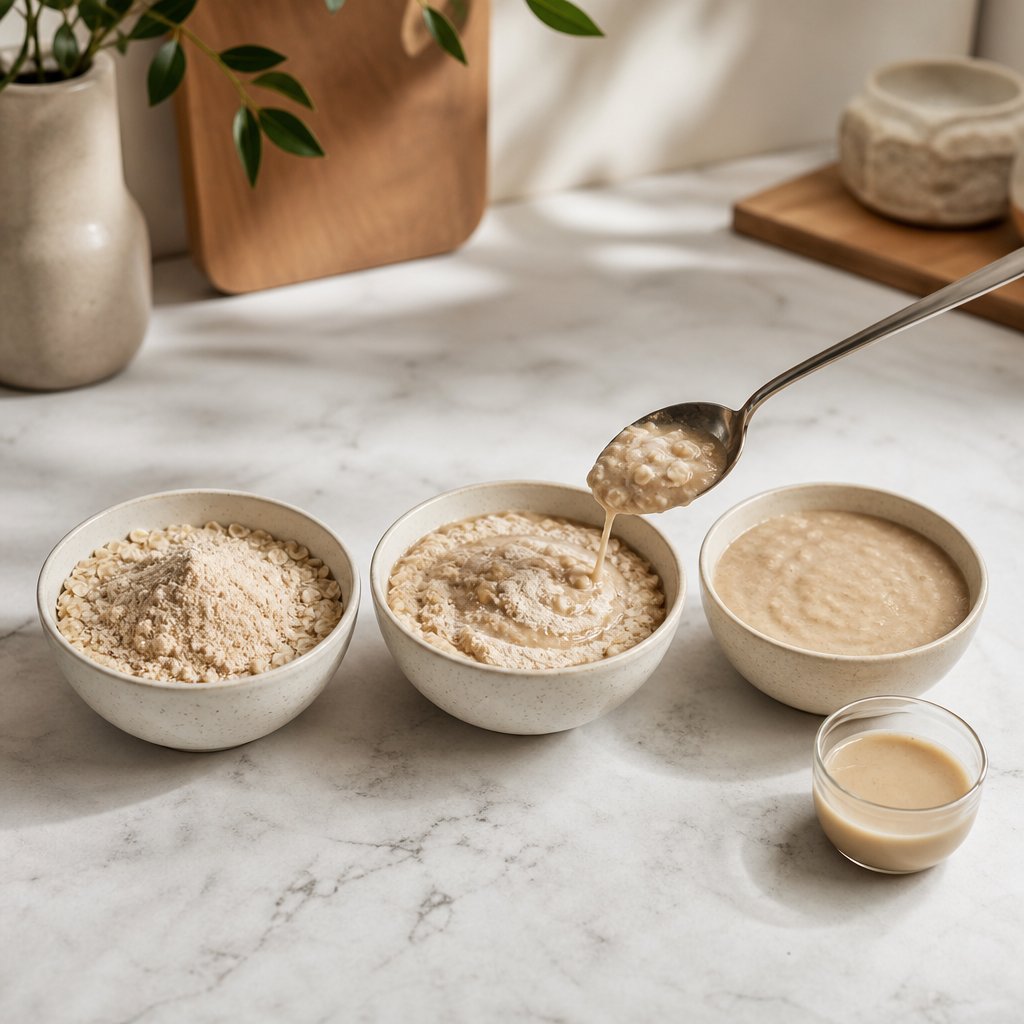
Knowing how to add protein powder to oatmeal without clumps comes down to controlling two things: temperature and hydration. There is no single "correct" method. Instead, you have three reliable approaches, each suited to different schedules, preferences, and powder types. Try all three and stick with the one that fits your morning routine.
One universal rule applies across every method: fold gently rather than whisking vigorously. Aggressive stirring introduces air pockets that trap dry powder and create lumps. Slow, deliberate folding gives the protein time to absorb liquid evenly. Also, plan on adding 2-4 tablespoons of extra liquid per scoop of protein powder, since protein wicks moisture from the oats and thickens the mixture considerably.
The Cool-Then-Stir Method
This is the simplest approach and the one most people find works on the first attempt. You cook your oatmeal normally, pause briefly, then stir in the powder once the temperature drops below the clumping threshold.
- Cook your oats on the stovetop or in the microwave using your usual liquid ratio (typically 1/2 cup dry oats to 1 cup water or milk).
- Remove from heat and let the oatmeal sit for 60 to 90 seconds. This brings the temperature closer to 150-160°F, below the point where protein aggressively denatures.
- Add a splash of cold milk or water (about 2-3 tablespoons) directly on top of the oatmeal. This creates a cooler zone for the powder to land in.
- Sprinkle one scoop of protein powder over the surface rather than dumping it in one spot.
- Fold gently with a spoon or spatula until the powder is fully incorporated and the texture is smooth. Add more liquid if the consistency feels too thick.
This method preserves the warm, comforting temperature of your oats while avoiding the clumping zone. It is how to make oatmeal with protein powder when you want minimal extra steps and a hot breakfast on the table fast.
The Protein Slurry Technique
If you have tried putting protein powder in oatmeal directly and still get small lumps, the slurry method eliminates that problem entirely. You pre-dissolve the powder in cold liquid before it ever touches the warm oats.
- In a separate cup or small bowl, combine one scoop of protein powder with 3-4 tablespoons of cold water or milk.
- Stir or whisk until you get a smooth, paste-like consistency with no dry spots. It should look like a thick sauce.
- Cook your oatmeal as usual and remove from heat.
- Pour the protein slurry over the warm oatmeal and fold it in gently until evenly distributed.
This technique works especially well for plant-based powders that tend toward graininess, and for anyone mixing protein powder with oatmeal who wants a guaranteed smooth result every time. The cold slurry also drops the overall bowl temperature slightly, which means you can stir it in sooner without waiting.
Cooking Protein Powder Directly with Oats
Want to know how to make protein powder oatmeal in a single pot with no extra steps? You can add the powder to your dry oats before cooking, though this method requires a few adjustments to avoid a gummy or overly dense result.
- Combine 1/2 cup dry oats and one scoop of protein powder in your pot or microwave-safe bowl. Stir the dry ingredients together first.
- Add 1 1/4 to 1 1/2 cups of liquid (instead of the standard 1 cup) to compensate for the extra absorption from the protein.
- Cook over medium-low heat on the stovetop, stirring frequently. Lower heat reduces the severity of protein denaturation and gives you a creamier result.
- Remove from heat as soon as the oats reach your desired consistency. The mixture will continue to thicken as it sits, so pull it slightly earlier than you normally would.
This is how to make protein oatmeal with the least cleanup and fewest dishes. The trade-off is a slightly denser texture compared to the other two methods, and some people notice a mild change in flavor when protein cooks directly with the oats. If you use a flavored powder, the heat can intensify sweetness, so start with less sweetener than you think you need.
How do you add protein to oatmeal if none of these methods feel quite right? Combine elements from each. Some people cook their oats, wait 30 seconds, add a half-slurry, and fold. Others cook half the powder with the oats and stir the rest in after. Once you understand the principles, you can adapt freely.
With your technique dialed in, the next question becomes practical: how much protein powder should you actually add per serving before texture and taste start to suffer?
How Much Protein Powder to Add Per Serving of Oatmeal
You have the technique down. The next decision is quantity. More protein powder does not always mean a better bowl. There is a practical ceiling where texture, taste, and digestibility all start to decline, and knowing that limit saves you from wasting powder on an inedible result.
The Maximum Protein Powder Per Serving Rule
So is there protein in oatmeal on its own? Yes, but not much. A standard 1/2 cup serving of dry rolled oats delivers about 5 grams of protein alongside 28 grams of complex carbohydrates and 4 grams of fiber. That is a solid nutritional foundation, but it is not enough to support satiety or muscle recovery for most active people. This is exactly why adding a scoop of protein powder makes such a meaningful difference.
The sweet spot for most people is one scoop (delivering 20-25g of protein) per 1/2 cup of dry oats. At this ratio, the powder integrates smoothly, the oatmeal retains a pleasant creamy texture, and the flavor stays balanced. Push beyond 1.5 scoops per serving, and you will notice the bowl becoming overly thick, chalky, and difficult to eat. The oats simply cannot absorb that much powder without turning into something closer to protein sludge than breakfast.
If you need more than 30 grams of protein from a single meal, a better strategy is one scoop of powder in the oats plus a complementary protein source on the side, like Greek yogurt or a hard-boiled egg, rather than overloading the bowl itself.
Ratio Guidance for Bulking, Cutting, and Maintenance
How many grams of protein in oatmeal you should aim for depends entirely on your goals. Here is how to think about it:
- Muscle building (bulking): Use a full scoop (20-25g protein) and cook your oats with whole milk instead of water. This bumps total protein in oatmeal with milk to roughly 33-35g per bowl. Add a tablespoon of nut butter for extra calories and healthy fats. A dietitian-recommended protein oats recipe using this approach delivers around 350 calories and 25-30g of protein, making it a solid muscle-building breakfast.
- Weight management (cutting): A half to full scoop works well here. Use water or unsweetened almond milk to keep calories in check while still getting 15-25g of protein per serving. The fiber from oats combined with protein creates strong satiety signals that reduce mid-morning snacking.
- General health (maintenance): Even half a scoop (10-12g protein) meaningfully shifts the protein-to-carb ratio of your breakfast. You go from a 1:6 protein-to-carb ratio to roughly 1:2, which is a significant improvement for blood sugar stability and sustained energy.
Oatmeal how much protein you need also depends on your total daily target. Most nutrition guidelines suggest spreading protein intake across meals rather than loading it all into one sitting. Aiming for 20-30g at breakfast puts you on track without requiring heroic portions.
Complete Meal Macros When You Combine Oats and Protein
How much protein in oats changes dramatically depending on what you add. Here is a clear breakdown showing how each combination stacks up nutritionally. These numbers assume 1/2 cup dry rolled oats cooked with water, plus the listed protein powder amount:
| Serving Combination | Calories | Protein | Carbs | Fat | Fiber |
|---|---|---|---|---|---|
| 1/2 cup oats alone (cooked in water) | 140 | 5g | 28g | 2.5g | 4g |
| 1/2 cup oats + half scoop protein | 200 | 17g | 30g | 3g | 4g |
| 1/2 cup oats + full scoop protein | 260 | 29g | 31g | 3.5g | 4g |
| 1/2 cup oats + full scoop + 1/2 cup milk | 335 | 33g | 37g | 7.5g | 4g |
The jump from plain oats to oats with a full scoop is striking. You nearly six-fold the protein content while adding only 120 calories. How much protein in oatmeal with milk climbs even higher, reaching 33g when you cook with dairy instead of water. That single bowl now rivals the protein content of a three-egg omelet.
Does oatmeal have protein worth counting on its own? At 5 grams, it contributes modestly. But combined with the right amount of powder, it becomes one of the most efficient high-protein breakfasts you can prepare in under five minutes. The key is matching your scoop count to your goals rather than defaulting to more-is-better logic that sacrifices the eating experience.
Ratios and macros tell you what to aim for, but how you prepare the bowl matters just as much. Hot stovetop oats and cold overnight oats each handle protein powder differently, and the method you choose affects everything from texture to meal-prep convenience.
Hot Oatmeal vs Overnight Oats for Protein Powder
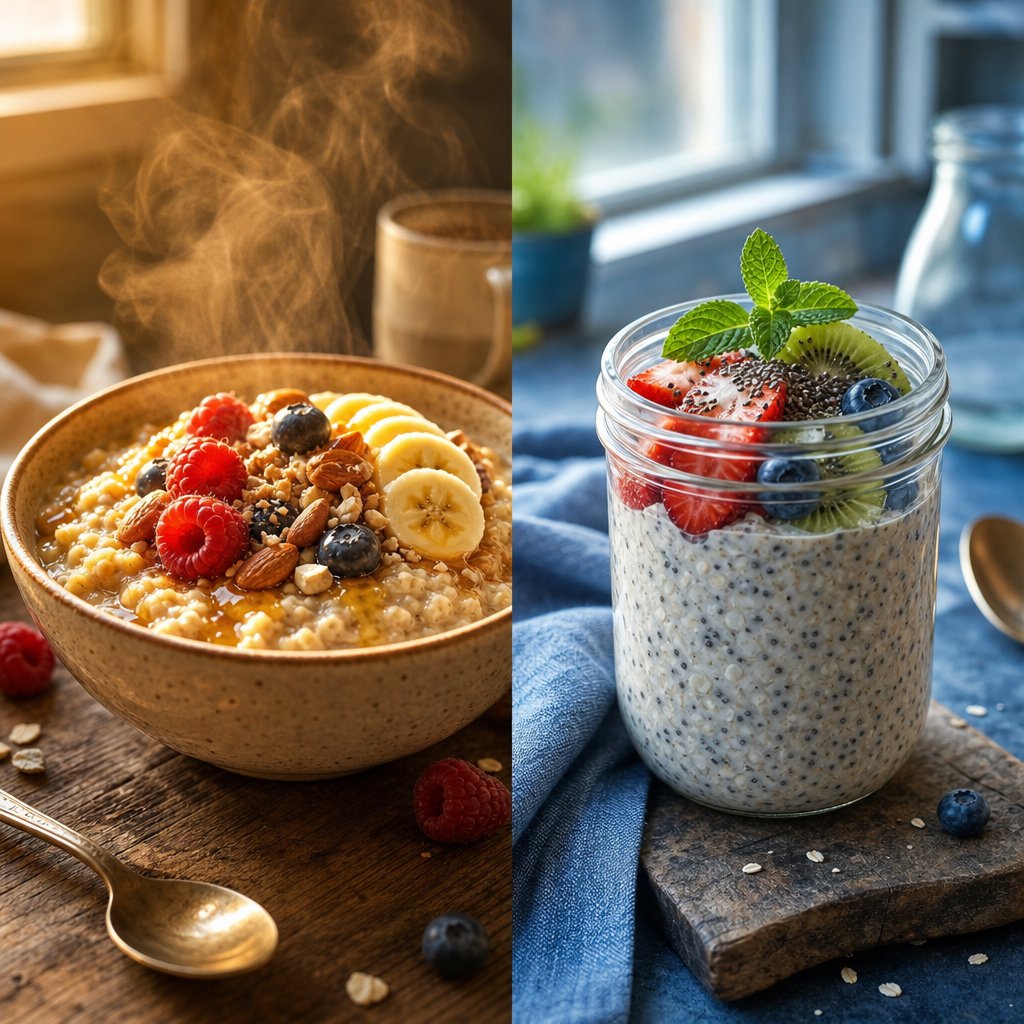
Both hot and cold preparation methods produce excellent protein oats, but they solve different problems. Hot oatmeal gives you a warm, satisfying bowl in minutes. Overnight oats eliminate clumping risk entirely and reward you with zero morning effort. Your ideal method depends on whether you value speed and warmth or smoothness and convenience.
Hot Protein Oatmeal Preparation and Tips
Hot oats with protein powder deliver that cozy, fresh-cooked breakfast feel that cold prep simply cannot replicate. You can go from dry oats to a finished high protein oats bowl in under five minutes using the stovetop or microwave.
Pros
- Ready in 3-5 minutes with no advance planning required
- Warm, comforting texture that works year-round
- The cool-then-stir and slurry methods both produce smooth results when executed correctly
- Flavored powders release aroma when slightly warmed, making the bowl smell more appealing
Cons
- Requires temperature awareness to avoid clumping above 160°F
- Some plant-based powders develop a slightly cooked or chalky taste when heated
- Not ideal for batch prep since reheated protein oatmeal can turn gummy
A simple oats with protein powder recipe for hot prep: cook 1/2 cup rolled oats in 1 cup water or milk, remove from heat, wait 60-90 seconds, add 2 tablespoons cold milk, sprinkle in one scoop of protein powder, and fold gently until smooth. Total time from start to spoon: about four minutes.
Overnight Protein Oats Method
If you want to know how to make protein oats with guaranteed smoothness and zero morning effort, overnight prep is the answer. Cold soaking eliminates heat entirely, which means protein powder hydrates slowly and evenly over several hours without any risk of denaturation or clumping.
Pros
- No clumping risk whatsoever since there is no heat involved
- Protein powder fully hydrates over 5-8 hours, creating an exceptionally smooth, creamy texture
- Casein protein thrives here, thickening into a pudding-like consistency that feels almost dessert-like by morning
- Perfect for weekly meal prep since jars keep well in the fridge for up to 5 days
- Soaking oats overnight may reduce phytic acid and improve nutrient absorption compared to quick-cooked oats
Cons
- Requires 5-8 hours of fridge time, so you need to plan the night before
- Cold texture is not for everyone, especially in winter months
- Some protein powders develop slightly off or overly sweet flavors after extended soaking
- Plant-based powders can taste earthier after sitting overnight compared to fresh mixing
A basic oats and protein powder recipe for overnight prep: combine 1/2 cup rolled oats, one scoop protein powder, 1/2 tablespoon chia seeds, and 3/4 cup milk in a jar. Stir thoroughly for at least 30 seconds to break up any powder clumps, seal, and refrigerate overnight. In the morning, stir again and add toppings. High protein overnight oats recipes using this framework regularly deliver 35+ grams of protein per serving when combined with Greek yogurt.
Which Method Delivers Better Texture and Taste
For pure texture smoothness, overnight protein powder oats win. The extended hydration time lets every particle dissolve completely, and you never fight clumps. For flavor intensity and warmth, hot preparation has the edge since gentle heat brings out the natural sweetness of oats and activates aromatic compounds in flavored powders.
Many people rotate between both depending on the day. Busy weekday mornings favor overnight jars prepped on Sunday. Relaxed weekend breakfasts call for a warm bowl made fresh. Neither method is objectively superior. They are simply different tools for the same goal: getting more protein into your oats and protein powder routine without sacrificing the eating experience.
| Factor | Hot Protein Oatmeal | Overnight Protein Oats |
|---|---|---|
| Prep Time | 3-5 minutes | 5 minutes prep + 5-8 hours fridge time |
| Clumping Risk | Moderate (manageable with technique) | None |
| Best Protein Types | Whey isolate, collagen | Casein, whey, plant blends |
| Texture Result | Creamy and warm, slightly thickened | Dense, pudding-like, ultra-smooth |
| Meal Prep Friendly | No (best eaten fresh) | Yes (lasts 3-5 days in fridge) |
| Flavor Retention | Strong aroma, slightly intensified sweetness | Mellow, blended flavor profile |
Whichever method you choose, the flavor of your protein powder matters just as much as the technique. A perfectly smooth bowl still falls flat if the powder clashes with your toppings, and the right pairing strategy can turn basic oats and protein powder into something you genuinely crave each morning.
Flavor Pairing Guide and Topping Combinations
A smooth, well-mixed bowl of protein oatmeal still misses the mark if the flavor is off. The wrong powder-topping combination can taste muddled or outright unpleasant, while the right pairing makes your breakfast feel like something from a cafe menu. Flavor strategy is what separates a bowl you tolerate from one you look forward to.
Best Protein Powder Flavors for Oatmeal Pairings
Not every protein powder flavor belongs in oatmeal. Some integrate beautifully with the warm, nutty base of cooked oats, while others clash the moment you add toppings. Here is how the most common flavors perform:
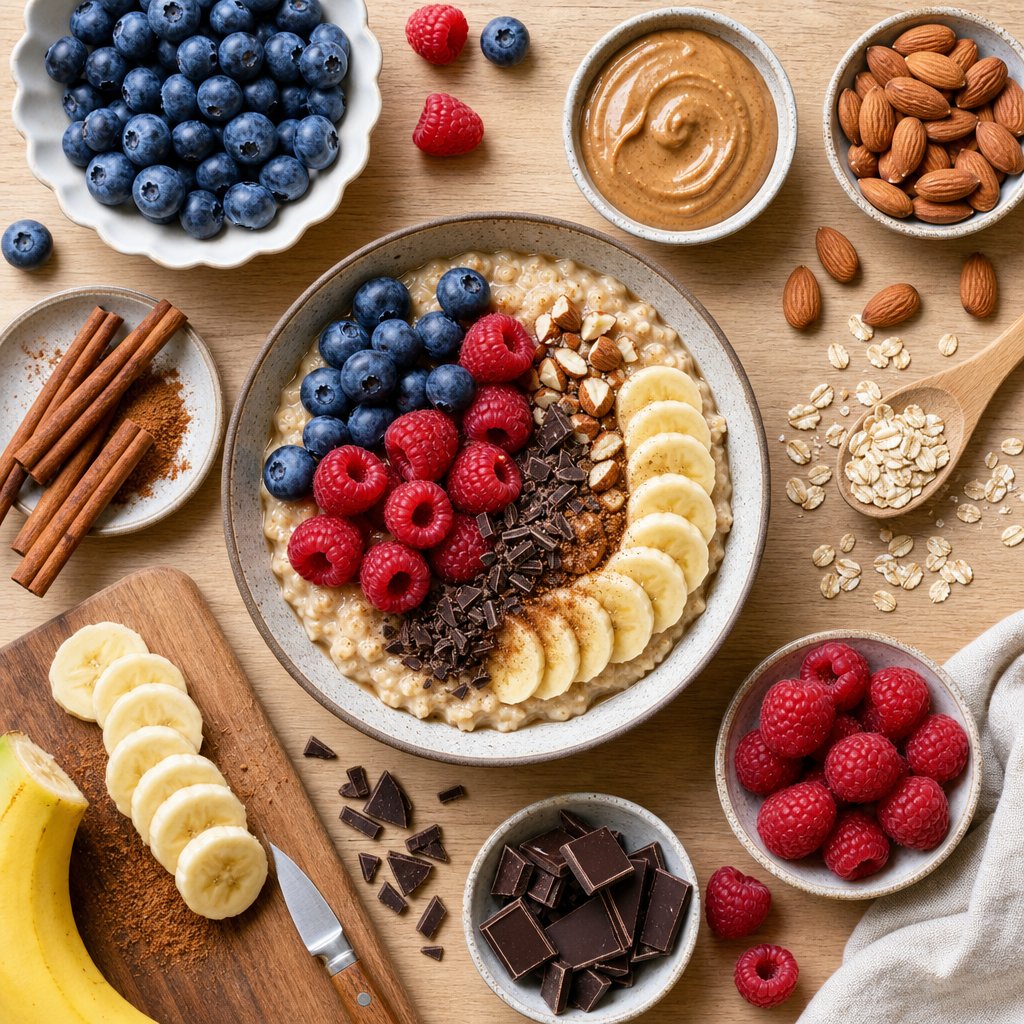
- Vanilla: The most versatile flavored option. Its mild sweetness complements nearly any topping without competing for attention. Pairs naturally with berries, honey, cinnamon, sliced banana, and nut butters.
- Chocolate: Rich and indulgent, but it narrows your topping choices. Works best with banana, peanut butter, dark cocoa nibs, and a drizzle of maple syrup. Avoid pairing with tart fruits like raspberries unless you enjoy that contrast.
- Unflavored: The blank canvas. Unflavored protein powder lets your toppings define the entire flavor profile, giving you complete control over sweetness and taste direction every morning.
- Brown sugar or caramel: A natural match for fall-inspired bowls. Brown sugar oatmeal protein powder pairs beautifully with toasted pecans, maple syrup, diced apple, and a pinch of sea salt.
- Fruity flavors (strawberry, berry blend): These are the trickiest. They work with fresh fruit toppings of the same family but clash with nutty or savory additions. If you enjoy pecans or peanut butter on your oats, skip fruity powders entirely.
Topping Combinations That Complement Each Flavor
Wondering what to add to oatmeal for protein and flavor at the same time? The best high protein toppings for oatmeal pull double duty, boosting both nutrition and taste. Here are proven pairings organized by powder flavor:
- Vanilla protein + mixed berries, drizzle of honey, dash of cinnamon, sliced almonds
- Vanilla protein + sliced banana, walnut pieces, a swirl of almond butter
- Chocolate protein + banana coins, 1 tablespoon peanut butter, cacao nibs, flaked coconut
- Chocolate protein + fresh strawberries, dark chocolate chips, hemp seeds
- Unflavored protein + brown sugar, toasted pecans, cinnamon, vanilla extract
- Unflavored protein + savory toppings like a fried egg, avocado, everything bagel seasoning
- Caramel/brown sugar protein + diced apple, toasted walnuts, maple drizzle, pinch of nutmeg
One important note on sweetness: if you use a flavored, sweetened protein powder, you likely do not need additional honey, sugar, or maple syrup. Most flavored powders contain 2-5 grams of added sugar or sugar substitutes per scoop, which is enough to make the bowl taste pleasantly sweet on its own. Taste before you sweeten. Unsweetened or unflavored powders, on the other hand, leave the sweetness entirely up to you, which is why they pair so well with naturally sweet toppings like ripe banana or berries.
The main flavor clash to avoid: fruity protein powders combined with heavy nut-based toppings. Strawberry protein with peanut butter, for example, creates a confused flavor profile that satisfies neither craving. Stick to complementary families. Fruity goes with fruity. Nutty goes with chocolate, vanilla, or unflavored.
Non-Powder Ways to Boost Protein in Oatmeal
Protein powder is not the only way to add protein to oatmeal. If you want variety, or if you are curious about how to add protein to oatmeal without protein powder, several whole-food protein sources for oatmeal integrate just as easily:
- Greek yogurt (1.5-2g protein per tablespoon): Stir 2-3 tablespoons into warm or cold oats for a tangy, creamy boost. Registered dietitians recommend it as one of the simplest ways to add more protein to oatmeal without changing the flavor dramatically.
- Egg whites (3.6g protein per egg white): Whisk one or two egg whites into oats during the last minute of cooking. They set gently in the heat, adding volume and protein without any eggy taste.
- Nut butters (8g protein per 2 tablespoons): Peanut, almond, or cashew butter adds protein, healthy fats, and rich flavor. Swirl it in after cooking for the best texture.
- Hemp seeds (4g protein per tablespoon): Sprinkle on top for a subtle nutty crunch. They also deliver omega-3 fatty acids.
- Cottage cheese (14g protein per 1/2 cup): Blend smooth and fold into warm oats. It disappears into the texture while nearly doubling the protein content.
- Milk instead of water (8g protein per cup): A simple swap that adds creaminess and protein without any extra ingredients.
Combining a scoop of protein powder with one or two of these whole-food additions is how to add more protein to oatmeal when you need 35-40+ grams in a single bowl. A dietitian at Rutgers School of Health Professions notes that pairing whey protein powder with two tablespoons of peanut butter can push a single bowl past 40 grams of protein, more than five eggs worth.
With flavor and protein sources sorted, one variable remains that quietly determines whether your bowl turns out smooth or disappointing every time: the quality and formulation of the protein powder itself.
Choosing the Right Protein Powder for Oatmeal
You can nail the technique, get the temperature right, and use the perfect ratio, but if your protein powder was never designed to mix into food, you will still fight texture issues. Most protein powders on the market are formulated for one thing: dissolving in a shaker bottle full of cold liquid. That is a very different challenge than integrating smoothly into a warm, semi-solid base like oatmeal. The best protein powder for oatmeal is one engineered with solubility, minimal fillers, and food-grade mixing properties in mind.
What Makes a Protein Powder Mix Well into Food
When you shake protein powder in water, you are working with a thin liquid, vigorous agitation, and a sealed container. Oatmeal gives you none of those advantages. You are folding powder into a thick, starchy matrix with a spoon. That means the powder itself needs to do more of the work.
Two physical properties matter most for oats protein powder performance:
- Particle size and granule structure: Finer particles with higher porosity absorb liquid faster and disperse more evenly in semi-solid foods. Research on instant powder rehydration confirms that particle microstructure directly determines how quickly and completely a powder integrates with its surrounding medium. Powders with overly fine particles can actually clump more aggressively due to increased surface cohesion, so there is an optimal range rather than a simple smaller-is-better rule.
- Surface hydrophilicity: Powder particles with hydrophilic (water-attracting) surfaces wet faster and resist forming those dry-on-the-inside clumps. Proteins with exposed hydrophobic regions on the particle surface create a barrier that repels moisture, which is exactly what causes those stubborn lumps in your oatmeal.
Processing method also plays a role. Spray-dried protein powders tend to form denser, more spherical particles that can resist water penetration. Powders processed at lower temperatures or through methods that preserve a more porous internal structure typically rehydrate faster and blend more smoothly into thick foods. This is why two protein powders with identical nutrition labels can behave completely differently when you stir them into a bowl of oats.
Ingredients and Quality Markers to Look For
Choosing the right protein for oatmeal goes beyond just picking a flavor you like. The ingredient list tells you whether a powder will play nicely with food applications or fight you every morning. Here is what to look for:
- Short ingredient list: The fewer additives, the more predictable the behavior in food. Powders loaded with gums, thickeners, and emulsifiers are formulated for shaker-bottle texture, not oatmeal integration. Those thickeners can over-gel in warm oats, creating an unpleasant gummy consistency.
- Minimal or no artificial sweeteners: Sucralose, acesulfame potassium, and similar sweeteners can develop a pronounced bitter aftertaste when heated or when concentrated in a thick food matrix. Natural sweeteners like stevia or monk fruit tend to perform better in protein enriched oatmeal, though even these can taste overly sweet when combined with flavored toppings.
- High protein purity: Look for powders where protein accounts for 80% or more of the total weight per serving. Lower-purity products contain more fillers, maltodextrin, or fiber additives that change how the powder absorbs liquid and can make your oatmeal gritty or overly thick.
- Third-party testing: Certifications like NSF Certified for Sport or Informed Sport verify that what is on the label matches what is in the tub. They also screen for contaminants like heavy metals, which industry guides identify as a critical quality marker for any protein powder product.
- Clean protein source: Whether whey, pea, or another base, the source should be free from antibiotics and hormones. Grass-fed whey and organic plant proteins generally undergo less aggressive chemical processing, which can preserve better solubility characteristics.
One practical test you can do at home: mix a scoop of your protein powder with just two tablespoons of room-temperature water and stir with a spoon for 15 seconds. If it forms a smooth paste without dry pockets or rubbery clumps, it will perform well in oatmeal. If it resists dissolving or forms a sticky mass, that powder was not designed for food mixing regardless of what the marketing says.
The Role of Manufacturing in Powder Performance
Ever wonder why some protein powder for oats dissolves like magic while another brand with the same protein type clumps immediately? The difference often comes down to how the powder was manufactured, not just what is in it.
The growing demand for protein enriched oatmeal and other protein-enhanced breakfast products has pushed the supplement industry toward developing powders with better food-mixing properties. This means optimizing granule size, controlling surface composition during drying, and sometimes applying hydrophilic coatings like lecithin that help particles wet faster in thick liquids. These are not decisions made by the brand you see on the label. They happen at the manufacturing level.
Most protein powder brands do not manufacture their own products. They partner with specialized OEM/ODM manufacturers who handle formulation, processing, and production at scale. These manufacturers control the variables that determine real-world mixing performance: drying temperature profiles, particle agglomeration techniques, and surface treatment processes. For example, ZhuFeng offers OEM/ODM health food manufacturing with customized formulation in powder and granule formats, enabling brands to develop protein powders specifically engineered for superior solubility in both hot and cold food preparations. This kind of specialized manufacturing is what separates a protein powder that disappears into your oatmeal from one that fights you every morning.
For consumers, this means paying attention to how a powder actually performs rather than relying solely on label claims. For brand owners or entrepreneurs looking to create a protein powder for oatmeal and food applications, the manufacturing partner you choose determines whether your product delivers on that promise. Facilities with flexible production capabilities and experience in powder/granule optimization can dial in the exact particle characteristics needed for smooth food integration.
The best protein powder to add to oatmeal is ultimately one that combines clean ingredients, appropriate sweetness levels, and a manufacturing process optimized for food-mixing rather than just shaker-bottle performance. When those elements align, protein powder with oatmeal becomes effortless, and your morning bowl delivers both the nutrition and the texture you are after without compromise.
Frequently Asked Questions About Adding Protein Powder to Oatmeal
1. Does heating protein powder in oatmeal destroy its nutritional value?
No. Heat causes protein denaturation, which changes the physical shape of protein molecules but does not break the peptide bonds holding amino acids together. Your body absorbs the same amino acids whether the powder was mixed into hot oatmeal or cold liquid. The only thing affected is texture. Clumping begins around 160°F (71°C), so letting your oatmeal cool for 60-90 seconds before stirring in the powder prevents texture issues while preserving full nutritional benefit.
2. How much protein powder should I add to oatmeal without ruining the texture?
One scoop (20-25g protein) per half cup of dry oats is the practical sweet spot. At this ratio, the powder integrates smoothly and the oatmeal retains a creamy consistency. Going beyond 1.5 scoops per serving typically produces an overly thick, chalky result because the oats cannot absorb that much powder. If you need more than 30g of protein per meal, add a complementary source like Greek yogurt or nut butter rather than extra scoops.
3. What is the best type of protein powder for oatmeal?
Whey isolate is the most versatile choice for both hot and cold oatmeal due to its fine particle structure and smooth dissolution. Casein works best in overnight oats where it thickens into a pudding-like texture over several hours. Collagen peptides dissolve invisibly without changing taste or texture but lack complete amino acids for muscle building. Plant-based blends work well in overnight oats but may need extra liquid and stronger flavors in hot preparations to mask graininess.
4. Is it better to add protein powder to hot oatmeal or overnight oats?
Both methods work well but solve different problems. Overnight oats eliminate clumping risk entirely since cold soaking lets protein powder hydrate slowly over 5-8 hours, producing an ultra-smooth texture ideal for meal prep. Hot oatmeal is faster (3-5 minutes) and delivers a warm, comforting bowl but requires temperature management. The cool-then-stir method or protein slurry technique prevents clumping in hot prep. Many people rotate between both depending on their schedule.
5. Can I cook protein powder directly with oats on the stove?
Yes, but it requires adjustments. Mix the protein powder with dry oats before adding liquid, increase your liquid by 25-50% (use 1.25-1.5 cups instead of 1 cup), and cook over medium-low heat while stirring frequently. Lower heat reduces aggressive denaturation and produces a creamier result. Pull the oats off heat slightly earlier than usual since the mixture continues thickening as it cools. The texture will be denser than the cool-then-stir method, but cleanup is simpler with only one pot.